


By John Fitzgerald

(Part One)
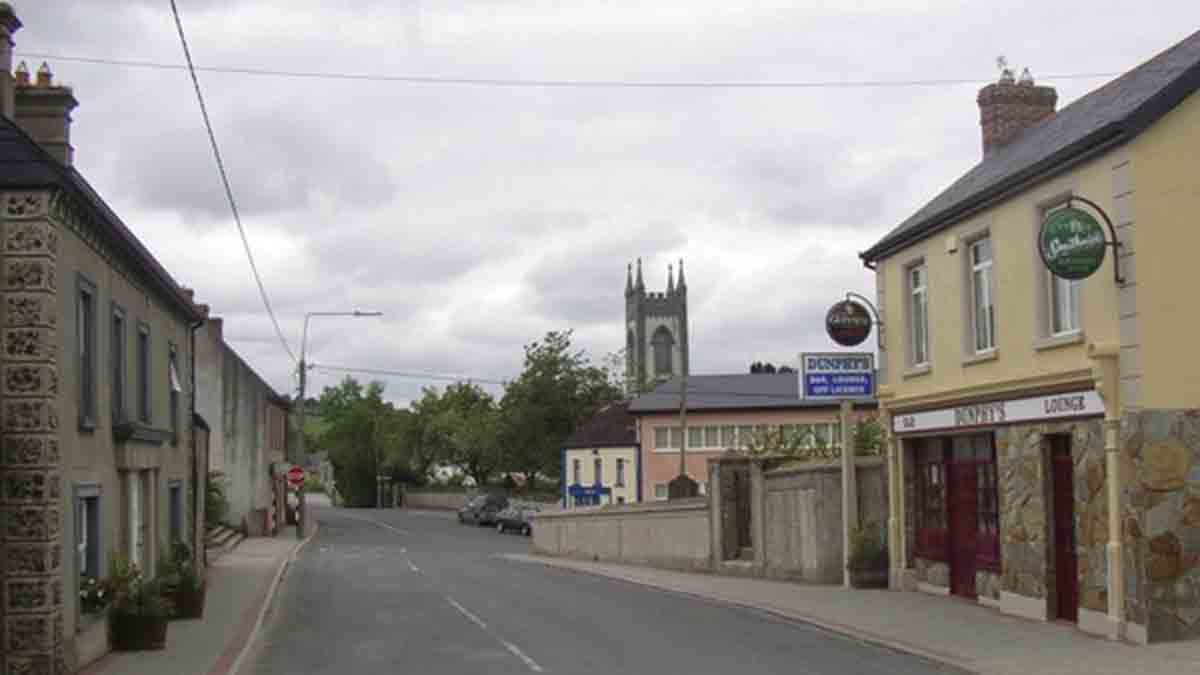
Kilmoganny is a quiet village and a bit off the beaten track geographically. But for two days in August 2000 it awoke from its gentle slumber. There was music in the streets. Catholics attended the Protestant church. And past pupils of the old “school on the hill” travelled from near and far to attend a marathon reunion.
The event drew huge crowds. Hundreds of men and women who had learned the “hard way” in the classrooms of the chalk white building assembled to share tales of joy and woe. Some had flown from South Africa, the U.S.A. and England to savour the quaint atmosphere of rural Kilkenny.
They recalled an age when political correctness was unheard of and computers were just crazy gadgets you read about in science fiction.
Kilmoganny’s Millennium Committee organised the event to mark two centuries of education in the area. The celebrations began with the unveiling of a plaque at St. Eoghan’s National school by 96-year old Ellen Brennan, the oldest past pupil in Kilmoganny. The village was at its best in terms of cleanliness and aesthetic appeal for the weekend
To underline the village’s time-honoured record of peaceful co-existence between people of all denominations, hundreds of local Catholics attended a service in St. Matthew’s Protestant Church.
Canon John Flynn described the cross-community service as “a milestone in our efforts to create peace and harmony on this island”. Kilmoganny had, he felt, “crossed the sectarian divide. He admonished people to learn from Ireland’s past, but not to become prisoners of it.
There were hearty handshakes and friendly nods at the end of the service, and a real sense of community spirit pervaded the interior of the little church.
“If only this could happen on the Falls and the Shankill roads”, as lady remarked, as Catholics, Protestants and Dissenters spilled out onto the streets of Kilmoganny. “Give it time”, her daughter urged, “the old wounds take to heal.”
The highlight of the celebrations was a trek up the long winding hill towards the old schoolhouse, which had become a private residence. Ned Kirwin, a key organiser of the weekend festivities, led the way, flanked by Millennium Committee members.
There was laughter and lively reminiscing as the throng of wizened former students re-traced the path they had trodden as youngsters.
The narrow, tree-lined route that led to the school had borne witness, I was told, to many a nervous exchange about homework undone and countless childhood pranks.
“Like the day Marty Hogan disturbed a nest of wasps which proceeded to attack the girl pupils marching behind him”, somebody shouted, as I trudged alongside the past pupils on their pilgrimage.
At the top of the hill stood the old school. Known locally as the “Whitehouse”, it is situated in a picturesque woodland clearing. Memories came flooding back for the pupils of several generations.
The beech tree was still standing, though older and wiser like the human throng gathered around it. Cows grazed in surrounding fields that seem to stretch to infinity. The lawn in front of the building had a drooping willow whose leaves quivered in the light breeze.
A vintage car honked and pulled up behind us. It was Dick Dunphy, who had arranged to convey some of the elderly visitors to the scene of their childhood learning. His ancient taxi was a relic of the 1930s. Among his passengers were Nancy and Maurice Butler, the oldest couple in Kilmoganny. They had just celebrated 66 years of wedded bliss.
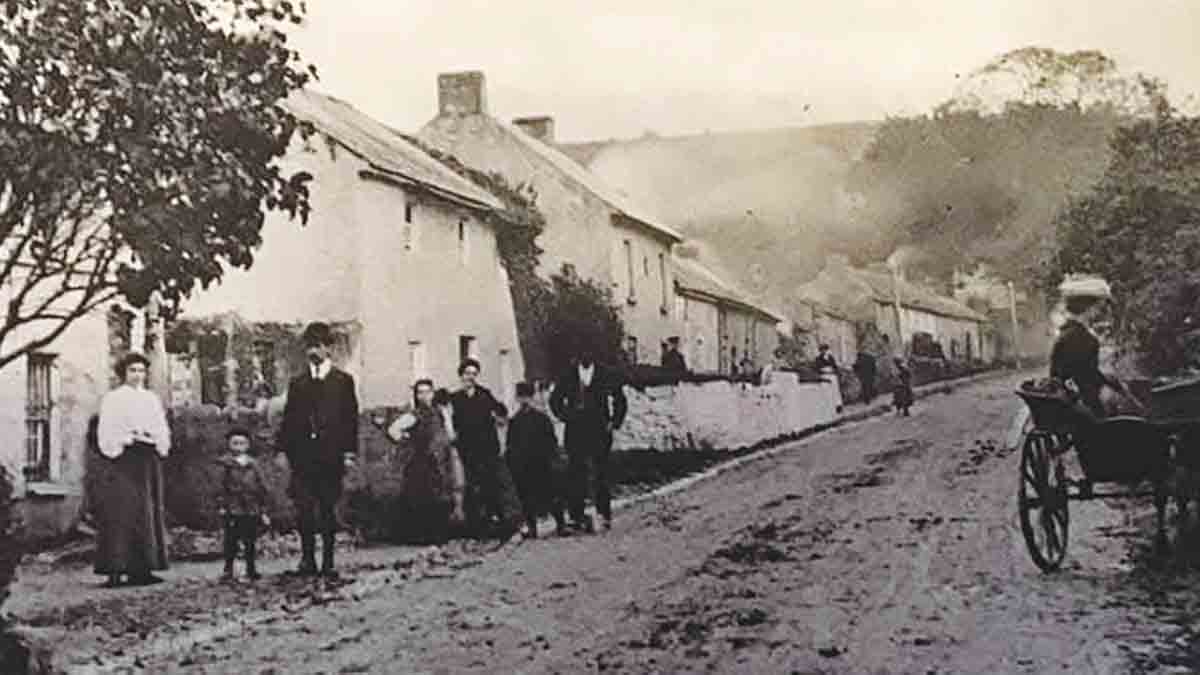
Before serving as a school, the “Whitehouse” had been a fever hospital. In 1831, nurses there had treated the wounded after the infamous Battle of Carrickshock. It also catered for victims of the Great Famine in the 1840s. It opened as a school in 1856.
Ellen Cullinane, daughter of Kilkmoganny’s only tailor, enjoyed the athletic side of schooling. Instead of a small playground, she recalled, she and her schoolmates had “a wilderness to play in. “I loved running”, she said, “but I never ran away from the School on the Hill. I treasure my memories of it.”
Ellen’s father, Liam, was something of a legend in the village. One occasion, he had to make up a three-piece suit for a local hackney man who was getting married next morning. This was desperately short notice for the tailor. He worked through the night, and had the order ready on time.
Phil Moore started school in Kilmoganny in 1940. His abiding memory is of collecting sticks in the nearby wood to light the fire-there was no central heating-and of writing on slates with chalk.
Corporal Punishment was taken for granted. All teachers had a “big stick” and know well how to apply it, he sighed. “You’d be lucky if you got away with five or six slaps. It could be up to 14 or more on a bad day. But still, my school days were happy.”
Margaret O’ Leary remembered “posting letters” in tree trunks on her way up the hill in the vain hope that the fairies might get them. She swapped sandwiches with her friends and loved the wide-open spaces of the Kilmoganny countryside.
First Communion and Confirmation days filled her with trepidation. She worried about not being able to answer the Bishop’s questions. But her fears melted away when the proud moment arrived. After the “Whitehouse”, she went to the technical school in Barscoobe, a revered institution…