


By John Fitzgerald

The Sisters of Mercy were the great teachers in Callan for decades. But they also had a strict code of discipline in the early part of the twentieth century. Learning through kindness and a politically correct teaching method was unheard of-with rare exceptions: The infamous Bata-a long ruler or skilfully crafted stick-was all the rage.
At the Callan convent-and indeed in similar schools nationwide- nuns entered the classroom armed with the wooden slappers, ready to administer punishment whenever necessary to maintain a high standard of education and impeccable behaviour among the pupils. At the Callan Convent of Mercy, some nuns were more merciful than others.
The late Josie O’ Keeffe-Cuddihy had an interesting angle on the bad old days of corporal punishment. Her father, Kieran O’ Keeffe, was one of Callan’s noted carpenters. In addition to his more conventional business, he had the distinction of being the man who supplied slappers to the Convent. This sideline continued until the early 1950s.
He won the lucrative contract after a nun asked him if he could produce a superior quality Bata to the ones she had been issued with in the past. She was breaking too many of them on the hands of pupils and wondered if Kieran might be able to make a tougher, user-friendlier model-one with a longer life span that could withstand a ferocious bout of slapping.
Kieran went into his workshop and, after a lot of trial and error; he managed to create a number of alternative models. One was a long round stick fashioned from pinewood. Then there was a squarish ruler type Bata that measured about a foot and a half in length and had knots protruding from it. The others were variations of these two models.
The nuns discussed the pros and cons of the various Batas Kieran had submitted for approval. After lengthy deliberations and reflection, they decided to test them all in field trials in the classrooms. Eventually, they settled on both a round and square slapper, and Kieran started turning out these in his workshop.
That was all very well for Kieran, but his daughter Josie, who attended the convent primary school, had the job of delivering the slappers to the nuns. Whenever a fresh consignment was ready, she would carry them to the Convent under her arm, or in a box, depending on the quantity involved. Needless to say, this did little to endear her to fellow pupils, who left school every day with sore hands from the slapping.
(In the fifties, more than twenty years after Josie’s schooling, Annie Byrne was asked by a nun in the convent who had just broken a slapper to “go down to Kieran O’ Keeffe and get another one immediately”. Annie remembers Kieran as a friendly and thoughtful man with a little moustache who peered out from over silvery spectacles at her in his workshop.)
One day, Josie defied her father and the nuns by hiding a batch of Batas. She refused to tell the nuns where she’d hidden the dreaded instruments of chastisement. The head nun ordered a search of the entire school. The guards and the Parish Priest were called in, and Josie was locked in the cloakroom for several hours as punishment.
Decades later she remembered her ordeal: sitting in a dark, shadowy room looking at coats hanging on hooks for what seemed an eternity and wondering if the search teams would locate the slappers. Eventually, they found them, and the nuns were back in business.
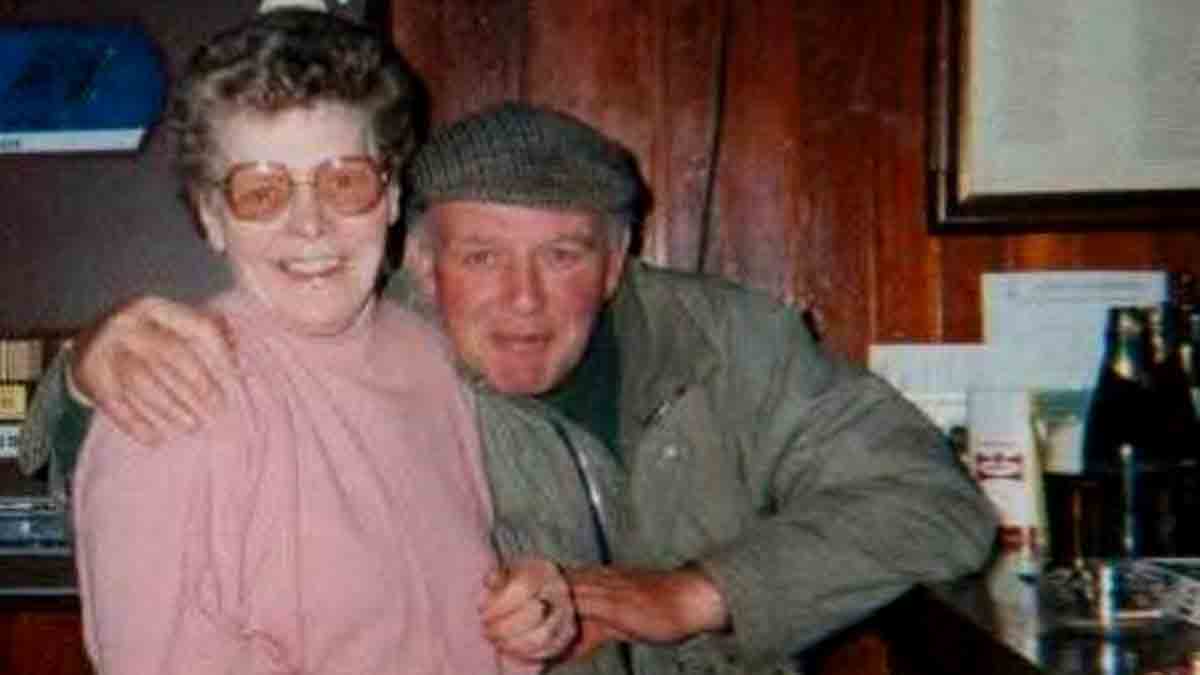
In later life, Josie took over the famed Cozy Inn pub in Callan…
Winged Messengers and Hostile Fire…
In the days before TV or even radio coverage of hurling matches-when Barrie Henriques was just a distant speck on the broadcasting horizon- people who couldn’t attend a game had to wait for the lads to arrive back in the towns, villages, farms, or country homes with the good or bad news about. Phones were scarce too, and most contact was by word of mouth.
But in the early 1920s, Callan had an edge over every other part of Ireland in this respect. I’m indebted to the late Philip O’ Keeffe for this intriguing story:
Postman John McCormack and his wife Maish in Lower Bridge Street devised a way of getting the match results to Callan after the final whistle blew. They trained a squad of thirty or more carrier pigeons to fly to the various match venues, and return with the results of each game.
The Callan lads in the crowd- or stadium, in the case of high profile showdowns- would spot the pigeon, which would alight in a suitable place for one of them to attach a note detailing the final score, and sometimes a few hastily scribbled observations, depending on who happened to catch the pigeon first.
Hundreds of people, including many from outlying country areas, would line up in Bridge Street, and at the Cross, waiting with bated breath for the pigeon to return. A mighty cheer broke the tension if the bird conveyed good tidings. If the news was bad, John McCormack had to be sure to get the pigeon out of sight for its own safety.
There is the story of one pigeon that was killed “on active service”. It was flying over the Tipperary countryside and preparing to alight at the edge of a pitch where a friendly game between Kilkenny and Tipperary teams was in full swing.
The Tipp fellows had fallen a bit behind, and it seems that a hot-blooded man who lived not far from the pitch decided to vent his annoyance on the winged messenger. The cats might win the day, he said, but he swore that pigeon would never see another dawn over Callan.
A single shot rang out. The feathered sports hack halted momentarily in mid-air and fell from the sky like a downed fighter plane.
After this incident, John McCormack made a point of training two pigeons to cover each venue, allowing for the possibility of one falling victim to hostile fire.
John’s imaginative service to the sporting world, and to the people of Callan, continued until the early 1930s, when radio put his carriers out of business.