


By John Fitzgerald

A three-hour feast of storytelling, verse, and historical reminiscence will unfold at Fennelly’s of Callan on August 15th.
Historian Philip Lynch will join Joe Kennedy of Callan Heritage and other luminaries to present talks, recite poetry, tell folk tales, and display a collection of vintage local maps. An extensive question and answer session will follow the presentations.
Philip has an encyclopaedic grasp of everything relevant to Callan, but an especially keen interest in what he calls “people of note” who hailed from the area.
He is author of The Treasures and History of the Christian Era, an enthralling tome that encompasses such themes as the suppression of the monasteries by Henry V111, including Callan’s beloved Augustinian Abbey; the 17th century ravages of Cromwell, the attempted suppression of Gaelic culture, and penal days in Callan.
There’s a chapter too on the impact of a major church scandal in the late 19th century when a parish priest defied his superiors, prompting a schism that ripped Callan apart.
Aside from this, he has delivered hundreds of insightful lectures, shedding light on the often-turbulent life and times of Kilkenny through the ages.
Philip says that Callan has produced more famous people than almost any other town on earth, and he has the documents to prove it.
The event at Fennelly’s will include some insights into the lives and times of these great ancestors.
Here are some of the best-known ones:
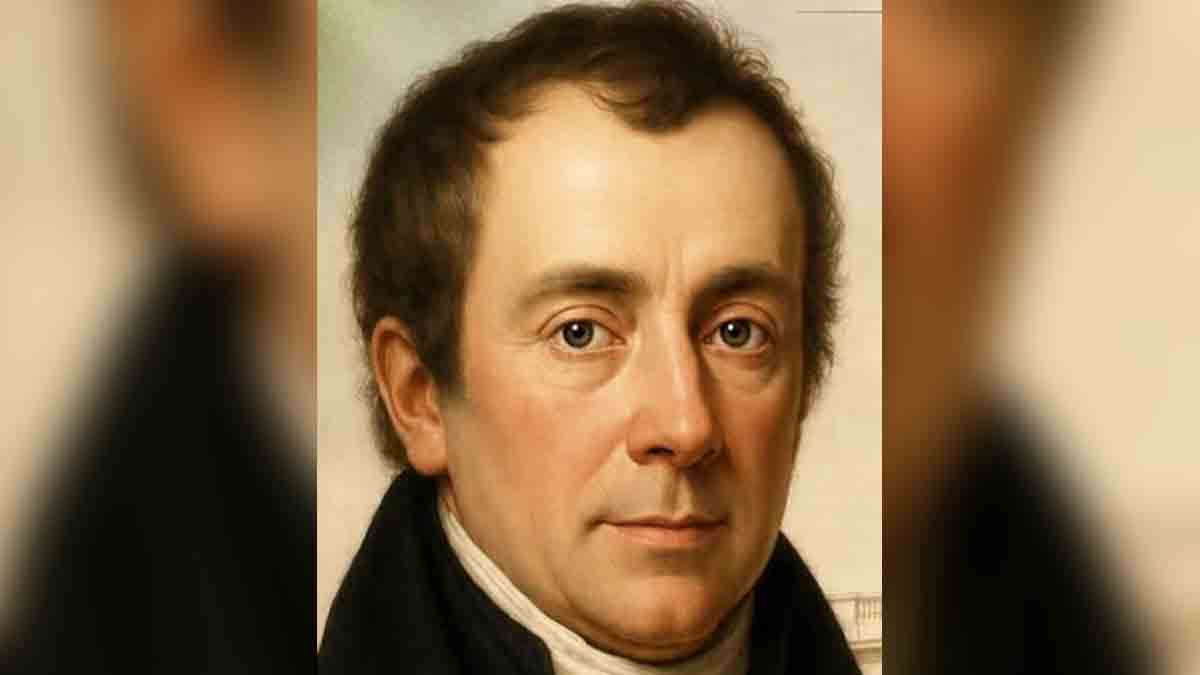
The architect James Hoban (1762-1831), who was born in Desart, just a few miles from Callan. After emigrating to America he designed the White House, among other prominent buildings. A memorial plaque and information panel in his honour can be viewed just outside Supervalu in Green Street.
Edmund Rice (1762-1844). Born at Westcourt, Callan, he started the Christian Brothers Order after he lost his wife in an accident. Ironically, he was himself opposed to corporal punishment- a sentiment that defied the schooling ethos of his time. He made a huge impact on education in Ireland, and thanks to him, the gift of learning was no longer restricted to children of wealthy families.
Abbess Mary Butler, a cousin of the 2nd Duke of Ormonde, (1646-1723) was born in Mill Street. She became a Benedictine nun and was appointed to the Order’s convent in Ypres, Belgium, she had the distinction of being the first person to don a religious habit at the Royal Court of England since the Reformation. Another first for Callan!
Callan-born Father Tom O’ Shea (1813-1887) founded the Tenant Protection Society in 1849 to fight for the rights of downtrodden tenants and against the tyranny of landlordism. It later became the Tenant League. He played a major role in championing this cause, fending off the powerful landlord class, a hostile political establishment, and powerful clergy who tried to silence him.
Rear Admiral Sir Thomas Candler, was born in Green Street in 1850. The ambitious Callan man went on to become a Count of the Russian Empire.
Callan man Sir George Tallis, whose birth date is unknown but who died in 1950, was a renowned Shakespearean actor and producer in Sydney, Australia.,
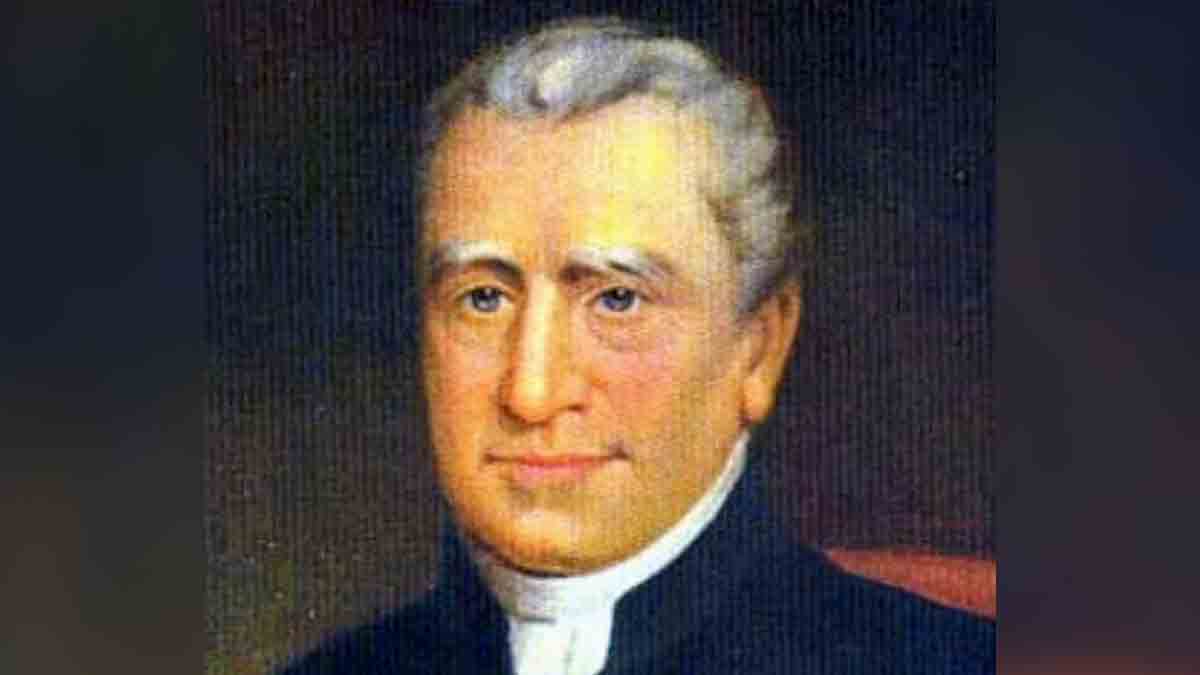
Most Rev. Christopher Butler (1673-1757) was born in Garryricken, Callan, He was a grandson of the 1st Duke of Ormonde and went on become Archbishop of Cashel and Emly.
Diarist Humphrey O’ Sullivan (1780-1838), though a Kerryman by birth, took Callan to his heart when he accepted a teaching post locally. His diaries present a graphic and revealing picture of day-to-day life in an Irish town and district from the years 1827 and 1835. While he commented too on national and international events, it is the unique insight into the lives of ordinary folk, and his word pictures of the Callan countryside, that make his diaries so appealing.
Callan man Michael Ryan (1813-1891) emigrated to Newfoundland He became fabulously rich due to his success in the fishing industry and was affectionately known as King Cod. In 1997, his residence was converted into a museum, officially opened by Queen Elizabeth II.
The Fenian poet/journalist John Locke (1847-1889) was born in the Minauns, Callan. His “subversive activities” forced him into exile. In New York, he worked as journalist and penned many poems, including the celebrated and oft recited Dawn on the Irish Coat and one recalling his native town called The Old Abbey Well.
Another patriot, Thomas Shelly (1823-1905) was born in Green Street but didn’t leave Callan at all. He did have to “disappear” for a while though in1849 because of his part in the Ballingarry Uprising. He served as a Town Commissioner and wrote extensively about Callan’s past.
James Maher (1904-1977) was another local historian. Born in Bridge Street, he edited the diaries of Humphrey O Sullivan and wrote prolifically on aspects of local heritage. He also penned light verse and was captivated by the romantic appeal of Slievenamon.
Asa Candler wasn’t Callan- born bur was a direct descendent of Daniel and Anna Candler who emigrated from the town to America in 1720. In 1892, Asa Candler founded the Coca Cola Company in Atlanta, Georgia.
Thomas Cahill, who was born in Bauntha, Callan, in 1911, emigrated to America, and, became San Francisco Chief of Police in 1958. He led a highly successful career and in 1994 was honoured when the hall of Justice in San Francisco was renamed the “Thomas J. Cahill Hall of Justice.”
The Cudahy family of meat packing fame is cited as a Callan success story. The family hailed from the townland of Kyleadohir. They uprooted and left for America in 1849 and though hampered by a lack of formal education their hard-working ethos brought them fame and fortune in the meat industry.
They set up companies that revolutionized meat packing thanks to adoption of mechanical refrigeration and refrigerated railway carriages. The Cudahys never forget their Callan links and origins as they soared to prominence as world leaders in the meat industry
Tom Kilroy (1934-2023), the award winning playwright and novelist, was born in Green Street, son of Callan’s first Garda Sergeant. Though he penned numerous critically acclaimed plays, he’s best known locally for his novel, The Big Chapel, inspired by the infamous Callan Schism. The title of his autobiographical work Over the Garden Wall refers to the view of the Fair Green from his childhood home on Green view Terrace.
World-renowned artist Tony O’ Malley (1913-2003) was born in Bridge Street. Some of his early work depicted local landmarks and he was influenced by the O’ Tunney sculptures that can be found in St Mary’s of Callan and Jerpoint Abbey. He scooped multiple awards for his paintings and was elected a life member of Aosdana in 1993. In 2000, he became the only Callan person ever to be conferred with the title Freeman of Kilkenny City.
With a line-up like this, Callan has plenty to be chuffed about. You can hear more about these and other local historic achievers next week at the event in Fennelly’s.
It runs from 3 pm to 6 pm on Saturday, August 15th. All welcome and admission free.