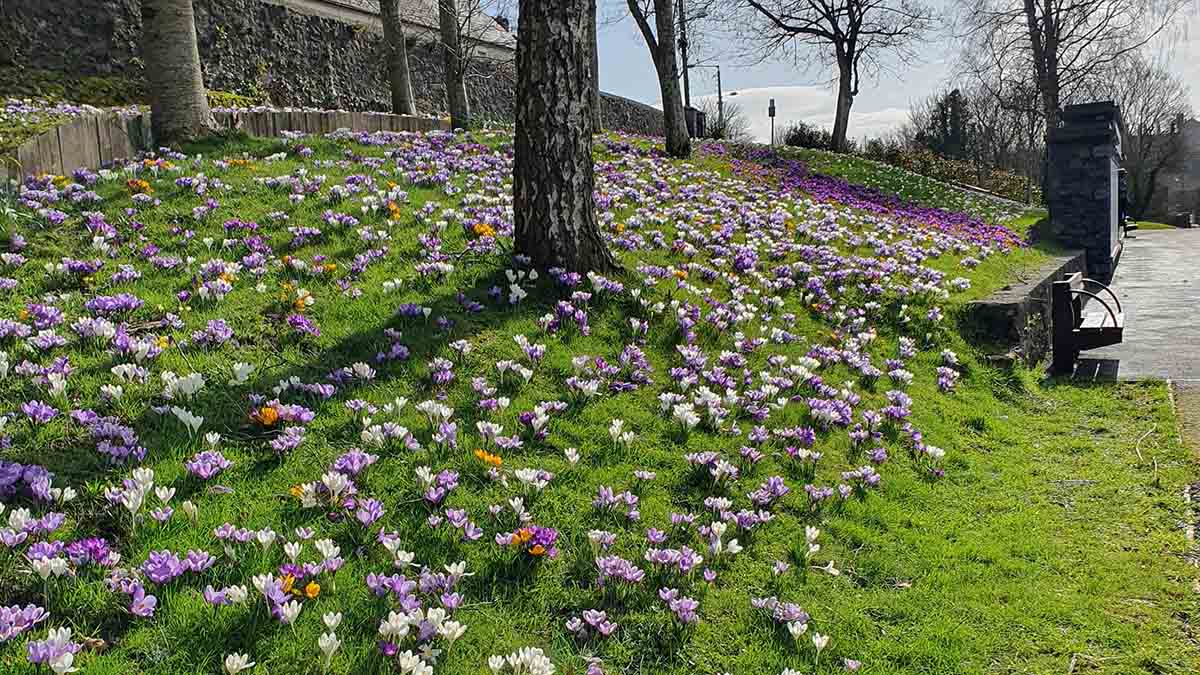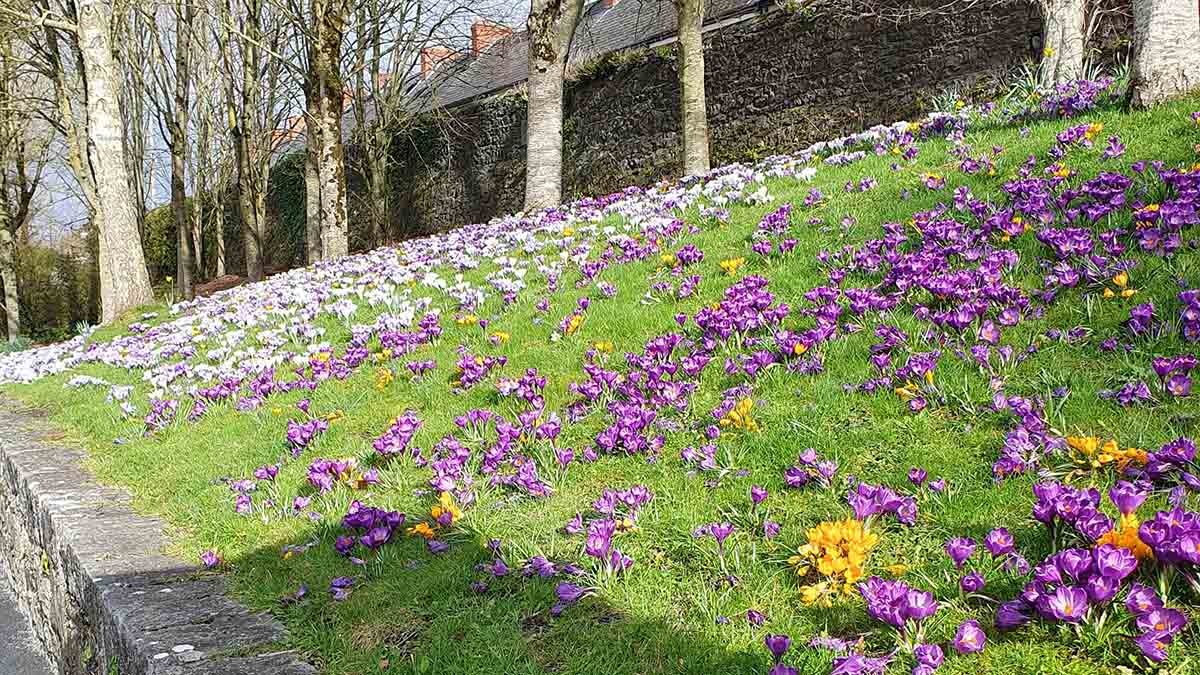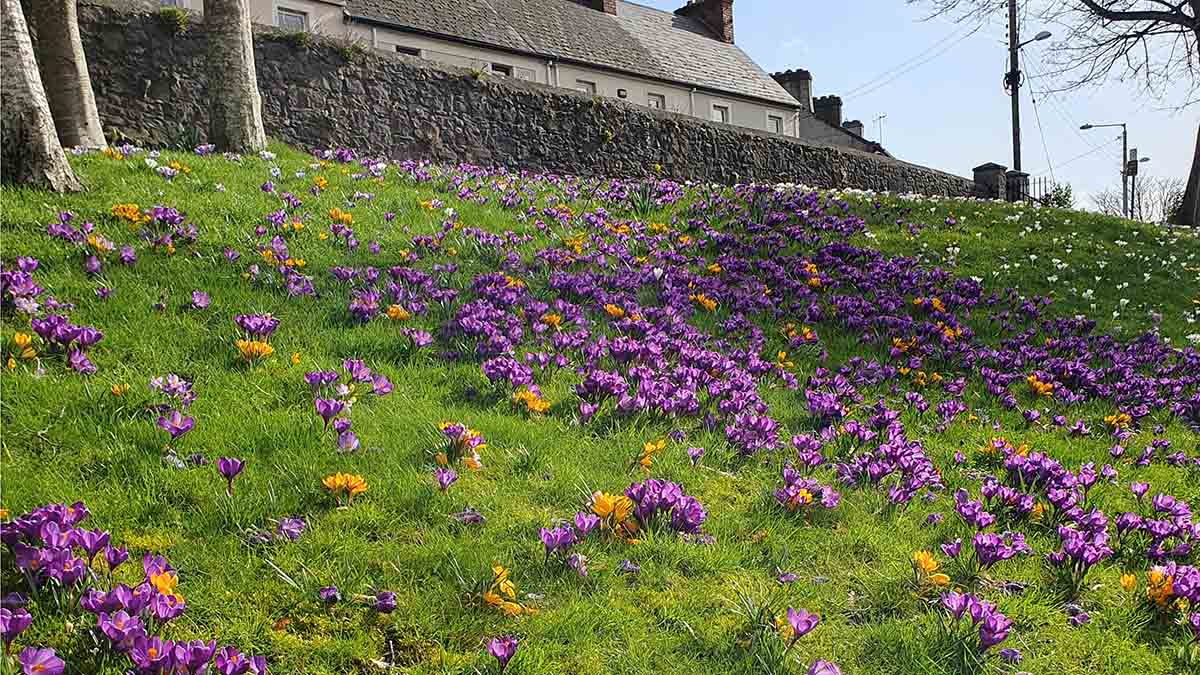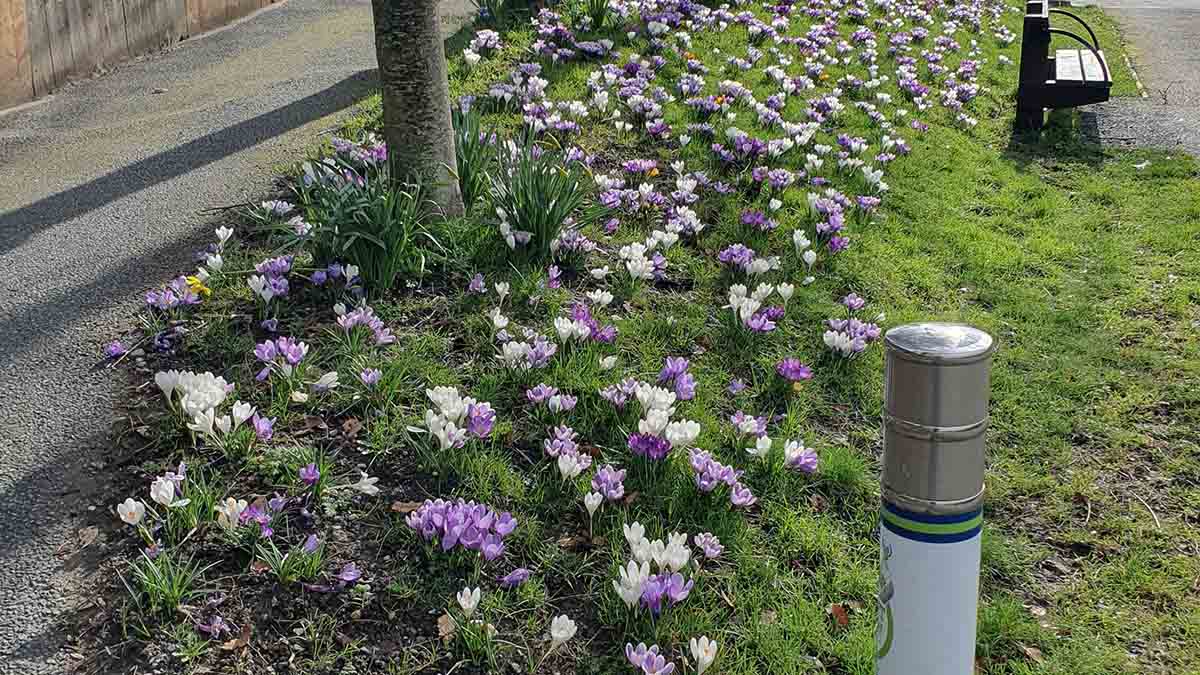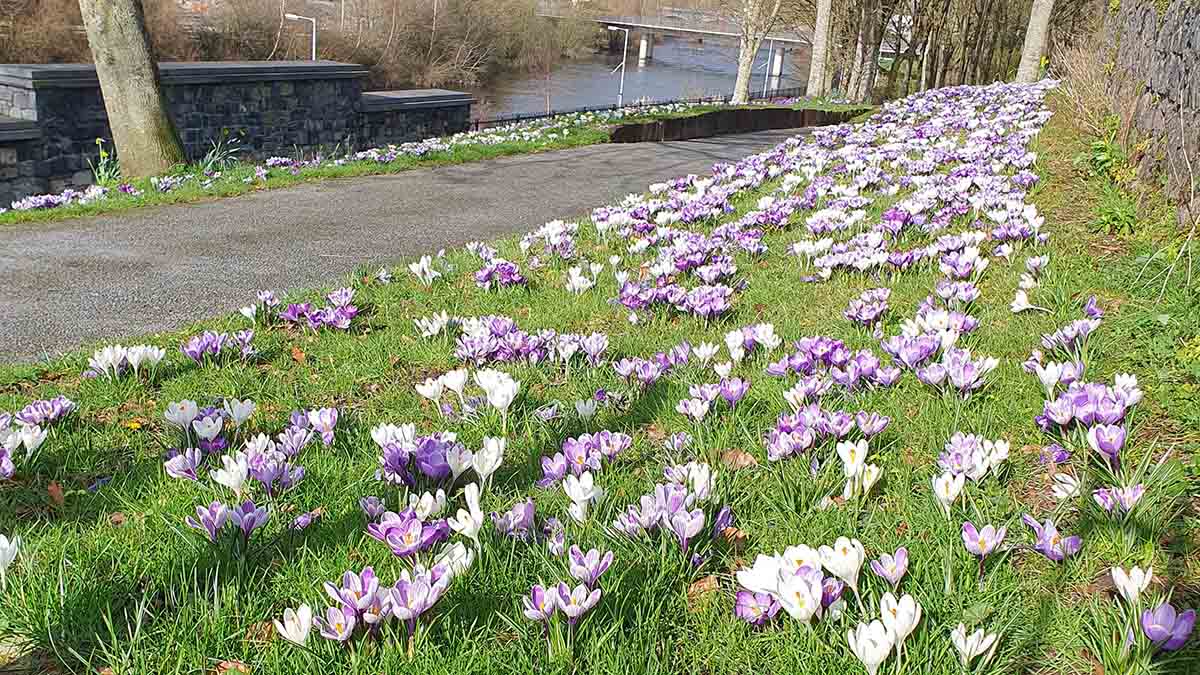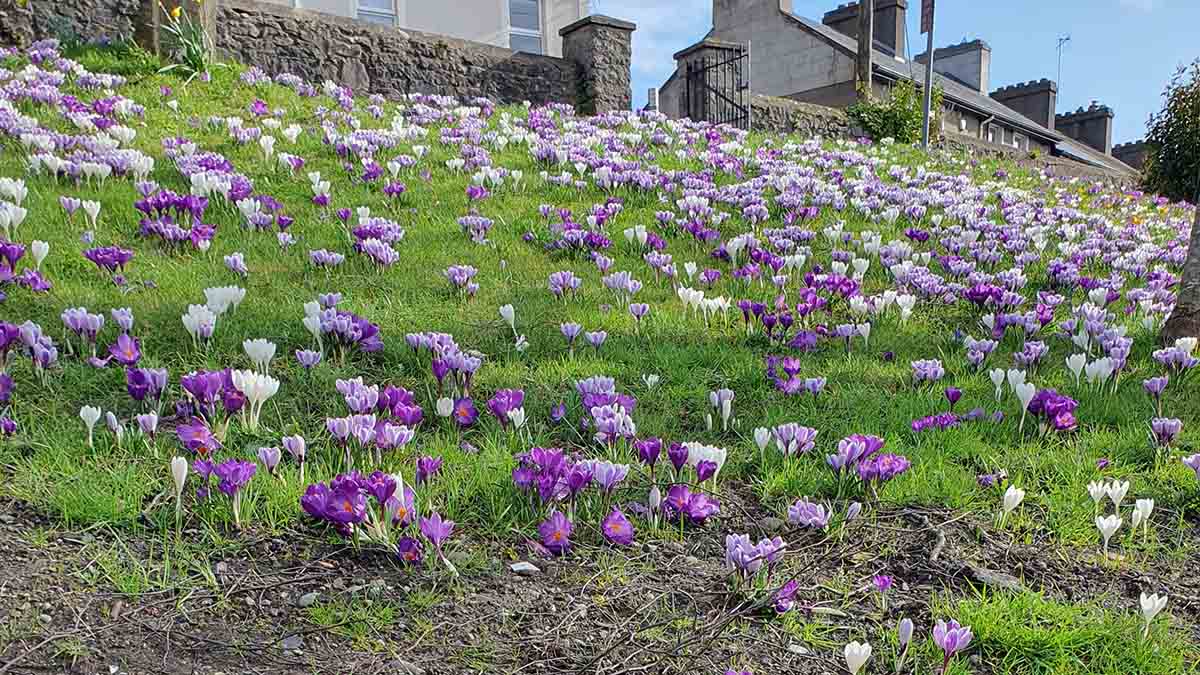



After the heavy wet January and February, the rainfall permeates the soil with moisture,and the Crocus flowers spring to life. Often these determined little flowers are poking right through the snow after a spring storm. They seem unfazed by the cold wet elements of winter. They can be seen in full bloom around the Kilkenny Great War Memorial in the Peace Park, on the banks of the river Nore. Coming in colours that vary from white, yellow and different shades of purple, they are little troopers. As one of the first flowers to appear in early spring, they bring inspiration.
Why not visit the memorial to see and enjoy these beautiful pollinator friendly spring flowering Crocus bulbs of which 26,000 were planted a number of years ago. Knowing where to look is like a little treasure find, and a sight that will never fail to impress you. The bounty, once found – never disappoints. With their grass-like leaves, the blooms slowly open to the warming, morning sun.
Crocus flowers coloured, yellow, white, and shades of purple, come and go so quickly. They make their early spring mark briefly and then they’re gone.
Out for a walk, these pretty yellow ones happened to coincide nicely with Easter.
Early spring flowers such as crocus are a taste of what’s to come for honey bees. They are lured to the little flowers during the short time they are in bloom.
Thankfully there’s more of the bulbs every year as the bulbs bulk up and more develop below the ground and eventually fill the gaps between them.
Cheery crocuses are some of the first flowers to pop up in spring. Typically flowering in purple, with lush orange centres, you can also grow white crocus and yellow crocus varieties, for a more variable colour scheme in the spring garden. They are available to purchase from September onward so why not plant some in your own garden or green spaces in Kilkenny.
Crocuses are hugely popular with bees, particularly bumblebees, which feast on nectar and cover themselves in pollen after emerging from hibernation. Before establishing a nest, some bumblebees may even sleep in crocus flowers, which close at night.
Generally, crocuses do best in a sunny, open position in well-drained soil. The small corms are particularly easy to plant, too. Over time, crocuses will gradually spread to form colonies that provide marvellous bursts of colour in early spring.
If you’re a fan of early bloomers, then the crocus is the plant for you. For what it lacks in size, it more than makes up for in impression. Resilient and tough, these diminutive flowers will bloom for weeks, even in the harshest of weather. They’re the perfect way to brighten the last gloomy days of winter.
They can be sneaky
Crocuses are part of the Iris family (Iridaceae), and like Irises, grow from bulb-like structures called corms. There are currently more than 80 known varieties. Of these, the majority bloom in late winter or early spring. But there are a few that flower in late fall.
Measuring in at 3-6 inches, these perennials are indeed tiny. But they’re sneaky. Just when you think they’re dead, they pop up literally overnight. That’s because, unlike daffodils and tulips, their flowers emerge at the same time as the foliage.
Crocuses open when the sun shines, but close up at night and in rainy weather. There’s a rich pollen inside each flower. This is a boon for pollinators looking for a food source when not much else is available.
The great display of crocus’s is thanks to many groups from Kilkenny including:
The Kilkenny Great War Memorial Committee, Keep Kilkenny Beautiful, Kilkenny County Council Biodiversity officer, The Volunteer Centre, Michael Street Residents volunteers, and businesses in Kilkenny who supported the project.