


The Kilkenny Observer welcomes John Comerford from Kilkenny tours who will bring us on trip to visit various locations in Kilkenny city and county. The Kilkenny Observer is delighted to bring you a piece of history on the first Friday of each month. To give the full history on each location would take up too many column inches, but we hope that the information shared, will, at the very least, whet your appetite in discovering Kilkenny’s rich history, architecture, and hidden gems. This week (number three in the series) John visits ‘Fertagh Round Tower’
One of Ireland’s most distinctive early Christian monuments rises quietly from the landscape north of Johnstown, Co. Kilkenny. Fertagh Round Tower, signposted locally as Grangefertagh, stands 4km from the village and just off the old Cashel–Portlaoise road. Recognised as one of the tallest and slimmest round towers in Ireland, it remains the most striking survivor of a once important monastic centre.
The monastery at Fertagh was likely founded in the 6th century by St. Kieran of Saigir, one of the earliest missionaries of the Irish Church. Its prominence made it a target for attack, and in 861 Viking raiders struck the site, only to be driven off by Cerbhall, King of Ossory. The monastery suffered again in 1156, when it was burned, leaving the round tower as the principal remnant of the early settlement. At eight storeys high, reached originally by wooden ladders, the tower was among the tallest in Ireland and served both as a bell tower and a place of refuge.
Religious life continued at Fertagh into the medieval period. In the 13th century, an Augustinian priory was established under Anglo‑Norman patronage, adding a new chapter to the site’s long ecclesiastical history.
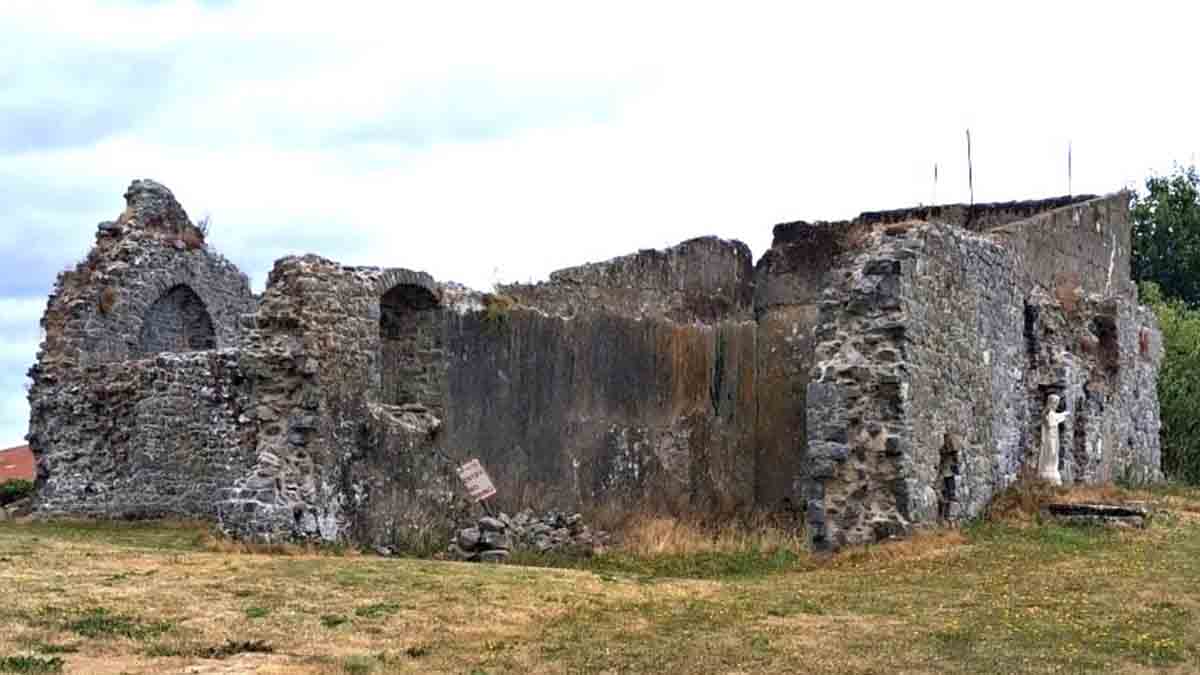
The tower stands beside the remains of a late medieval church, which underwent an unusual transformation in the 20th century when it was converted into a handball alley. This rural tradition, once widespread, resulted in many of the church’s architectural features being cemented over, obscuring window mouldings and carved stonework.
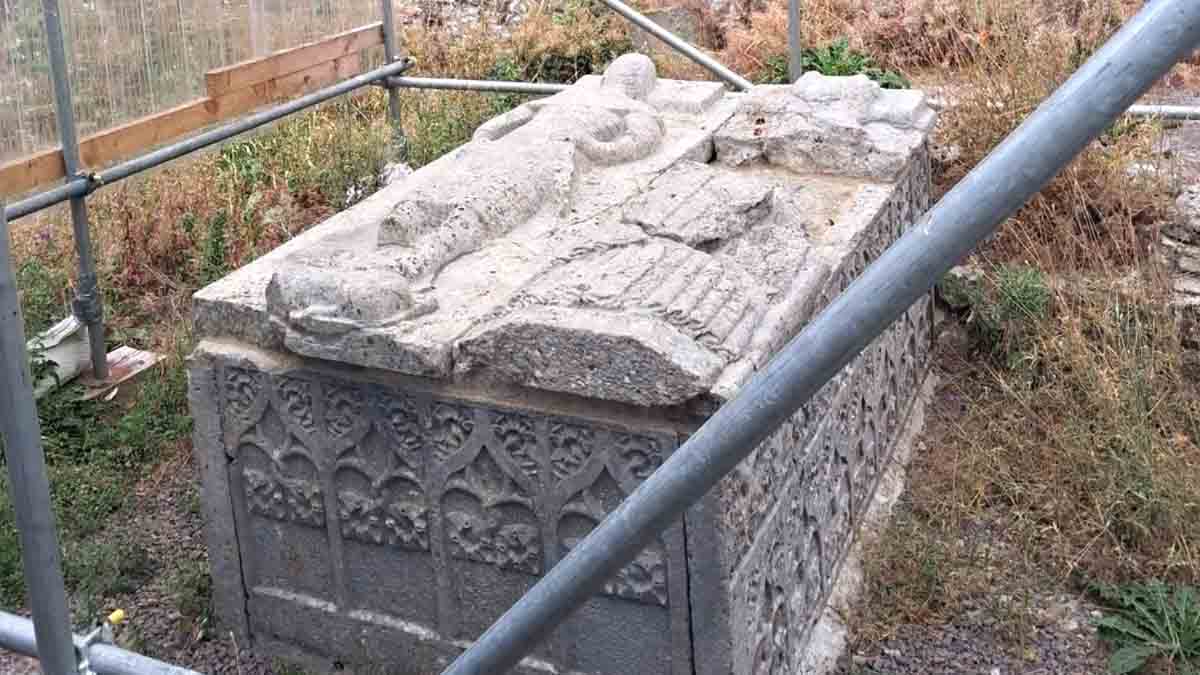
Within the roofless church lies the 16th‑century table tomb of John MacGullapadraig and his wife, featuring a rare recumbent double effigy. The tomb was carved by the celebrated O’Tunney family, master masons renowned for their work at Jerpoint Abbey, Callan, and St. Canice’s Cathedral. Their craftsmanship at Fertagh links the site to a wider network of high‑status ecclesiastical patronage.
In the 19th century, several important features of the medieval church were removed for preservation. The west doorway and east window were taken down and installed in Johnstown Church of Ireland, where they remain part of the parish’s architectural heritage. The baptismal font and a carved representation of the Crucifixion were transferred to the Catholic church in Johnstown, ensuring that elements of Fertagh’s long religious history continue to be honoured within both local traditions.