


By John Fitzgerald

(Part two)
Annie Keating’s younger sister Madge Kelly of the sweet shop in Bridge Street, had a famous budgie as I mentioned last week. Apart from the locals, thousands of emigrants sang his praises. Mention of his name elicited many a smile and meandering yarn in the Irish Diaspora. Misty-eyed exiles in places like Boston, New York, Brisbane or London stayed up all night talking about their memories of “Budgie Kelly/”
Budgie insisted on the speaking of correct English at all times. If you tried to hold a conversation with him, you had to be very careful to avoid any significant grammatical errors: He spotted these immediately and reprimanded you severely by squeaking, shrieking, and correcting your mistakes. His accusing look made you feel guilty and you had to say, “I beg your pardon” if you got it wrong.
Madge was endlessly excusing the bird’s resort to less than flowery language in his darker moods. The local Parish priest or curate blushed whenever the bird swore about foul weather, the price of spuds, or whatever ailed him.
Budgie became a national celebrity when a top Radio Eireann anchorman called to Madge’s residence in Bridge Street to interview him. There was excitement in the town the day RTE arrived to record the words and wisdom of a bird that had truly put Callan on the map.
Stunned audiences all over Ireland listened to the feathered prodigy pontificate on a wide range of local and academic topics.
“Budgie Kelly” was more than a talking bird: His use of words and difficult phrases bordered on the intellectual. He sang the Soldiers’ Song whenever he heard that a veteran IRA man from the locality had died.
Madge taught him to shed a tear at the mention of Michael Collins being shot, though his performance was deemed by locals to be more than mere habit or repetition. The wily bird, they swore, seemed to grasp the acute political and historical importance of that event.
Budgie was learning Latin at an advanced age- according to Madge- when he sadly passed away. He was the only budgerigar in the county ever to have his obituary published in the local newspaper.
Dusting off old memories
Annie Keating is best remembered in Callan for her verses, in which she re-opened long forgotten pathways to the past, and dusted off the old memories and snippets of folklore for the benefit of present day townsfolk.
Her poetry appealed especially to people who had travelled to foreign shores. One of these Callan exiles was Dixie Funchion. He wrote to Annie in 1958 and asked if she wouldn’t mind penning a poem that he could treasure as a memento of the town he had grown up in and that he might never see again.
Moved by his letter, Annie composed one of her most evocative “Look Backs” on the town.
In a covering note to Dixie, she said she hoped the “few auld verses” that had popped into her mind upon receiving his letter would please him, and take the homesick Callan man back into “every nook and corner…from the Commons to the Green…from Powlshawn to the Big Bridge…from the cross to the border with Tipp”.
She invited Dixie, three thousand miles away, to follow in her footsteps across the bridge of time as she wrote My Native Town of Callan
Here are some of the verses. The full poem can be read in Callan through the Mists of Time.
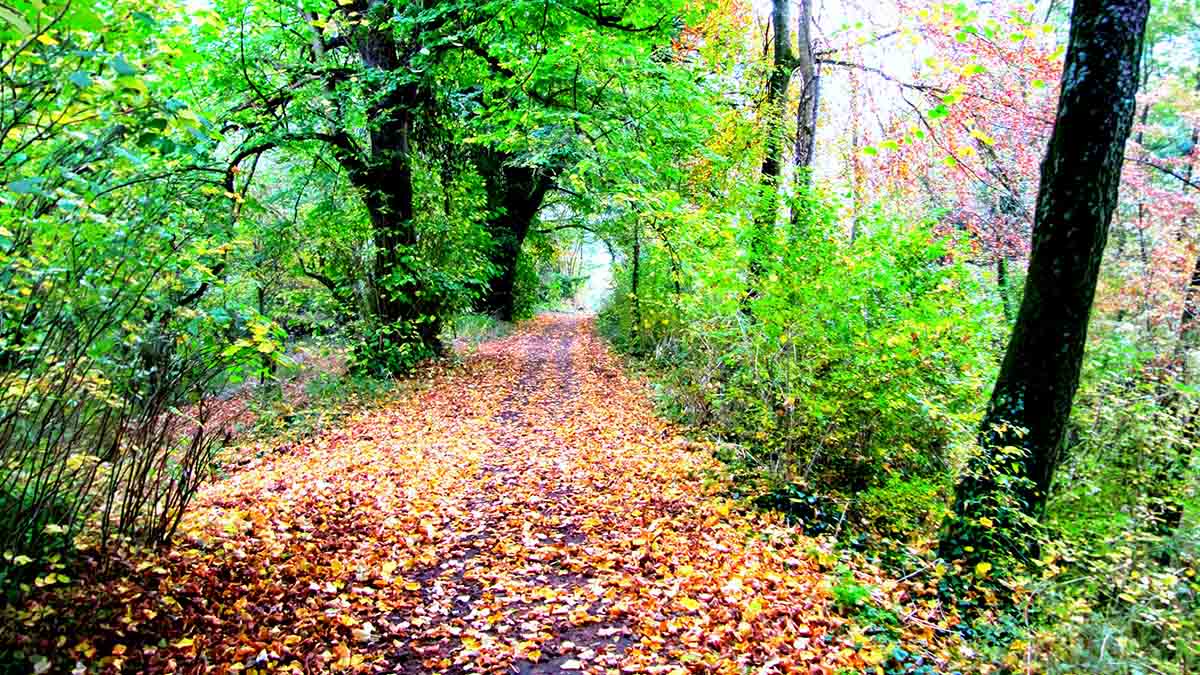
Behind the bridge I see the Walk
With tall and stately trees,
Where oft we gathered chestnuts
‘Mid ferns up to our knees.
The Convent where the good nuns dwell
Is standing quiet nearby:
Its belfry there I plainly see
Dark against the sky.
And now I’m up in West Street,
And there is Ivy Lodge,
The hideout when boys mitched from school,
Where pursuers they could dodge.
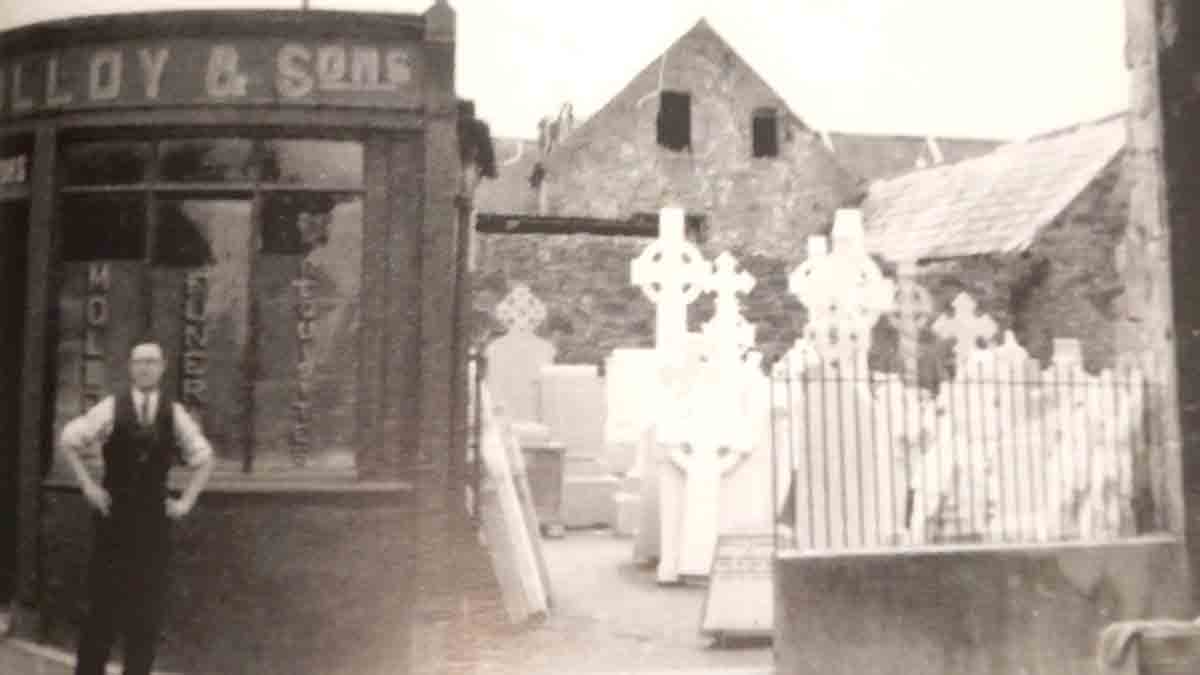
I now look in Molloy’s stone yard,
There are statues there galore.
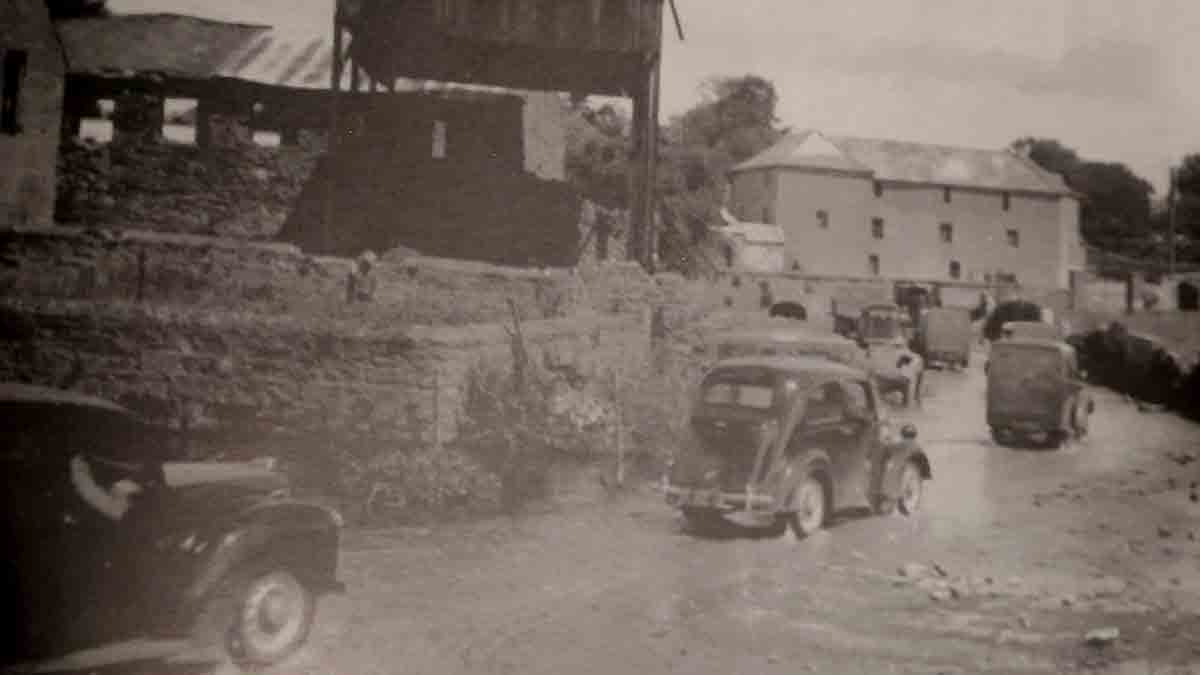
And further down I see the cars
Drawing grain to Pilsworth’s store.
I see the Brothers’ big brown doors
Where we went in for years,
The best days of our lives, no doubt,
Whatever about the tears.
I hear the sound of Nolan’s saw
Buzzing o’er the town,
I watch the dear old creamery cars
Jogging up and down.
There by the churchyard railings
I see the little school,
And the old familiar houses,
From there down to the Cool.
There’s Cass’s with its apple trees
Across at the other end:
The Mecca of the schoolboys
Who had a coin to spend.
And now I’m up in Green Street
There by the Concert Hall.
And o’er the road is the Parish Church
Where the priest baptised us all.
The barracks and the courthouse,
And the Terrace with its steps,
I could never say how many,
For we took them in broad leaps.