


By John Fitzgerald

(Part four)
Concluding the story of Callan (with a special focus on Upper Bridge Street) in Seamus O’ Brien’ s youth. Parts one, two and three can be read elsewhere on the Observer website
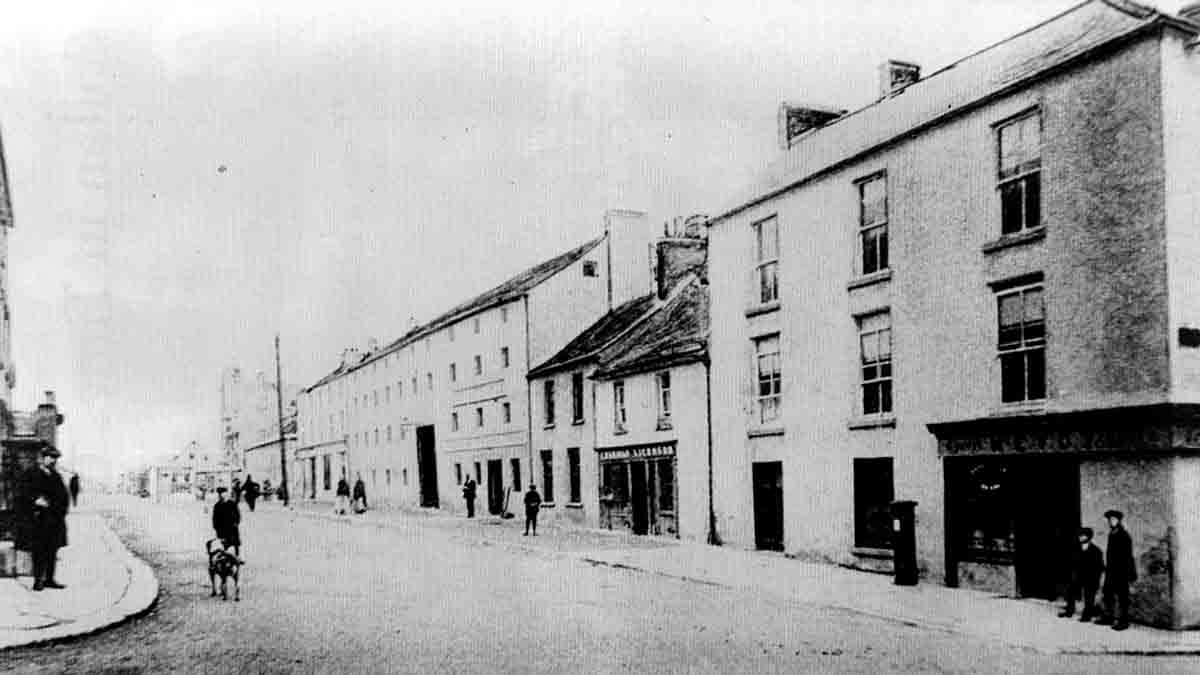
In number twenty-six Upper Bridge Street lived a Mrs. Shelly and her son, Jack. Mrs. Shelly’s maiden name was Hoban and she was a direct relative of the man who designed the White House in Washington DC. Christy and Peg Cunningham opened a pub in the building, a business that Michael and Ann Cunningham later took over and ran with equal success.
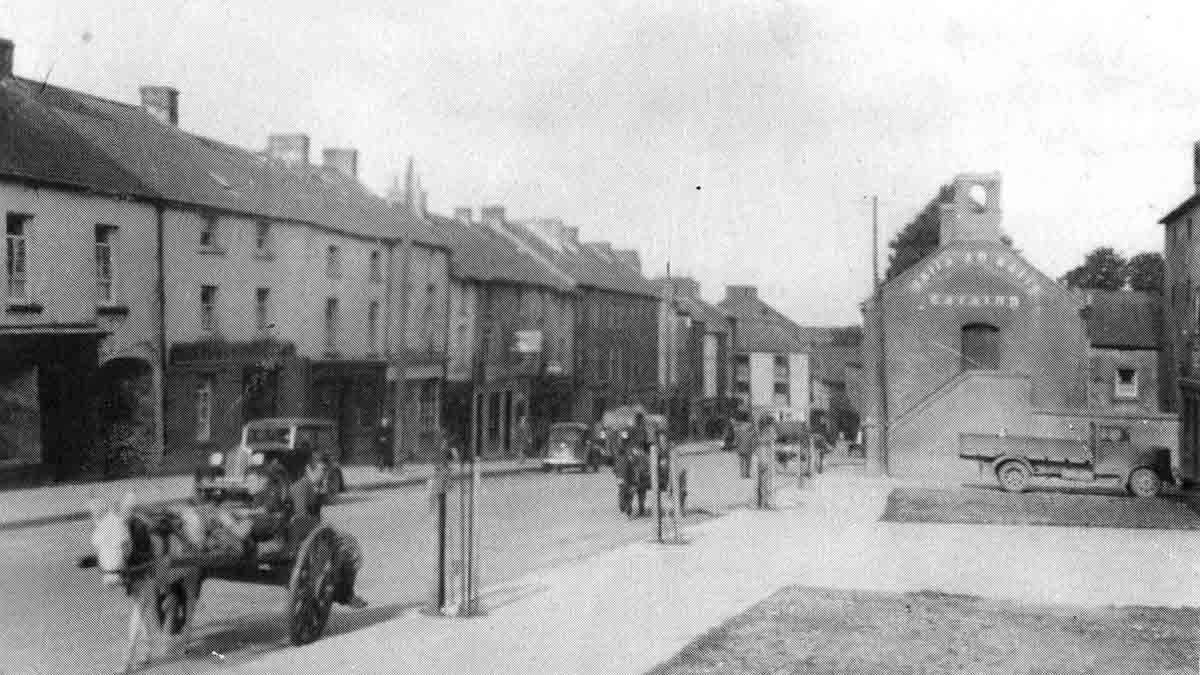
Horse drawn carriages could be hired at the stabling and livery establishment, whether for funerals or essential journeys, or recreational purposes.
With mechanization, a motorcar hackney business began to flourish as Seamus grew into his teens.
James and Mary O’ Mahoney’ s butcher shop had all the bloodied hunks of meat displayed prominently, both in their windows, which had no glass, and hanging from hooks outside the entrance to their premises. Pigs’ heads and sheep’s heads abounded, long lines of chickens with their heads still attached, and occasionally rabbits, whenever poachers or wayward youngsters supplied these.
At that time, butchers proudly flaunted their meaty bits and pieces, with no need for fancy wrappings or tactful concealment of the butchering process. The eyes of the livestock remained in their sockets, staring at you from the side of the street as you passed.
To get around the problem posed by the absence of glass in the windows O’Mahony’s had wooden shutters that they closed after business hours.
Tommy Kearney of Green Lane delivered meat for O’ Mahoney’s in a sidecar to people in the surrounding countryside, taking orders for the following week from customers as he called to each household. This was a popular service, as many people lacked transport (horses and donkeys were expensive enough to keep) to get into town.
Two bakeries operated, and the aroma of newly baked bread was better than any appetizer for locals, especially after a hard day’s work when your stomach was rumbling. Dunne’s’ ran one bakery, and the Canavans, a gifted family of bakers, had established the one beside it.
The Canavans delivered bread to people in the district by horse and cart. The cart was equipped with a specially designed hinged box that contained a selection of rustics, loaves, and “ducks” for their loyal customers.
Mr. Jones, the fishmonger and green grocer would also ensure that you didn’t starve. His wife was a teacher in Windgap.
Not that there was much chance of starving in 1920s Callan. And if you had a sweet tooth then this was the street to be in…it had no less than three confectioners.
Margaret O’ Keeffe was a big hit with the kids. She stocked every known brand of sweet: “Rainbows” at twelve a penny; Peggy’s Leg at one shilling and two pence each, “Half-time Jimmy”- a twelve squared toffee bar, and minerals with different flavours such as lemon, orange, strawberry and raspberry. The bottles were three pence each and sported a notice cautioning: “Drink it here and leave the bottle”.
Margaret married carpenter Tom Maher of Kilsheelan, who, upon Margaret’s death, married Dick Fennelly’s sister, Kitty. He added an ice cream parlour to the premises. Bridie Townsend set up a confectionary at number twenty-three and also kept boarders. She married Johnny Tyrell of Ballylarkin, who would prove one of the LDF’s most committed and colourful recruits during the Emergency.
Kate Maher and her sister ran the smallest of the confectionaries. The sisters proudly displayed their name in Irish over the door: “O Meachair.” Their brother Jim lived with them for a while. He had lost a leg fighting in the War of Independence and had to get around with the aid of a stick.
Next to Kate’s premises was Mick Joyce’s newsagents shop. Mick Joyce was a pillar of the local community. A born businessman, he also managed an insurance agency and acted as an agent for the Cunard and White Shipping Lane. He was kept busy, with so many young men and women of the district opting to emigrate when their economic fortunes took a turn for the worst.
Mick was a lifelong hurling and football fan and appeared in a rare photograph of a GAA match… standing just inches from the famed Michael Collins.
So Upper Bridge Street in Seamus O’ Brien youth and childhood was, one might say, a microcosm of the Irish Celtic Tiger economy that lay far in the future.
A source of great comfort to Callan men in those far-off misty monochrome days was the fact that the seven pubs in Upper Bridge Street doubled as groceries, so they had a perfect excuse to be in the pub.
They might tell their wives; quite truthfully, that they were dropping in buy a head of cabbage or a loaf of bread…and could then relax over a pint or two or a “ball of malt.”
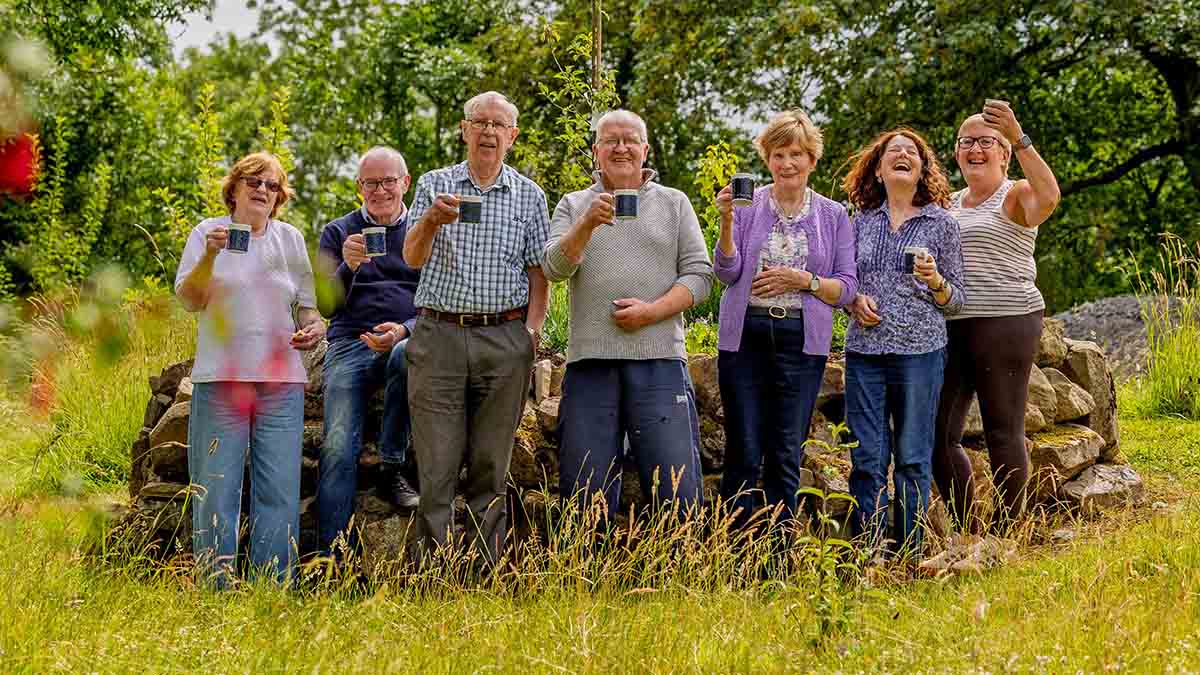
Seamus’s friend and fellow community activist Sean Holden sighed when I broached this captivating aspect of Callan’s fading heritage.
He intoned sadly: “Excuses like that don’t wash anymore. Women can’t be fooled as easily as that now. The town has changed so much, those people from back then wouldn’t recognise it. Different times, boy, different times!”