


By John Fitzgerald

(Part two)
In his childhood, the future newspaper correspondent and historian Seamus O’ Brien ran errands for a Miss Phelan to McEvoy’s shop on the West Street side of the Cross in Callan, where Barrie Henriques’s pub and Mellow’s restaurant stood in later years; and to the post office and grocery shops. He enjoyed these chores.
Having picked up Ms. Phelan’s old age pension at the post office, he bought oats for her hens, and then collected tea, butter, sugar, flour, and meat for her. She gave him a penny or two for himself, which he used to buy loads of sweets and toffees.
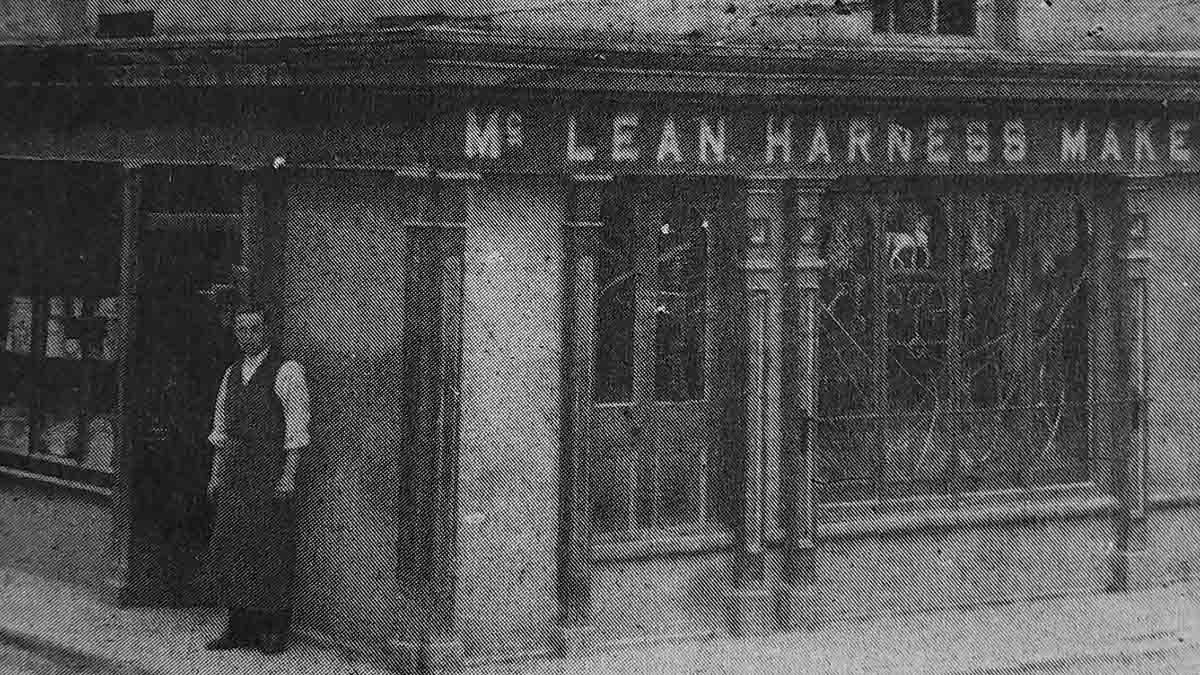
Bridget McClean’s shop at number twenty-seven sold groceries, vegetables, delph, and china, and ready-made harnesses. Her son Joe was a saddler, who had a workshop on Clodeen Lane, which runs parallel to Bridge Street from the town cross to the river. In past centuries it was the town’s main thoroughfare, a long forgotten and now difficult to imagine distinction.
Joe’s skills and the harnesses sold in his mother’s shop were in constant demand in an age where the horse still provided the main mode of transport.
At a later stage Joe McClean moved to Lower Bridge Street. His sister Alice served as assistant to the local postmistress, Ms. Paddle, upon whose retirement Alice was appointed to that much sought after position.
Alice McClean initiated a major change in Callan’s postal status quo by transferring the post office to a building beside Bobby Kerwick’s shop in Green Street, where it operated successfully for several decades.
The River and the Wells
When Seamus was three years old, in 1925, his father held him aloft outside the family’s newsagent’s shop to see a little piece of history in the making. Though he had no memory of this event, his parents told him about it when he was older. This was the rebuilding of the central arch of the big bridge, which had been blown up by anti-Treaty rebels during the Civil War in 1922.
The overseer on the job was, he learned, Stephan Cass of Green View Terrace. The building materials were all transported to the site on a huge wagon pulled by a steam engine. Traffic had to be diverted for the duration of the construction work, across the shallowest part of the King’s River, or, whenever the river rose to unacceptable heights, by Newtown and Mallardstown.
The bridge and the river would always be central to Seamus’s life in Callan. As a child, he loved running up and down the stone steps at the side of the bridge leading to the river. He had to climb the iron-gate, which was bolted most of the time for safety reasons with chain and padlock, to gain access to this adventurous pathway.
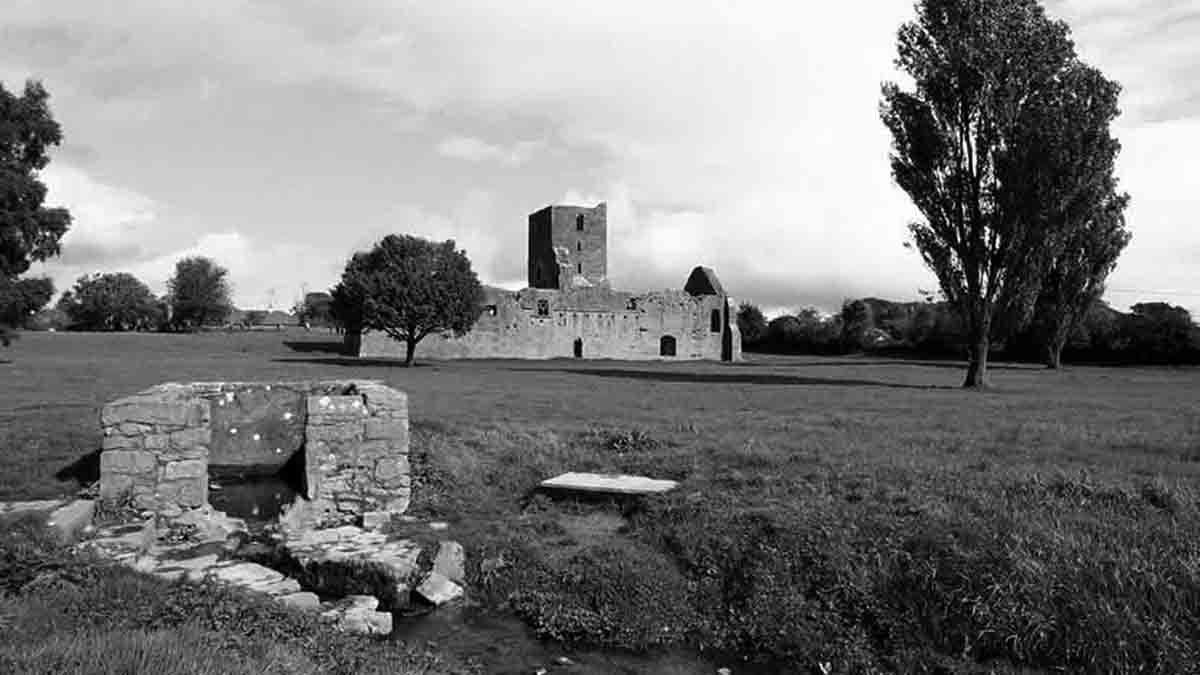
Townspeople used the steps to reach the river whenever they needed water for washing. For drinking water, prior to 1936, they carried their pails to the Abbey Well, a spot immortalized by local poet and journalist, John Locke, who pined for a last glimpse of the well before he died.
Exiled in far-off America as a “subversive”, Locke could only dream of returning and never got to see Callan again.
The Battle of the Buckets
Seamus referred in his diary to a row that erupted in the early 1930s at the Abbey Well between a group of women and that became known as The Battle of the Buckets. An unfortunate misunderstanding provoked the incident.
On the eve of a Corpus Christi procession in the town, some cattle being herded through the streets took a shine to ivy wreaths that women had proudly displayed, pinned to their front doors.
Not seeing the cattle eating the ivy, the women suspected that certain other women they knew, jealous of their lovely wreaths, had torn them down. The day after the procession and mass, the aggrieved women confronted the ladies they wrongly supposed had slighted them when they gathered at the Abbey Well for water and began belting them with their buckets.
The startled and completely innocent ones fought back, and a ferocious struggle ensued, with dozens of women clashing, using the buckets.
A young Philip O’ Keeffe of Bridge was picking mushrooms with his pal Sean Holden in a field adjoining the meadow and the two boys decided to investigate after hearing the loud racket.
When they saw the women clashing, they scampered home excited to tell their parents. The battle fizzled out only after the intervention of a nun and a friar, who came running across the meadow, gesticulating frantically and calling on the ladies to stop fighting. The two peacemakers negotiated a ceasefire and confiscated the buckets.
Seamus carried many a bucket of water from the river, and it was in the course of one such chore that he caught a fish in the bucket, the only one he caught in his life.
In Seamus’s childhood, Maher’s, Canavans and Dunnes in Upper Bridge Street had water pumped into their houses from the river. Each of these families had wells in their backyards.
But the quirkiest and most memorable of the wells in the street for Seamus was the one at Kerkick’s, because it was quite literally inside the house! It was located under the kitchen floor, and a wooden trap door had to be opened to allow townspeople fetch their water from it. Neighbours called at all hours of the day and night to draw water from Kerwick’s kitchen.
The trips to the river and the use of the backyard wells and Kerwick’s kitchen became unnecessary in 1936 when Callan had a much-needed water supply installed.
In the same year, the building of a less than edifying and primitive looking public toilet overshadowed Seamus’s beloved steps to the river. Despite its crude nature by modern standards, this wooden hut by the river was deemed a very necessary provision in an era when many Irish households had no toilets, inside or outside.
To be continued…