


By John Fitzgerald

(Part Two)
(The Gáirdín an Ghorta Farm and Folk Museum at Newmarket is drawing visitors from all over the South East, with its vast collection of exhibits that shine a light on Irish life through the decades. Part One can be read on the Observer website).
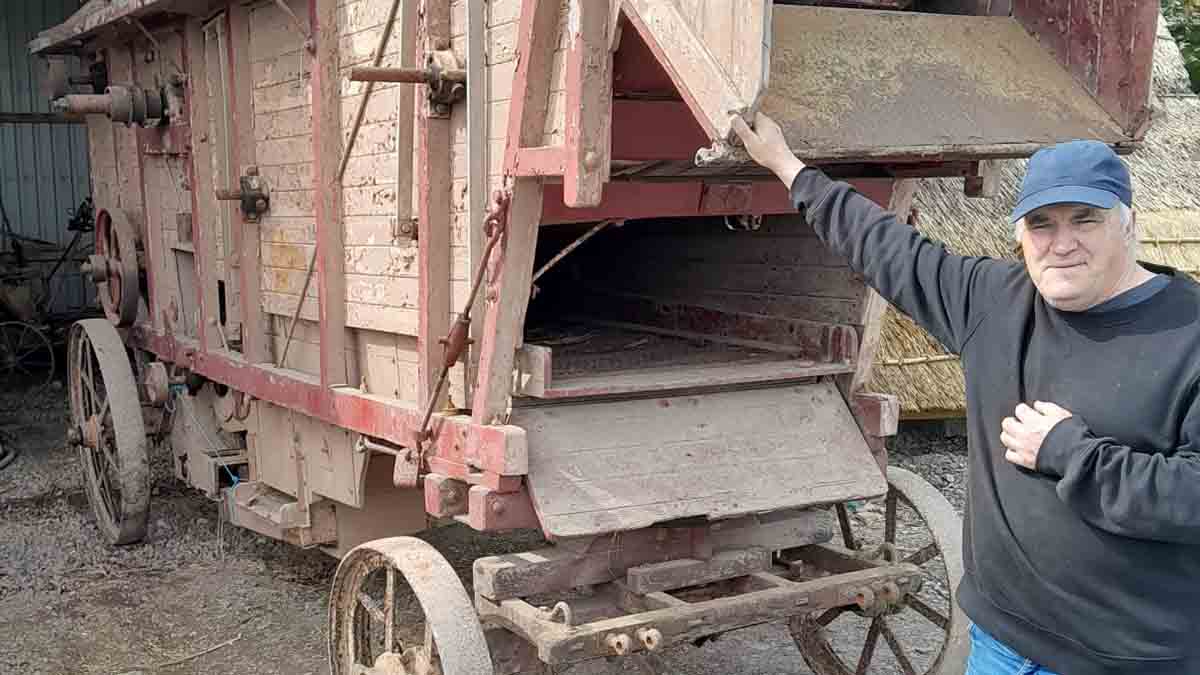
Among the must- see exhibits at the museum is part of a threshing set and curator Willie Barron is always happy to recount the story of this machine that helped to modernize farming as well boosting community spirit in the countryside.
A Scotsman, Andrew Meikle, invented the threshing machine in 1784. Its arrival was deemed a mixed blessing because, while it eased the workload of farmer and labourers, it also removed the necessity for large numbers of men to use flails to manually separate grain from straw.
Like any technological advance, it caused upheaval and social unrest, which eventually gave way to an acceptance that the new machine would benefit agriculture
Willie recounted how the crop was fed into the machine, with the straw dropping through it unto the earth underneath.
In Ireland, threshing days doubled as occasions of revelry. They brought communities together in a kind of rustic Golden Age that survives only in photo albums and ancient film reels.
Threshing dances livened up quiet country districts as celebration followed the lumbering engines across the land.
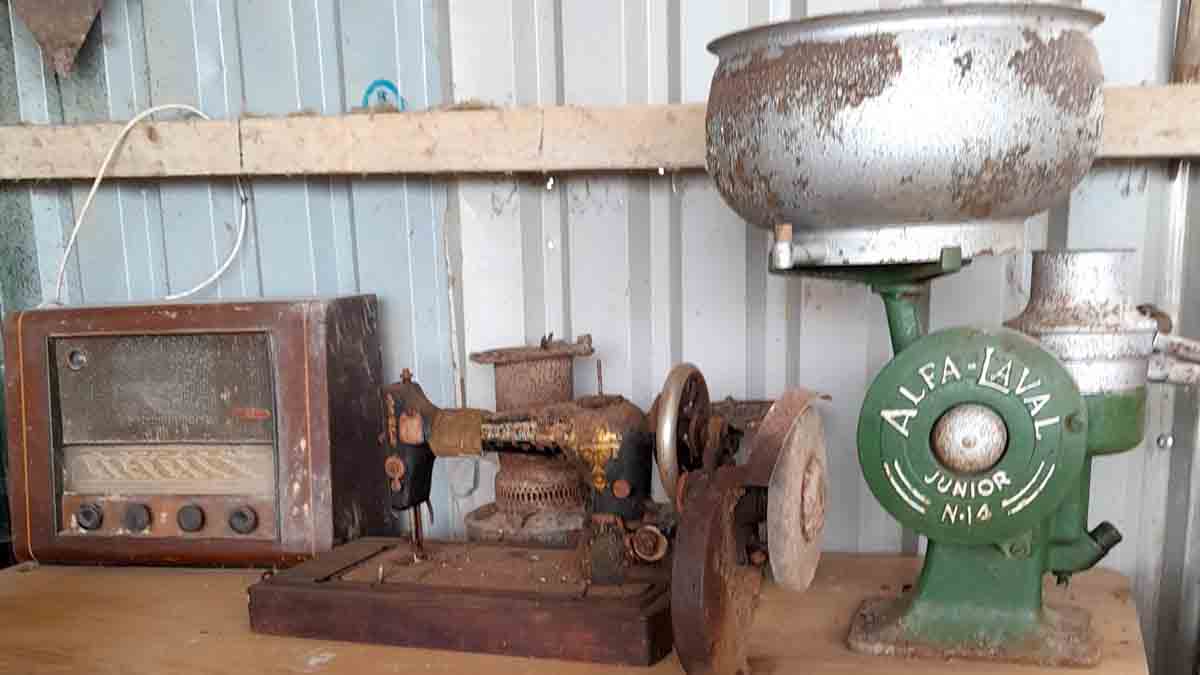
Elsewhere in the collection I saw a butter churn, into which cream was poured and mixed to make butter. In the old days, people on farmsteads took turns at the butter making. Everyone chipped in.
A Singer sewing machine, now fallen silent, lay near an old washing stand from an era before running water in most Irish households, rural or urban.
Willie showed me a cattle trough with a strange history. It had originally been part of the fuel tank of a German Word War Two bomber aircraft, jettisoned over neutral Ireland to lighten the aircraft’s load.
An enterprising farmer found it on his land, thought it would make a nifty feeding trough for his herd, and promptly pressed it into service.
It fed hundreds of cattle before finding its way into Willie Barron’s collection. Another exhibit with a military provenance was a sinister looking flamethrower, once used by the American army in the jungles of South East Asia, before journeying to Ireland and into the ownership of a farmer who found it handy for burning furze bushes.
Staying with the military theme, not far from this weapon of war turned farm tool, was a spike once used by the War of Independence IRA. The men of the Flying Column would leave several of these spikes on a road… either to puncture the wheels of oncoming Tan vehicles, in preparation for an ambush, or to block or delay enemy traffic.
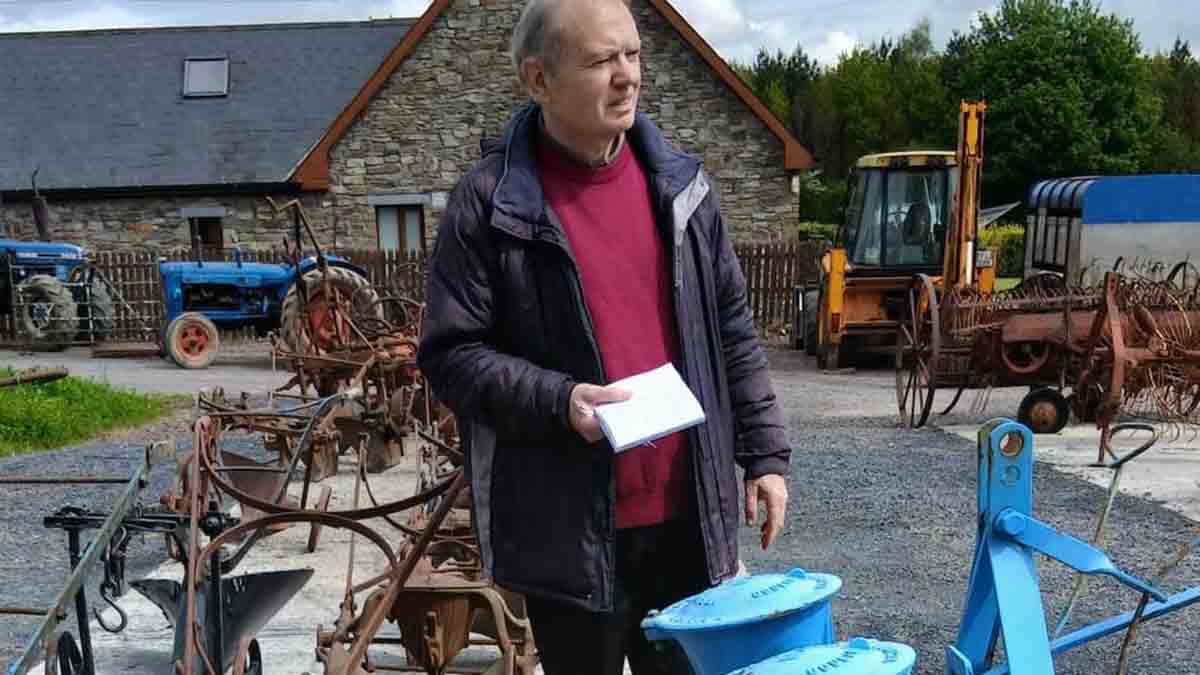
The Great Hunger is a subject close to Willie Baron’s heart, and two cast iron cauldrons form part of a growing collection dedicated to that defining event in our history. Colloquially known as “famine pots” these once fed soup or stirabout to thousands of people in workhouses. Though many people hated having to enter a workhouse, it was often their only hope for staying alive.
After the famine, the pots ended up on farms, serving either as grain receptacles or feeding troughs, though thankfully some of them were rediscovered and are now, like the two at Newmarket, available for public viewing. Large wooden ladles and mixers used by the cooks in the workhouses stand close to the pots.
Mention of the famine inevitably led me to ask Willie about the nearby Famine Garden, created as a metaphor of Irish history, and he kindly showed me this remarkable act of homage to the victims of that catastrophe.
To reach the garden itself, you undertake a short but unforgettable journey through a defining episode of Irish history. There are symbolic pathways and milestone along the route.
The walkway splits into two jagged rock paths; one is the path of the living, the other that of the dead, with yew trees flanking both of them.
Then you reach the valley of sorrow sand the bridge of tears, recalling the horrors and grief of our ancestors. Those who died, either in Ireland or on the infamous coffin ships, are remembered, as well as those who reached a new life beyond our shores.
A grove of Sycamore trees at another point reminds us that the famine had a context, that of oppressive colonialism. There are symbolic pointers to the future and to the restoration of community spirit, and the journey through time ends on a note of hope, with flowering cherries and bulbs to brighten the scene and restore one’s shaken faith in humanity.
All roads could be leading to Newmarket as word of the new museum spreads.
You can learn more about this extraordinary collection at Willie Barron’s new Facebook page: The Gáirdín an Ghorta Farm and Folk Vintage Museum. And if you wish to visit the museum just Whats app Willie at 086-8394349 to arrange a viewing.