


We tend to think of mathematicians and arty folk as being polar opposites. The life of Kilkenny man Micheál Brennan proved otherwise.
Micheál, who died last November; was a mathematical wizard; but he had an equal passion for art and culture.
Born in 1943, he was a lifelong achiever, early on securing a Mathematics and Statistics BA, followed by an MA in Mathematics from Maynooth.
From the outset his approach to education was at odds with the prevailing view that you had to beat sense, and knowledge, into pupils.
On his first day teaching at a Kilkenny Secondary school, he sensed the climate of fear the moment he arrived there. It was stifling and all-pervasive, matching the expressions of mortal dread in the classroom.
He abhorred the use of sticks, canes, and straps to beat pupils. He believed- and we now accept this as fact- that such treatment of schoolchildren could have damaging long-term effects. Micheál’s staffroom colleagues jibed, urging him to “join the club’ but he declined these offers with a remarkable tact and decorum.
Worst of all, he thought, was beating a pupil for slow learning. He went out of his way to help boys who struggled, instead of penalizing them.
Perhaps this was why, in addition to the dizzying array of academic luminaries who lined up to say “goodbye” after his passing, an even far larger contingent of past pupils turned out to say “thank you” to a gifted educator
After two years of teaching in Kilkenny, Micheál took the boat to Manchester in 1968 where he worked as a computer programmer. His grasp of mathematics proved a godsend in that role.
But he felt the pull towards academia and returned to education, landing a position at Salford College of Technology, and later a teaching post at Manchester Free School, which had an ethics-based approach to teaching.
During his spell in Britain he supported campaigns and initiatives to improve the quality of people’s lives, especially those afflicted by homelessness.
He backed the civil rights cause in Northern Ireland. Speaking out could, he found, involve taking the lonely road- but he believed it was often the only road, and the right one, to take.
In 1975, he arrived back in Ireland, and taught at a secondary school in Athlone, before securing a post in 1985 as a lecturer in Mathematics and Computing at Waterford Institute of Technology, which later became South-East Technological University (SETU). He continued to lecture there until 2009, when he retired.
Micheál’s educational career left a lasting impact on his students, whether at second level or in the hallowed halls of academia and in 2024 he was awarded Emeritus status in recognition of his achievement.
But he had no notion of giving his ever-active intellect a break. While at WIT he had undertaken a Ph. D on “the structure of interlace in Insular art c. AD 400–1200.”
This fulfilled a lifelong dream he had of exploring elements of our ancient Celtic past, partly inspired by his father’s profession as a monumental sculptor. His work with Celtic Crosses had fired Micheál’s imagination. He had helped his father, Daniel, with odd jobs in the workshop, captivated by the masterful stonework.
He was attracted to the study of Insular (or Hiberno-Saxon Art) by its emphasis on interlace decoration, examples of which are to be found in illuminated manuscripts, carvings, metalwork, and stone crosses. Then, drawing upon his vast experience and research, he sought to apply mathematics in the study and appreciation of interlace decoration.
In “retirement” his studies took him ever deeper into his chosen field: He served as a Research Associate in the Department of History of Art and Architecture, the Department of Philosophy at TCD, and in the School of History, Philosophy and Social Sciences at Bangor University.
He visited countless sites, especially old cemeteries, in search of heritage gems, did further exhaustive research, and lectured widely, as well as publishing papers on his subject.
His life became a whirligig of visits to seminars and conferences. As in the classrooms of his early career, he strove to simplify the complex, his objective being to make the intricacies of Insular Art accessible to the wider public.
Micheál felt strongly about the preservation of Ireland’s priceless built heritage, and at one point he campaigned to save the Viking settlement at Woodstown, which was under threat. He was equally passionate about his native City’s architecture and antiquities.
He managed to pursue an active social life, somehow finding the time in between his travels and studies to attend hurling matches, play the spoons at musical sessions, or to be with his family and friends.
In his final months, despite a serious illness, Micheál liked to travel from his home in Waterford to join the Kilkenny Heritage Walkers on their weekly tours. His own presentations to the group were avidly awaited in the city.
I attended one of these and it was a joy to hear his commanding but gentle voice elucidating overlooked or misunderstood archaeological minutiae.
The talk/walk commenced at Kilkenny Castle where he cast new light on the scores of time-worn carved faces on the walls and gave a riveting account of how the Moorish staircase was added to the castle, elaborating also on the origin of a classical symmetric entrance.
From the castle he took us on a most perceptive examination of brickwork in old buildings along the Parade and in St. Kieran’s Street.
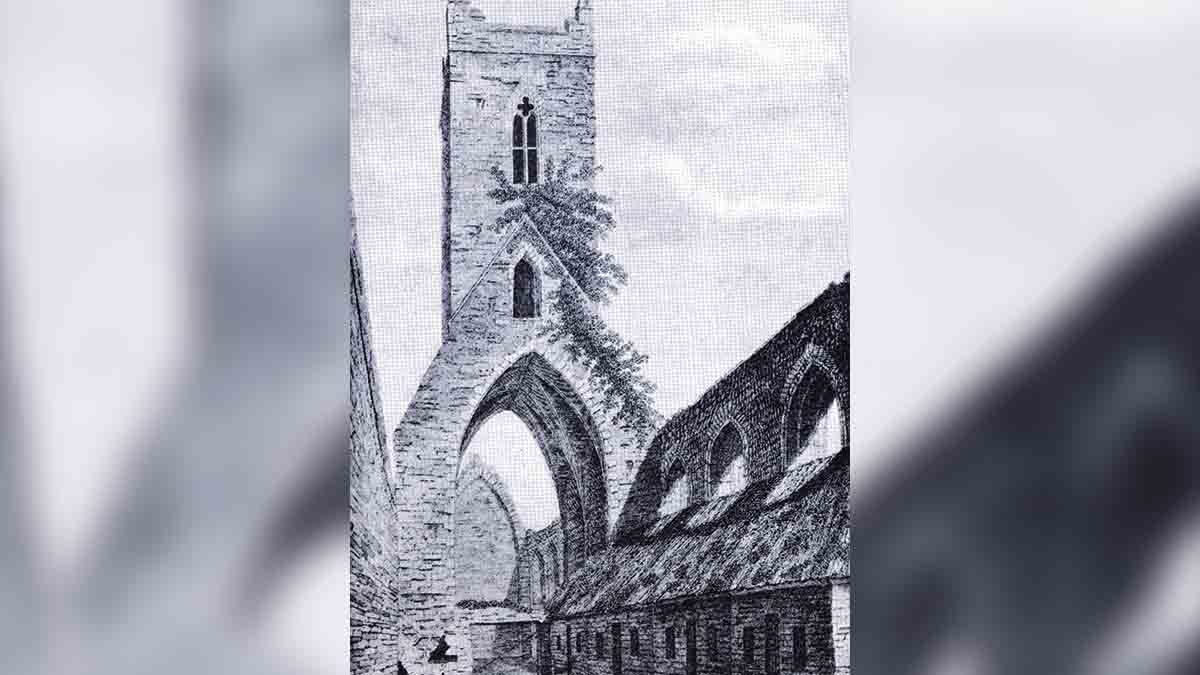
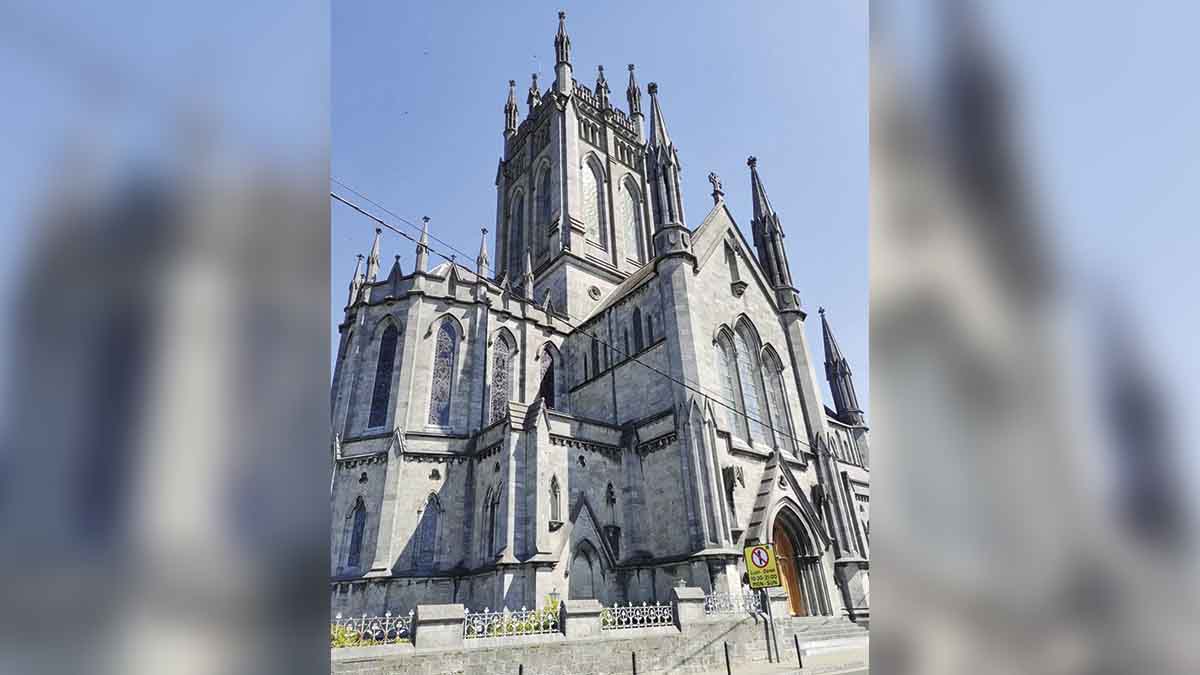
For other walks he expounded on the ancient face sculptures at St. Francis Abbey and outlined the significance of interlace panels at St. Mary’s Cathedral. He had a special place in his heart, he said, for the “rescued” Madonna of St. Mary’s, so-called because a local woman saved it from a demolition site.
He remained committed to unravelling our Celtic past right up to his final days on earth. Just weeks before he left us, Micheál sent this text to the Heritage Walkers group. He had just visited another historic building in Kilkenny:
¨…Looking at the inside of St. John’s this morning I dreamt of doing one last talk on sculpture and the odd bit of brickwork, all in St. John’s Parish. But I am starting a course of injections soon so that might put an end to the dream…”
If anyone ever deserved an “eternal reward” it is Micheál Brennan, an educator whose multifaceted life enriched, and transformed, so many other lives.
(Predeceased by his father Daniel, mother Ellen and brother Seamus. Much loved father of Kate, Amy, Deirdre and Rachel. His daughters and their mother Breda, his sister Margaret, sons-in-law Stephen, Dave, Ger and Luke, grandsons Max and Otis, sister-in-law Helen, brother-in-law Jim, nephews, nieces, neighbours and many friends)