


By John Fitzgerald

The Kilkenny Heritage Walkers honoured a very special woman on Saturday.
Bridget Woods (nee Corcoran) who was born in 1879 and died in 1965, never sought attention or glory, but her life exemplified a rare devotion to the county’s sporting heritage.
The walkers gathered at her graveside to pay homage, and the tributes were heartfelt.
We’ve heard and read about the great hurlers who achieved stardom, at local, county or national level. But their success, public and recognized- is not the full story.
Behind the visible and mighty Clash of the Ash in this county, there were sights and sounds heard by few…the squelching of cloth being pressed and squeezed, and the tumble of water into a tin bathtub.
For more than 50 years, Bridget Woods washed, cleaned and darned the jerseys of hurlers at her Green Street home.
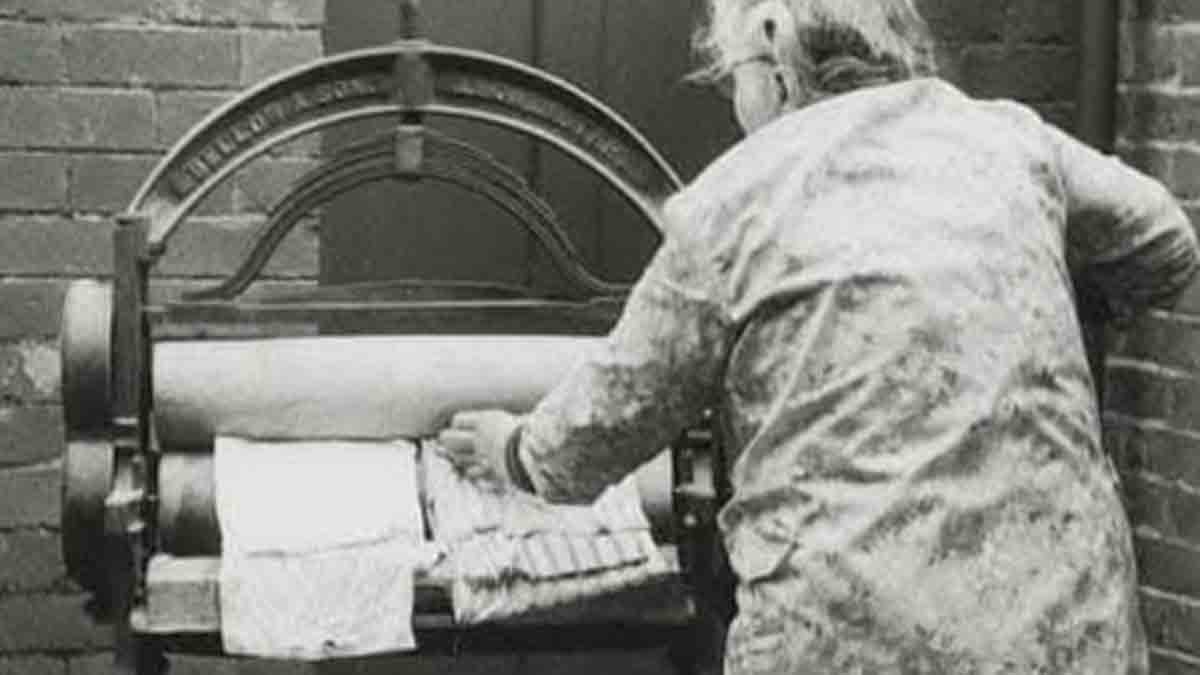
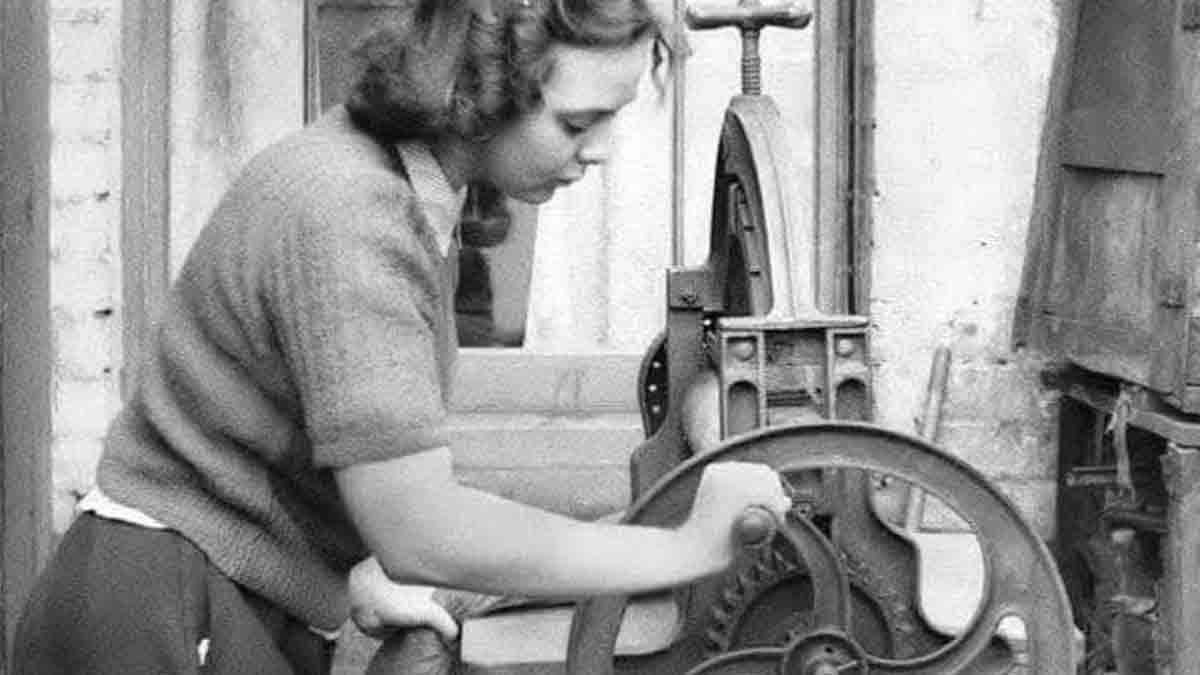
In those far-off days, when the spin drier we take for granted was unheard of, Bridget had a cast-iron mangle, one of the few in the area. She spent hours at a time washing the hurling garb and running it though the two rollers on their sturdy frame. (I include two pictures of a mangle in use.)
Week after week, in all weathers, she ensured that the players looked their best… even if their jerseys would soon be back on her doorstep for another wash.
The public well knew and appreciated the talent on the pitch, as did local media. But they didn’t see Bridget working late into the night amid piles of sweaty, mud-caked, and bloodstained apparel.
After the excitement of a game, when the roar of the fans had abated, and they headed home or to the pubs she was the one who set about restoring the colour and insignia to cloth smudged in the fray.
Bridget’s story is one that might have receded into the mists of time but for the mindfulness of a woman living in Galway. Her mother, Kathleen Moore nee Maher (1942-2024) knew Bridget well when she lived in the same street as her in Kilkenny.
The woman contacted Seamus Reade, secretary of the Kilkenny GAA County Board, telling him Bridget’s story, and asking if something could be done to improve the condition of her grave.
Kathleen Maher recalled Bridget Woods as a kindly woman, affectionately known to the Maher children as “Gaggy.”
Bridget’s marriage was childless, but she looked after Kathleen’s children for a period.
It was after Bridget’s husband died at a young age, that she started on the jerseys, most likely at some point in the 1930s.
Kathleen Maher remembered her as someone who embodied community spirit at its finest, but especially for her tireless devotion to a demanding and sometimes gruelling task that, even in those tough times, people found daunting.
After every game, the bundle of knitted sports clothing…begrimed and bloodied…would arrive at her house. For hours she’d wash, press, and flatten, until every jersey was in tiptop condition, ready for another Gaelic Athletic Showdown. She’d mend tears to the material and once washing was complete the darning would start.
And it wasn’t the lightweight jerseys of this century that she had to contend with. They were thick and heavy long-sleeved ones, resistant to washing. Just turning the handle to get the fabric through would strike people today as a forbidding chore, but Bridget took it in her stride.
She was never known to complain. When the weather wasn’t suitable for outdoor drying, she dried the jerseys by a big open fire.
She drew knowledge and insight from her work. She had listeners enthralled when she rattled off the names of all the players, which she knew by the numbers on their jerseys, and she could divine how a match had gone, and who had got the worst of the rough-and-tumble on the pitch by the state of the knitted cloth.
Like a mystic, she could hold up a jersey and tell the story of a game without having setting foot on the pitch. When she wasn’t working you might see her standing outside her front door, awaiting news of the latest match.
When she was finished with the jerseys, she placed them in a leather bag for collection. Being a devout woman, she included a bottle of holy water with them, invoking God’s blessing on the lads, to keep them safe as they did their county or district proud.
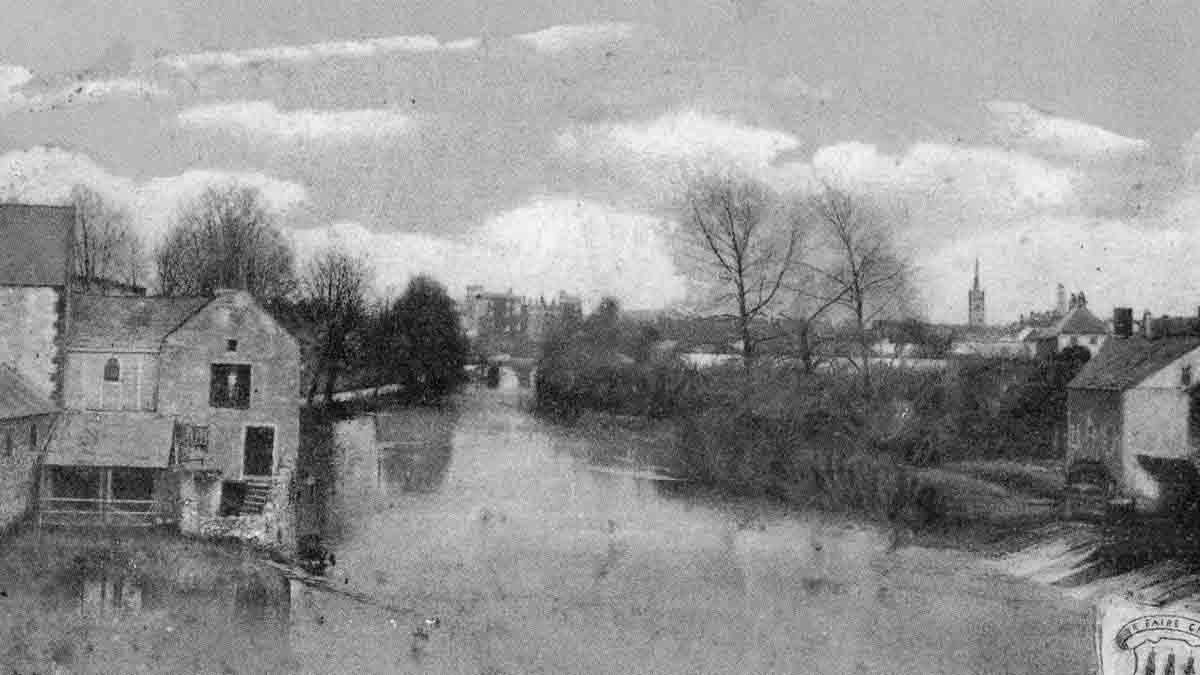
An abiding memory of Kathleen Maher was of rescuers taking Bridget from a top storey window of her house into a boat during the 1947 flood. The major weather event brought out the best in the people of Green Street, and other parts of Kilkenny.
The flood came in March after heavy snowfall nationwide that had persisted since late January. A warm spell started the thaw, which came too quickly for the country, and especially the rivers, to cope with.
The Nore was no exception. It rose to unprecedented levels. Many people had to be rescued from their houses and the boats, some towed by tractors, took them to safety. The boats had to avoid sheep and cattle swimming down Green Street, borne by the raging current.
Elsewhere in the city people mourned the loss of the Suspension Bridge at Talbot’s Inch, a legacy of the great philanthropist, Lady Desart
In Green Street, Bridget Woods was, initially, as shell-shocked as anyone by nature’s onslaught; but she didn’t panic.
After seeing to her own house, she assisted neighbours, helping with clean-ups, and consoling where she could. She was soon back to looking after the jerseys and keeping up to speed on the hurling scene.
The gathering on Saturday at Brigid’s grave in St. Kieran’s cemetery heard glowing tributes to her.
Marianne Kelly, on behalf of the Heritage Walker’s group, expressed the hope that Bridget would be honoured as “a quiet legend of Kilkenny’s sporting culture” and thanked those who had played a role in preserving her memory, in particular the Maher family and Ita Purcell of Greensbridge.
She had strong words of praise for the Kilkenny County Board of the GAA and its secretary, Seamus Reade.
Seamus had seen to it that Bridget’s grave, where her brother Denis is also buried, was given a long overdue clean up. It had become overgrown with weeds, the inscription on the headstone had faded almost to illegibility, and the stones were sinking.
On Saturday, its appearance was a credit to those who cared enough to intervene, as was the fine restoration work by Gargan’s of Friary Street.
Warm autumn sunshine favoured the gathering. It cast a gentle glow over Bridget’s resting place as the walkers dispersed.
“She deserves to be remembered”, one man opined.
Several heads nodded in agreement.