


By John Fitzgerald

(Part One)
A new museum in the heart of the county is drawing visitors from all over the South East. It nestles in the tiny village of Newmarket, and looks set to complement the internationally acclaimed Famine Garden- Gáirdín an Ghorta- which commemorates the Great Hunger of the 1840s.
The Gáirdín an Ghorta Farm and Folk Museum is a private collection started by local man Willie Barron, who has devoted much of his time in recent years to highlighting the multifaceted heritage of Newmarket and the surrounding district.
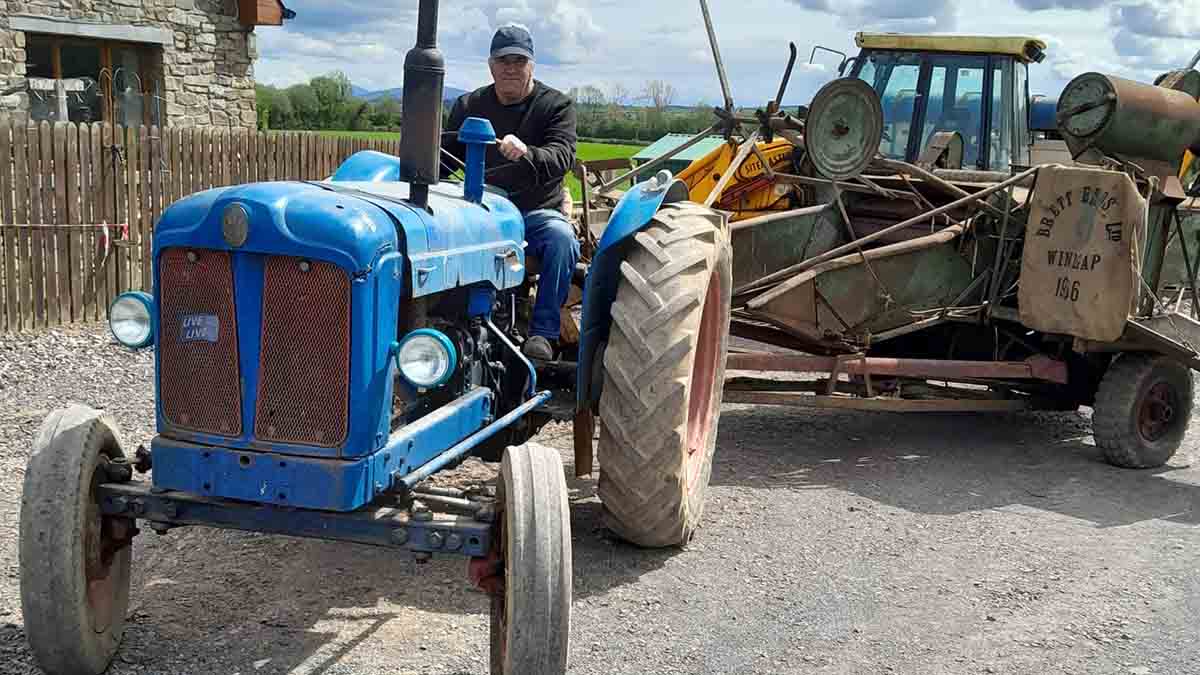
Willie has been collecting vintage farm tools and machinery for years but a few weeks ago, he decided the time had arrived to display the artifacts and share the priceless insights into our past that they provide.
“It’ll grow and evolve over the coming months,” he told me, and not a day passes without new exhibits taking their rightful place in the already impressive array.
As if to confirm this, a visitor drove into the yard in a large van from which he took two 1950s High Nelly bikes…donations to the collection.
The museum has proved a big hit with Men’s Sheds: People from those life-enhancing community hubs in Kilkenny, Waterford, Wexford, Carlow, and Tipperary are scheduled to call to Newmarket in the coming weeks.
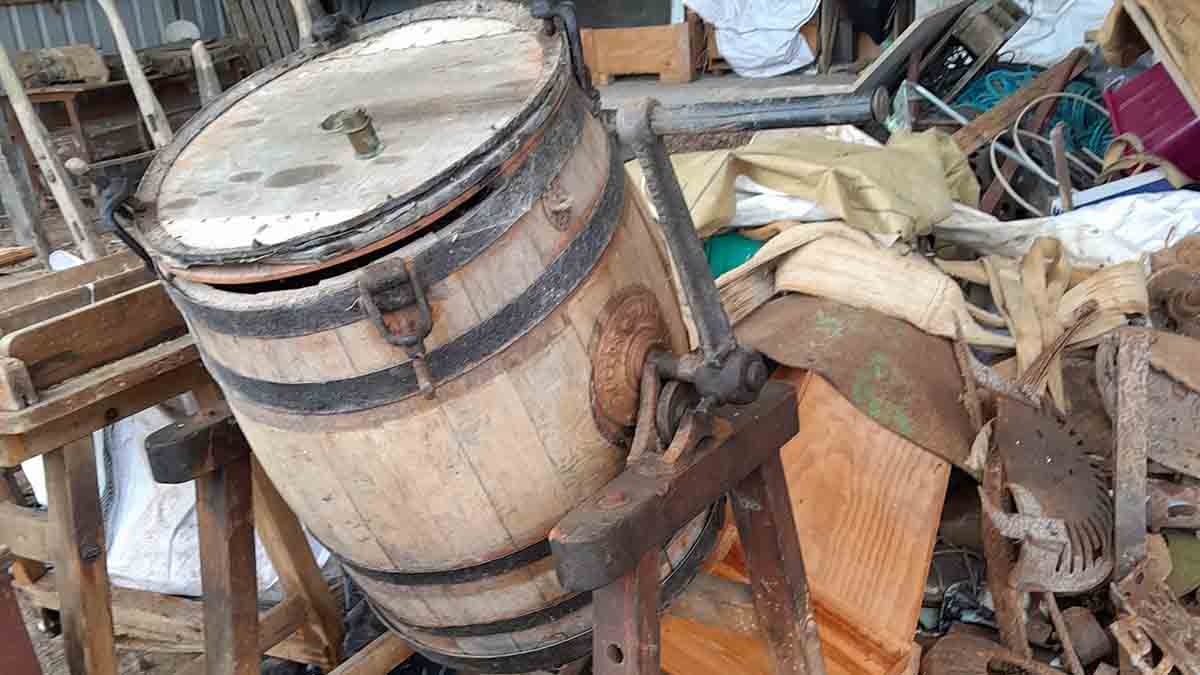
The collection isn’t confined to agricultural relics. Willie has a jaw-dropping assortment of exhibits that bring to life all aspects of daily life in a bygone Ireland, mainly dating from the famine era up to the 1970s.
Artifacts relating to the 1840s are especially poignant as the Famine Garden is just a few hundred yards away.
I called to see the collection last week. It was heartening to see another such museum in the county. A decade ago, the curator of the legendary Nore Folk Museum in Bennettsbridge, Seamus Lawlor, left this world, and his cultural treasure trove was lost to Kilkenny.
Now, Willie Barron has taken up the challenge and offered the county a much-needed repository of Irish tradition and memorabilia. It’s one that pays due homage to parts of our long, and often dark cultural legacy that we stand to lose without projects like his.
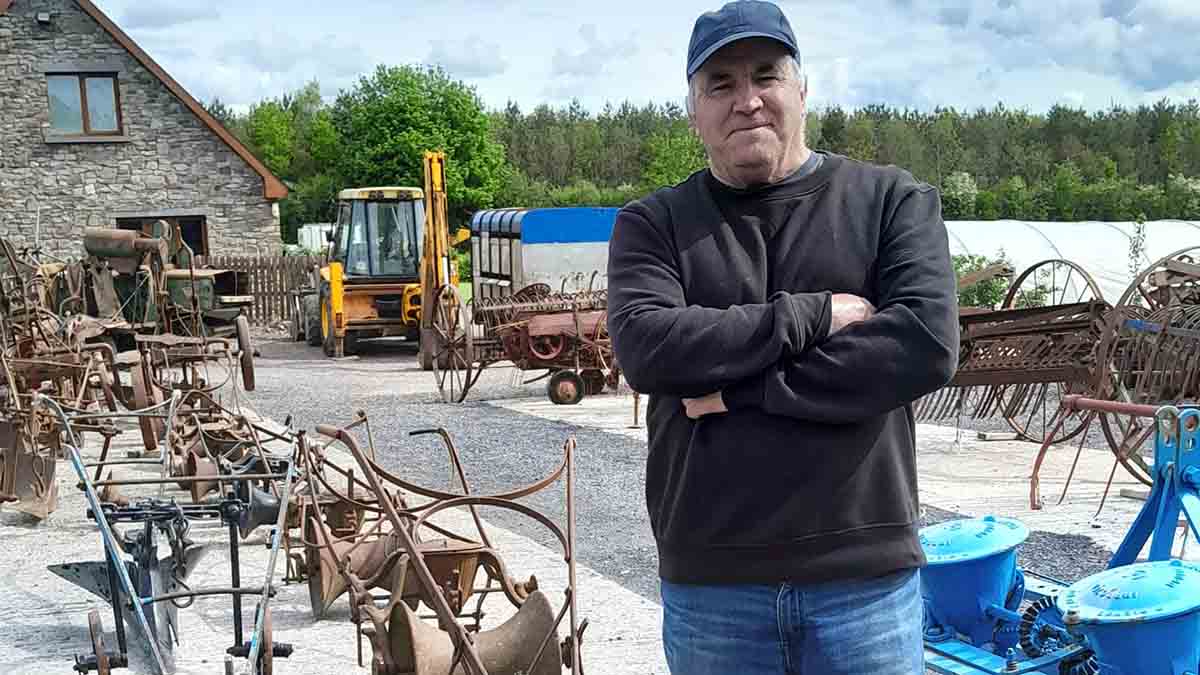
On entering the spacious yard adjacent to his home, I was struck by the sheer abundance of vintage gems, all carefully posed for inspection. First to catch my eye were three long rows of farm machinery, laid out neatly and evocatively, each telling its own story just by virtue of its distinctive form and presence…even before Willie himself began to expound in mellifluous tones on its provenance and the purpose it served in that “Other Country” of the past.
The curator gave an information-packed running commentary as he took me on a tour of the collection.
He revealed that Pierces of Wexford manufactured most of the farming exhibits. Founded in 1839, the Pierce Foundry was for decades the biggest maker of farm machinery in Ireland, turning out a wide range of ploughs, cultivation machines and threshing engines. Pierce Engineering continued to serve Irish agriculture until 2002.
Walking along the display line, I saw harrows, used to cultivate and break up the soil, a little timeworn but otherwise robust and intact. They shone forth in the weak midday sun, pulling you back into the mists of time.
A Swing Plough with no wheels was suitable for stony soil, and the Hay Car, Willie explained, conveyed the hay from the fields. The Hay Rake, as the name implied, raked up the hay to be made into “cocks’ in the fields. 19th century landscape artists loved to paint those bucolic haymaking scenes.
The Turnip and Mangel Seeder was a handy machine on the farm. It set turnips and mangels in drills, and two workhorses pulled the Potato Digger to perform its equally crucial role. The Swath Turner flipped over mowed hay to let the underside get a bit of air and sunshine.
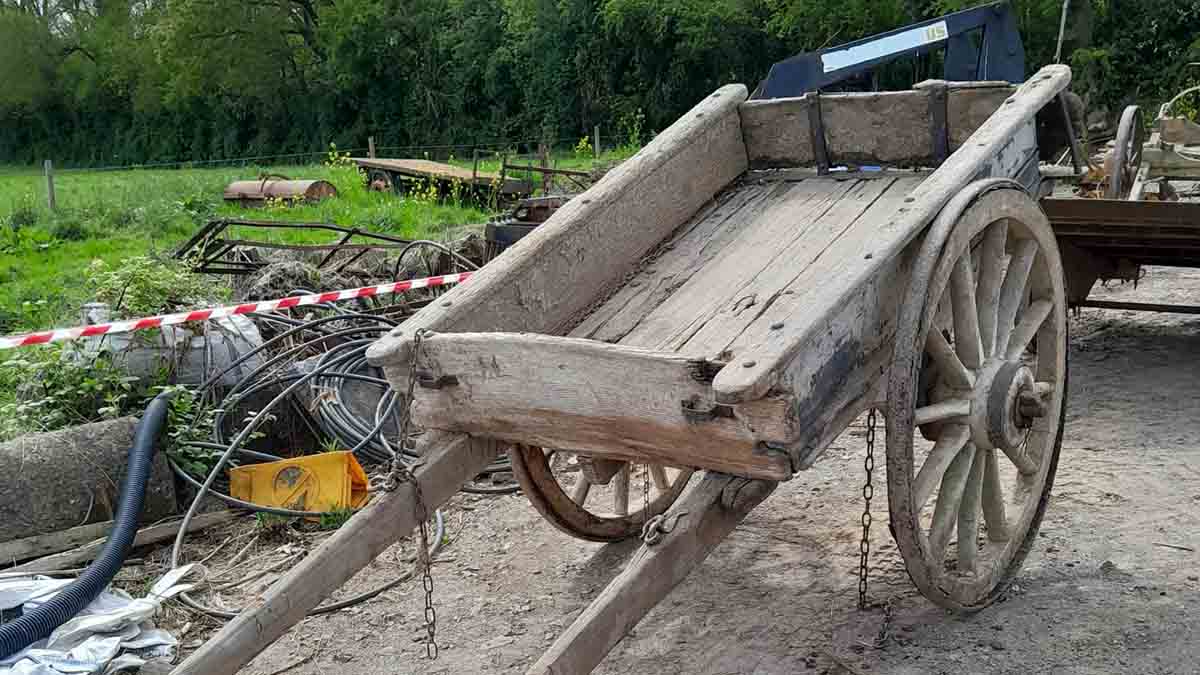
There were reaper binders, potato sprayers, and work carts, and Willie showed part of an old threshing set. I suspect that this will become one of his must-see exhibits.
Up to the middle of the 20th century, threshing was as much a beloved rural tradition as a farming method.
It brought rural communities together, with neighbours all helping each other as the threshing set passed from farm to farm.
(To visit the Gáirdín an Ghorta Farm and Folk Museum just Whats app Willie Barron at 086-8394349 to arrange a viewing)
To be continued…