


By John Fitzgerald

Callan had an impressive line-up for this year’s Heritage festival.
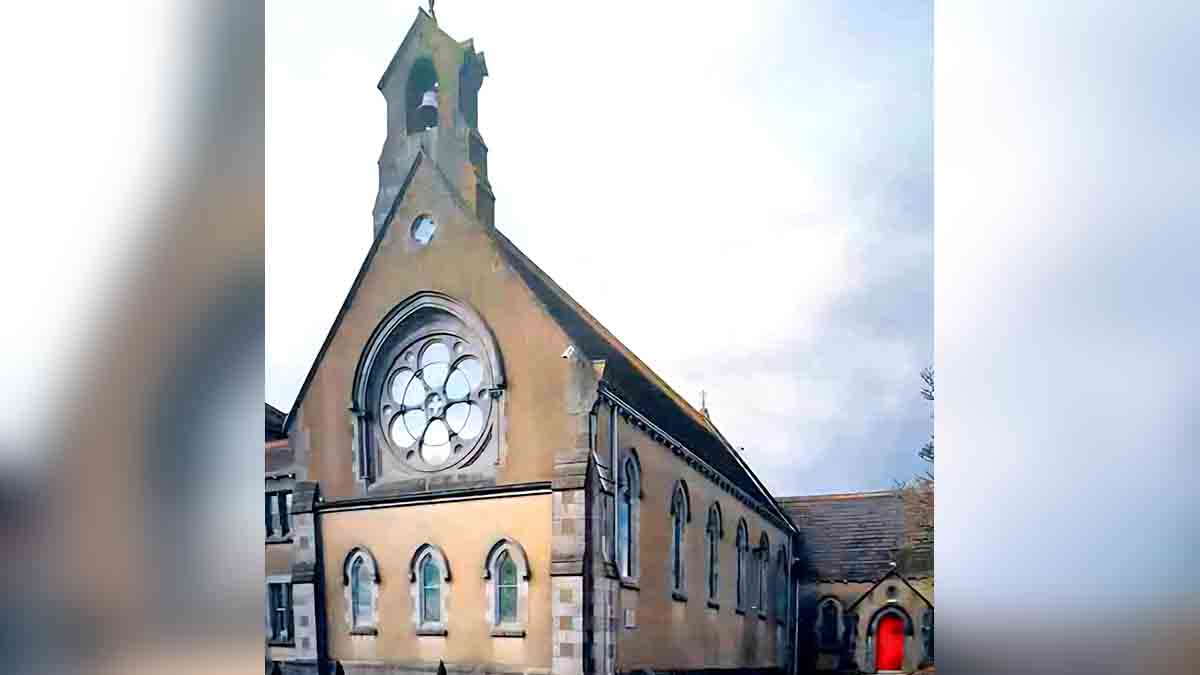
Two retired Mercy sisters gave a tour of the former convent chapel, a building hailed in the National Inventory of Architecture as a structure of Regional Importance due to its exquisite stone masonry, Gothic Revival design, and features that include ornate terracotta, superb limestone dressings, and some of the loveliest stained glass in Ireland.
A gathering of locals and returned emigrants listened enrapt as Sisters Ena Kennedy and Maria Goretti Comerford (who still reside in the Callan district) enlightened them about a place of worship that was central to the Convent’s spiritual existence for decades.
Sister Ena recalled how Catherine McAuley was inspired to start the Mercy Order and the great boost for education in Callan that followed the arrival of the first Mercy nuns in the town in 1872. This development was prompted mainly by the fall-out from the historic conflict between rebel PP Fr. Robert O; Keeffe and high ranking clergy.
The nuns stayed out of politics and got on with their mission. In 1881, a small functional chapel was built, but the devout women longed for a new chapel that would do justice and due reverence to the convent’s spiritual status.
Sisters Ena and Maria invited us into the chapel and painted vivid word pictures of the herculean, but ultimately successful quest to build the place of worship. After years of ardent fund-raising, dedicated architectural and construction work, and endless rounds of heartfelt prayer, the chapel was completed in 1906.
The nuns received an unexpected boost when the Archbishop of Sydney, Dr. Moran, formerly Bishop of Ossary, turned up at the opening ceremony. He had made a phenomenal voyage to support the nuns, and it was a good omen for the convent.
Among those fondly recalled by sisters Ena and Maria were the building contractor for the chapel, Michael Kerwick (who also owned the Steppes pub back then) and a host of Callan carpenters, builders, and other tradesmen who played a part in giving the convent its resplendent new chapel.
The construction team’s make-up reads like a who’s who of Callan’s finest tradesmen of that time, whose names live on through their descendents.
Sisters Ena and Maria were warmly applauded for their presentation and locals spent more than an hour touring the chapel, basking in its aura of peace and tranquility, conscious of the “Sale Agreed” sign on the grounds of the Convent Complex that signaled yet another big milestone in its history.
Elsewhere in Callan, elders of the district cast their minds back to a different Ireland. Joe Kennedy of Callan Heritage read locally composed poetry, while Philip Lynch regaled with a helping of witty anecdotes about 1940s farm life.
Retired publican Breda Somers recalled her first agricultural science lesson: In Fennelly’s courtyard she saw nature taking its course among the livestock.
Liam Rice, in addition to ably chairing the event, read from the writings of Kilkenny author/poet/artist Judy Rhatigan about everyday life in 1950s Ireland. In one book, Judy writes of the legendary Moat carnivals in Callan, describing how lads without ticket money for the dance in the marquee would ask pals to stage a mock fight.
When the stewards were busy breaking up the fracas, the other lads would sneak in and within minutes they’d be dancing around the platform
The bakery
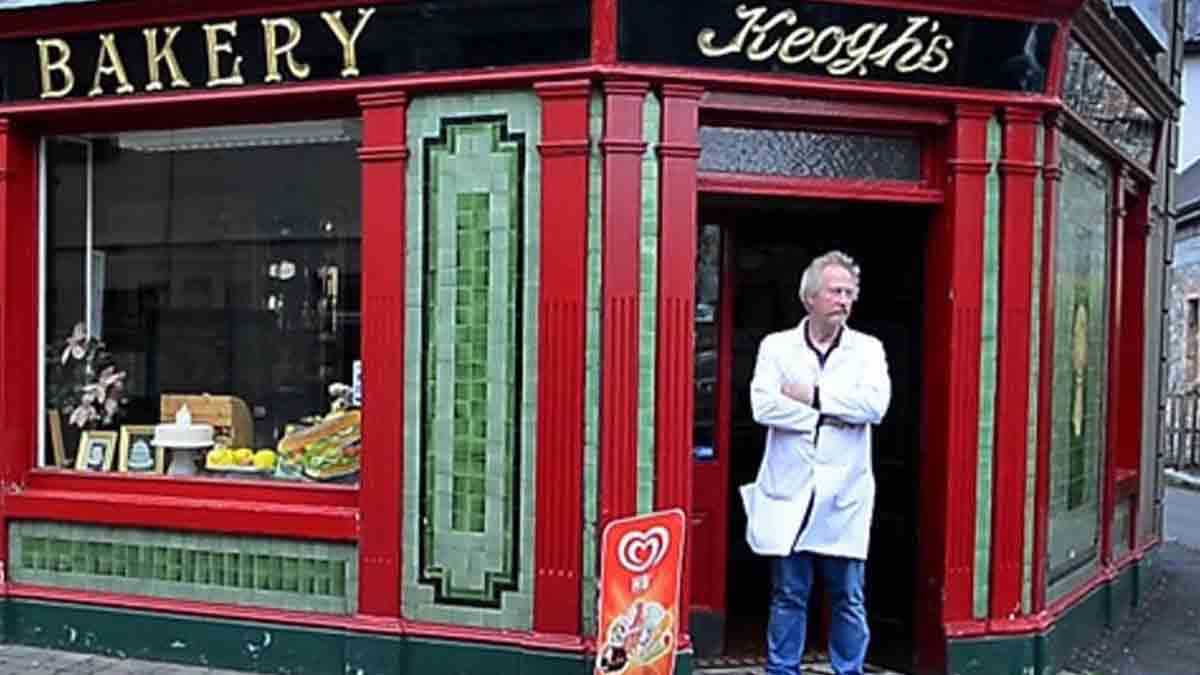
Billy Keogh gave an informative talk about the bakery in Bridge Street that’s been going since 1838, and at the same premises since day one.
Keogh’s Model Bakery is one of the oldest family-run bakeries in Ireland, famed nationwide, and even beyond our shores, for its turnover or rustic, baked in an old-fashioned brick oven.
The bakery has scooped numerous awards for its top quality bread and confectionary, including an Against the Wind prize in 2012. The present shop front is among the most admired in Ireland.
Billy alluded to some of the highpoints of the long Keogh’s saga. It survived the grim World War Two rationing, when flour and petrol were scarce. Keogh’s delivered bread to people’s homes by horse and dray, barrows, or horse-drawn vans, as mechanized transport was scarce. And with flour severely rationed, families had to make do with brown bread. White bread was like gold.
The ovens were fired, at different times, by wood, coke or oil. Timber was available locally and Kilkenny Gas Works supplied the coke. The ovens served other purposes too. One Christmas locals approached the bakery to see if their turkeys could be cooked in the oven.
Some locals had no ovens, while many people’s ovens were too small for the turkeys. Keoghs’ obliged, and hundreds of turkeys were cooked, each on its own plate to avoid any mix-up in turkey ownership.
People still send Keogh’s rustics to loved ones across the globe. Nothing pleases a Callan emigrant more than to receive a specially wrapped Keogh’s rustic from the old country. On the other side of the world, they dream of a thick slice with a dollop of melting butter on it.
The famine pot
Etaoin Holahan, who was baptized in the convent chapel, recited the tale of the famine pot and the peacock. In the early 20th century, Mr. Fennelly was gifted a large famine pot on the occasion of his retirement from the
Callan Workhouse Board of Guardians.
The Workhouse team transported the pot to Fennelly’s and positioned it at the bottom right hand side of the courtyard, close to a hay barn. Mr. Fennelly used the pot as a feeder for his two black funeral stallions.
At that time, his wife had a prized peacock that she adored, but it had the habit of landing on a local schoolteacher’s roof when it flew above Callan. The teacher complained about this to Mrs. Fennelly.
Reluctantly she agreed to have the bird’s wings clipped. One day, a sheepdog chased the peacock, and being unable to fly away, it sought refuge in the famine pot. Unfortunately, the pot was full of water and the poor bird drowned. The pot was filled with clay and flowers sown in it.
A century later, Etaoin and others were digging in Fennelly’s courtyard, as part of a clean- up, when they discovered the famine pot. Learning of its provenance, they decided to return it to the Workhouse.
With great solemnity, the cauldron was transported back up Bridge Street and Green Street on a forklift, with volunteers holding on to it from either side. The poignant symbol of the Great Hunger returned to its rightful home.
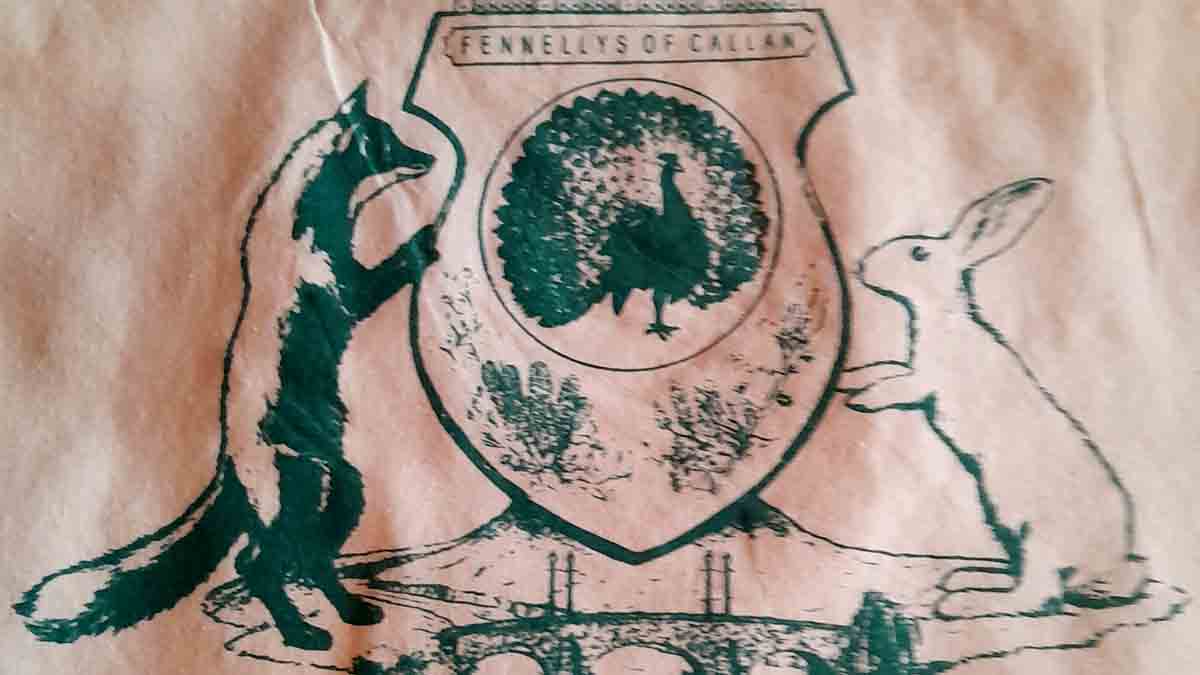
The peacock, in a sense, has also returned to its old haunt in Bridge Street, where a likeness of the bird now forms part of the specially designed Fennelly’s crest.
Like the stories told in the courtyard, it honours a part of Callan’s multifaceted heritage.
* Historian Philip Lynch will have a display of his artwork covering the history of the district, plus a collection of famine-era coinage, at the Power House in Callan, on September 25th, 26th and 27th., from 1.30pm to 5 pm each day.
Admission free.