


By John Fitzgerald

(Part one)
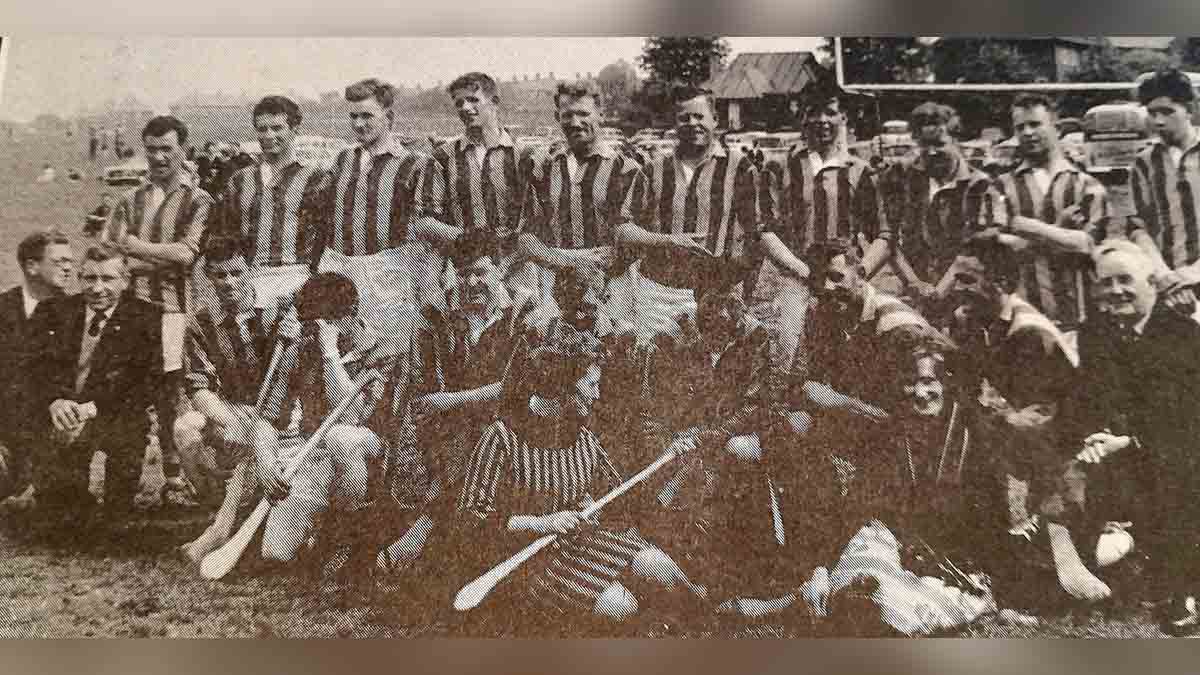
In previous articles I recounted the exploits of the barefoot hurlers on Callan’s Fair Green in the early years of the 20th century. From late springtime, all through the summer, and for most of autumn, budding and experienced hurlers practised day after day, honing their skills.
The same venue played host to other recreations. Footballers often used a pig’s bladder to kick around the pitch, and cricket was played on the Green, sometimes with battered hurleys serving as bats. But cricket never really caught on in Callan, partly due to a perceived link with “foreign oppressors.”
Women and girls went to the Green too, but mainly to watch the lads playing. They liked to avail of the seating that the Town Commissioners had erected in the 1900s, or to bring along rugs that they spread across the grass and lay down upon. The favourite game among girls was skipping, a healthy pastime that involved jumping over a circulated rope without touching it.
Both boys and girls loved hopscotch. For this, a large rectangle was drawn on a road or pavement and divided into eight squares. The squares were numbered from one to eight. A flat stone was laid in the square marked Number One. Then the first player would have to hop on one foot and kick the stone into square number two. He or she continued this procedure until the whole circuit had been completed.
But this was difficult, because you were eliminated if the stone happened to land on a dividing line between two numbers or if you kicked it outside the big rectangle containing the eight squares. You were penalised also if you lost your balance and your other foot touched the ground within the rectangle. You weren’t allowed to “put your foot in it”.
The golf links at Geraldine came into its own in the late 20s, attracting a fair number of members from the district. Subscription fees were high in the early days, confining its membership mainly to “professional men” like doctors, bank officials, chemists, a few “gentleman farmers”, and wealthy men of leisure.
With few cars on the road, golfers arrived on bikes with their bags of clubs strapped to their backs and wearing “Plus Fours” or “Oxford Bags”, as their distinctive trousers were called. Women golfers were unheard of in those far-off days, though they began to make an appearance as the century progressed.
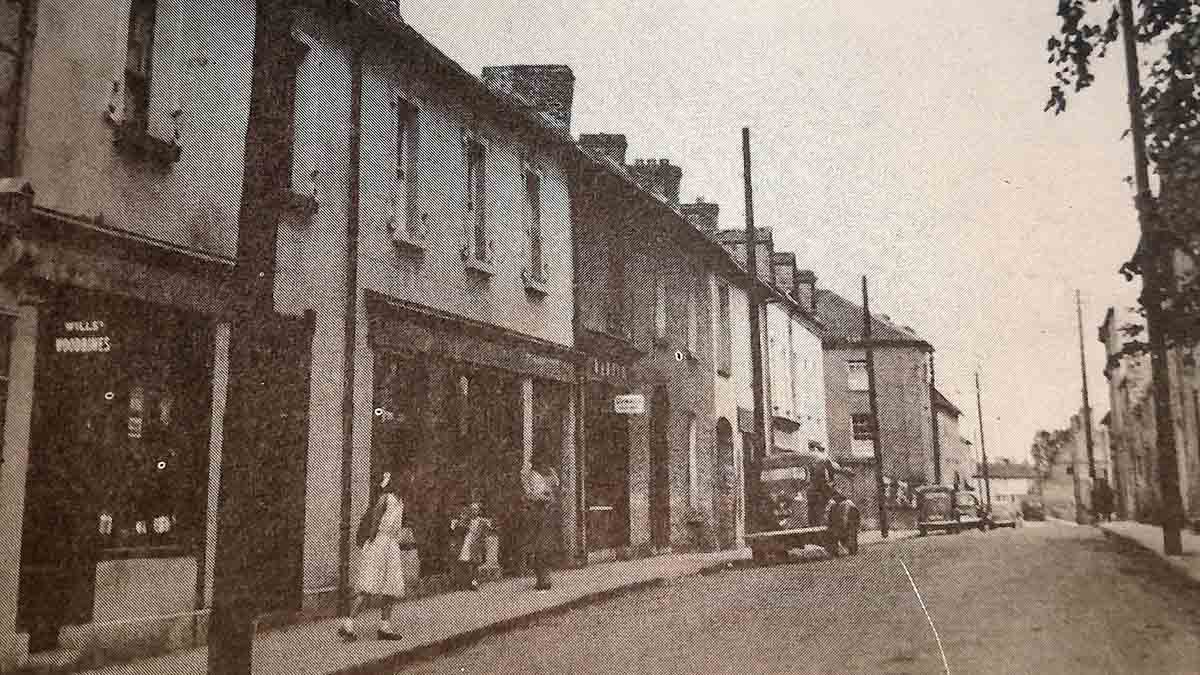
In the 30s and 40s, Callan had two tennis courts. One was in West Street. This catered for the perceived uppercrust players of the town and district. The one at Mallardstown had a lower subscription fee and a far higher membership but was snubbed- very politely of course- by the West Street players as a riffraff sporting venue to be avoided by anyone hoping to reach the apex of the social ladder.
In the absence of an alley, handball was played against the bacon factory wall. The game of Skittles was all the rage up to the early fifties. Pitches sprung up on side streets in Callan and at crossroads outside the town.
Pitch and Toss was another open-air sport that occupied the leisure time of Callan folk. The main venue was underneath a lamplight at the Bacon Factory. The illumination meant that games could continue well into the hours of darkness. It was also played in Ballylarkin on Sunday afternoons.
For each game, a medium sized flat stone was positioned on an even surface. The players then pitched coins towards the stone. The first toss was then awarded to the competitor who had landed his coin nearest the stone. The actual distances between the target and the coins were measured by a trawneen- a stem of strong grass.
Then the real sport and the gambling got underway. Bets were placed on the outcome of each toss, the result depending on whether a coin landed “heads” or harps.” When successful, you collected your winnings from a neat pile of bank notes, and silver and copper coins.
The “tosser” on which a coin was placed to be flung into the air consisted of a six inch long by one and a half inches wide piece of wood. The eyes of all the gamblers and fans followed the trajectory of each coin upwards with bated breath, and hearts thumped as the sparkling unit of currency came hurtling back to earth.
Some men bet their whole week’s wages on the tossing, a fact deplored by successive parish priests in Callan who preached against the evils of excessive gambling. “For what” one cleric asked, “would it benefit a man were he to win a full twenty pounds on the toss and then lose his immortal soul?”
The good priest may have had a point: A Callan man in the 1950s gambled his motor boat on the outcome of a toss and lost the bet!
To be continued…