


The Kilkenny Observer welcomes John Comerford from Kilkenny tours who will bring us on trip to visit various locations in Kilkenny city and county. The Kilkenny Observer is delighted to bring you a piece of history on the first Friday of each month. To give the full history on each location would take up too many column inches, but we hope that the information shared, will, at the very least, whet your appetite in discovering Kilkenny’s rich history, architecture, and hidden gems. This week (number 4 in the series) John visits John’s Bridge
For more than 800 years, John’s Bridge has stood as one of Kilkenny’s most enduring landmarks, carrying generations of merchants, soldiers, pilgrims and families across the River Nore. Alongside Green’s Bridge to the north, it has shaped the city’s development from the Middle Ages to the modern era, surviving floods, collapses and the constant evolution of urban life.
The River Nore has long been central to Kilkenny’s prosperity. In the eighteenth and nineteenth centuries, bridges were vital arteries for trade, linking markets, mills and workshops on both sides of the river. John’s Bridge, first built shortly after 1200, connected the bustling commercial district of John Street with the walled medieval city. Every cartload of grain, every barrel of ale and every herd of livestock heading passed over its span, making it one of the city’s most important crossings.
But the bridge’s history is marked not only by commerce, but by tragedy. During the catastrophic flood of 1763, the Nore rose with terrifying force. Green’s Bridge collapsed first, swept away like matchwood. Crowds rushed to John’s Bridge—the last remaining crossing—to witness the destruction. Timber, carts, furniture and even parts of houses floated past. When an entire cabin came sweeping down the river, more than 100 onlookers ran to the riverbank for a closer view. Sixteen remained on the bridge. Within minutes, the weakened structure gave way, and all sixteen were lost. It remains one of the darkest days in Kilkenny’s recorded history.
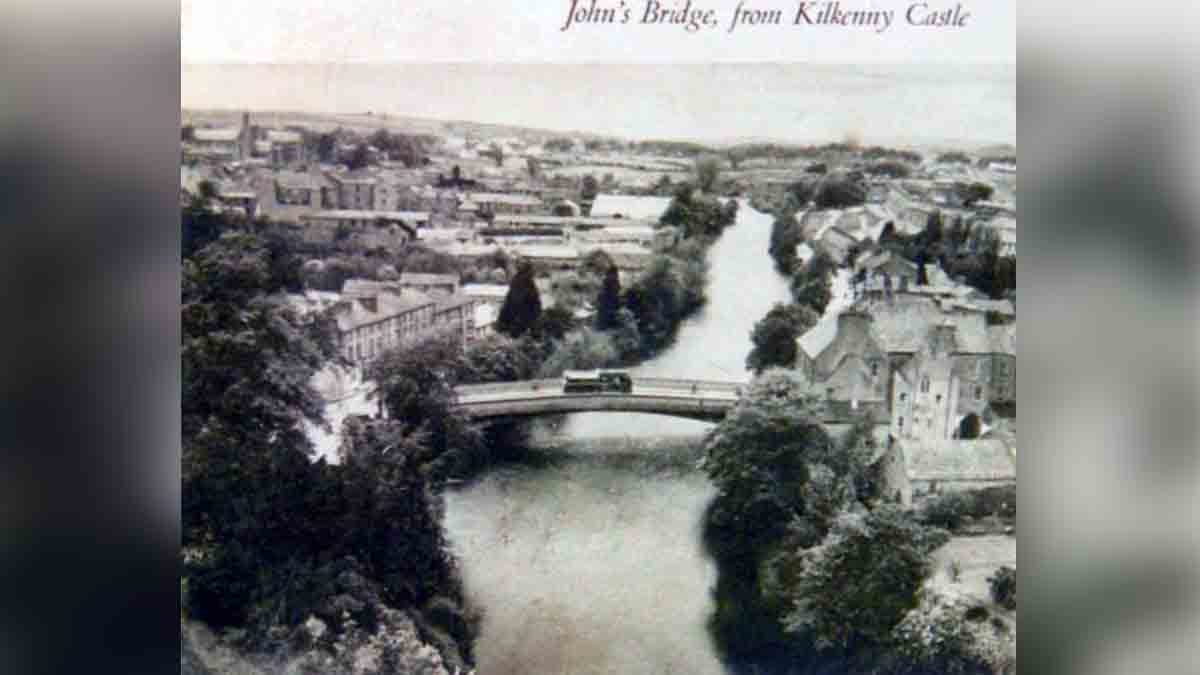
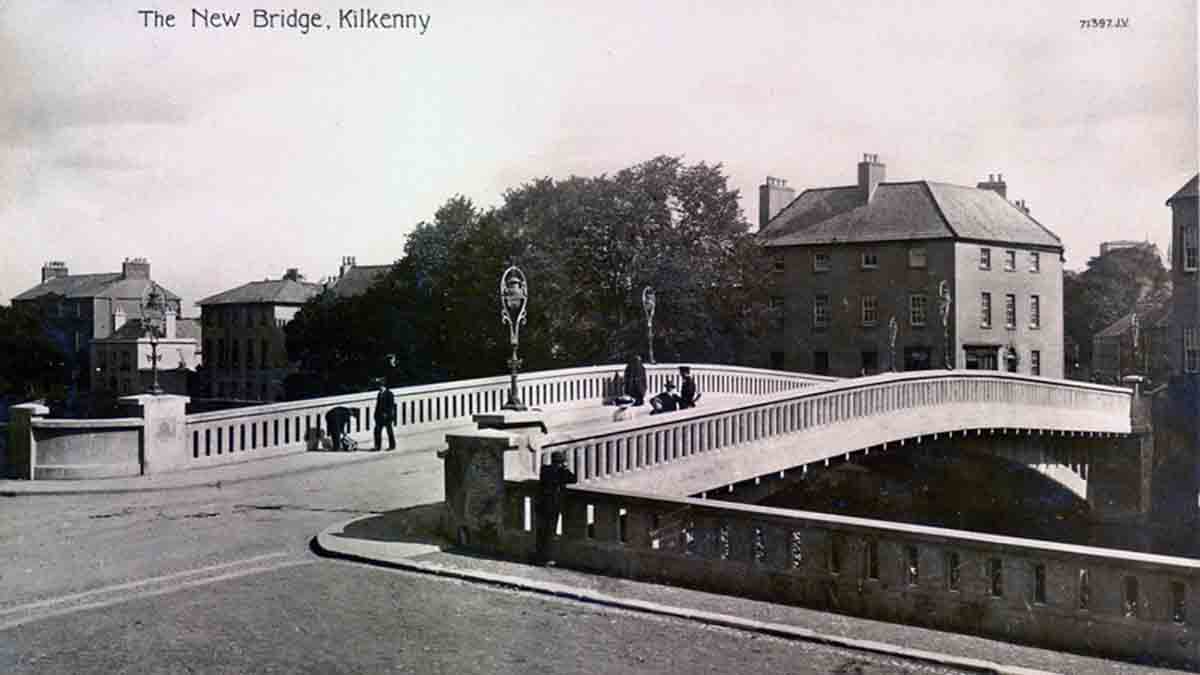
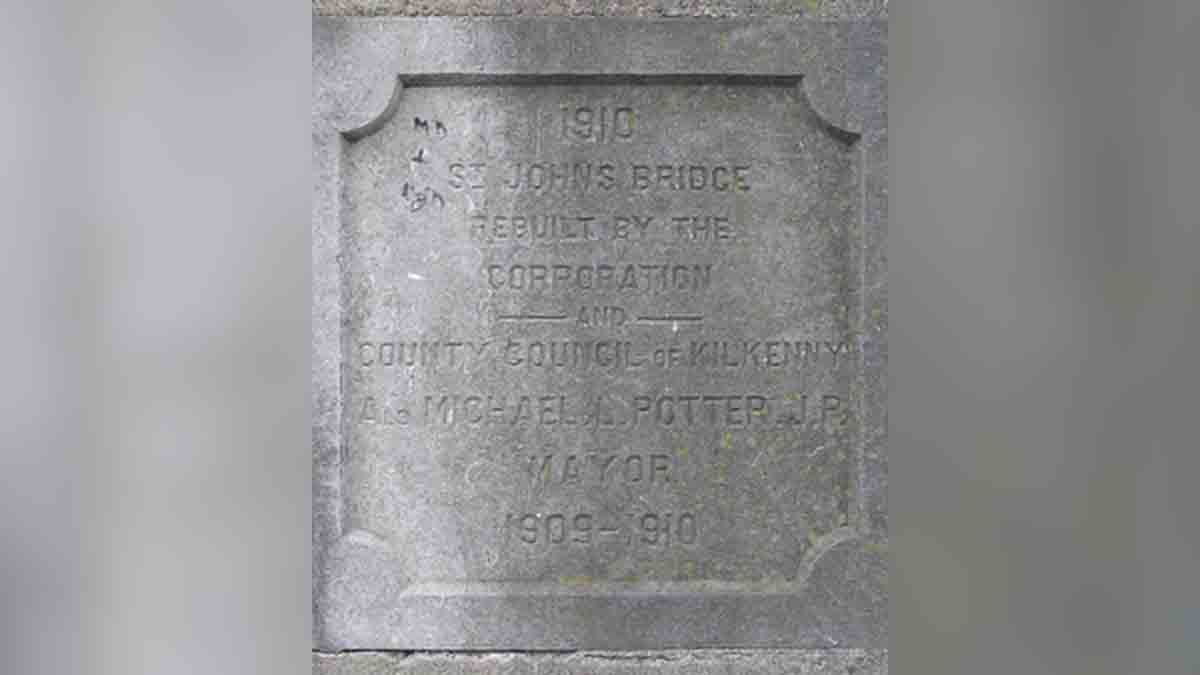
The present-day John’s Bridge, completed in 1910, marked a new era of engineering ambition. Designed by County Surveyor A.M. Burden and engineered using the pioneering Hennebique ferro‑concrete system by Louis Gustave Mouchel, it was the longest single‑span reinforced concrete bridge in Ireland or England at the time. To prove its strength, a steam engine owned by John Brennan of Neigham, Gowran, was driven across the new structure during testing—an unforgettable moment of local pride and engineering confidence. Its elegant sweeping arch still makes a striking visual statement across the Nore.
Today, John’s Bridge stands not just as a functional crossing, but as a symbol of Kilkenny’s resilience. It has endured medieval floods, Georgian collapses, Victorian rebuilding and the pressures of modern traffic. More than a bridge, it is a monument to the city’s ability to rise, rebuild and move forward.