


By John Fitzgerald

A highpoint of this year’s Callan Open Doors Festival, for me at least, was the performance of a play, The Deeds of Lord Barnard.
Scripted by Iarla O’ Neill, who also acted in the drama, it was set during the Great Famine of the 1840s.
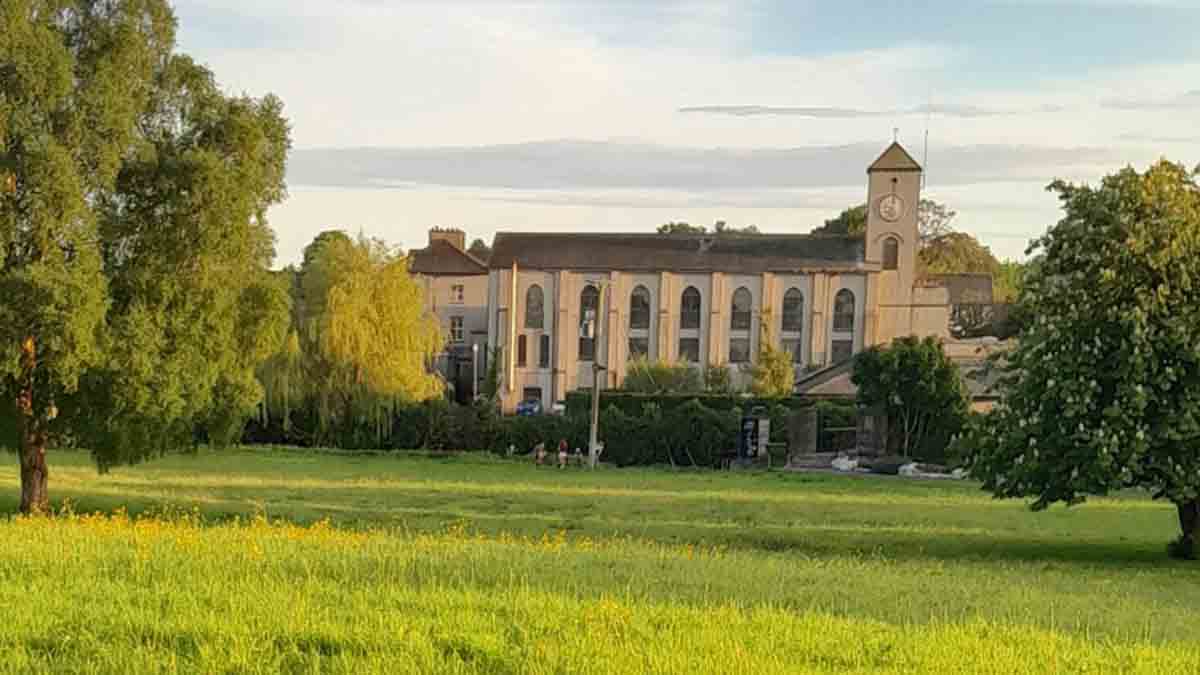
And what better stage than the garden of the old Callan Workhouse, itself a monument to that catastrophic era. Thousands passed through its doors, and, despite its fearsome reputation, it saved many people who otherwise would have perished in their hovels or on the roadsides.
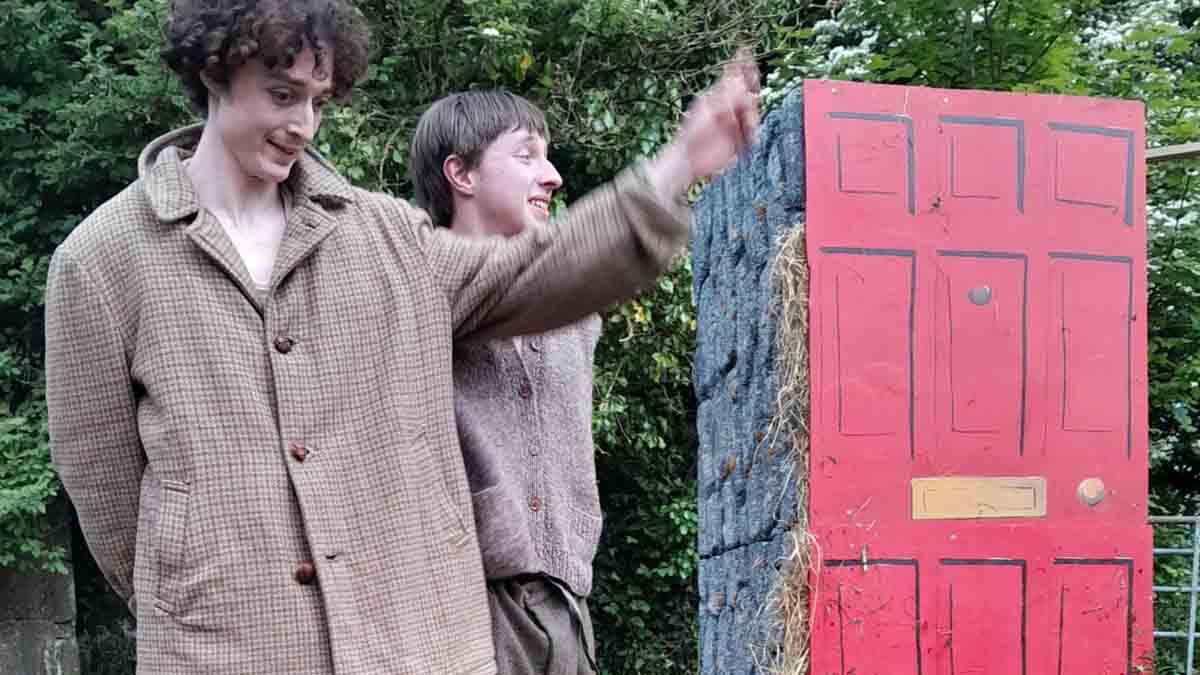
The play had two desperate fellows brooding on their plight, as hunger stalked the land. One of them suggested that maybe appeasing one of the pre-Christian deities might banish their pain and misery…that maybe a human sacrifice might satisfy the ancient gods and end the famine.
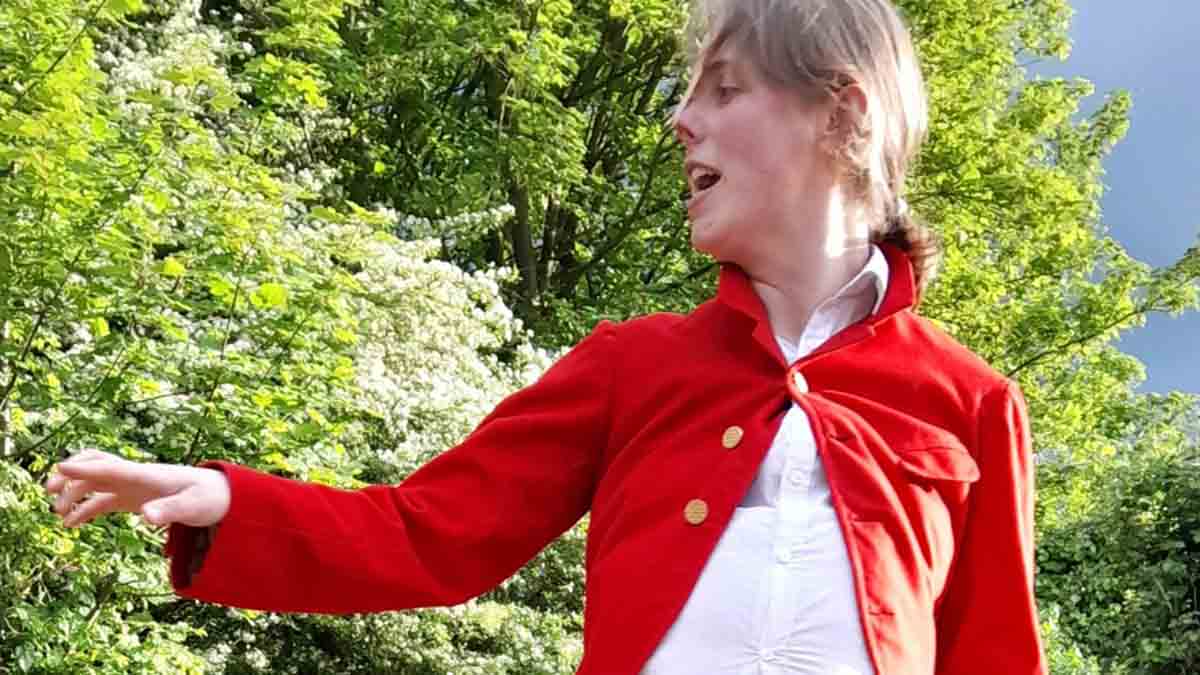
Lord Bernard appeared as the typical haughty Lord of the Manor, decked out in red foxhunting gear, complete with a token hound in tow to remind them of their status: A scintillating black comedy resulted that amused and repelled in about equal measure.
The drama elicited laughter but also reflection on the stark injustices and inequalities of the time: the cruel arrogance of the ruling classes amid the poverty and helplessness of the people, who had to battle hunger and brutal repression, on empty stomachs and devoid of hope.
Iarla O’ Neill, Rose Creagh, and Muiris Wallace gave captivating performances and the setting was ideal…a grassy rural backdrop with a gate, and all in the shadow of Callan Workhouse. This was the play’s debut and I’m sure it’ll be well-received elsewhere in Ireland.
The whole town basked in a summer of celebration for the Open Doors festival. For four wonderful days, music, visual art, gripping talks and a string of creative workshops drew the crowds as the town highlighted a wide range of talent and ingenious projects.
All sorts of normally hushed hubs of the locality came to life for the event. The Power House in Mill Lane, once a bacon factory and before that Callan’s electricity generating station; was back in action, but not to give light or get pigs worried.
It served as a venue for informative talks by artists from Callan and Kilkenny, each offering his or her unique perspective on their sources of inspiration…the people, places, and situations that acted as an impetus for their art.
Kilkenny-based artist Susan Horsch cast a spell with her Swimming in Space display, granting viewers an insight into her work with soft sculptures and textiles, which she uses as metaphors for aspects of the human experience. The Power House proved an apt milieu for her work
It also accommodated musical acts that blended electronic techniques with the use of Head Fiddle and traditional Mongolian throat singing…possibly a first for Callan
Fennelly’s of Bridge Street hosted Trad, Bluegrass and American Country sessions and residents of Mount Carmel savoured American folk music, while impromptu art lessons and guidance were given and gratefully received at the Macra Hall, and L’Arche Café.
Inflatable giants and puppets meandered around the scenic Abbey Meadow, and the Droichead Resource Centre echoed to the rhythms of African drumming.
Exhibitions brightened up many a venue, including the window of the Green House in Bridge Street, which showcased Views of Callan, by artists Martina Rosi (Italy) and Louise Boutant (France) whose “take” on the local landscape was influenced by their stay in the town.
Lessons in portraiture had budding artists lining up to improve their drawing and painting skills, and Ruth Lydon offered an introduction to the Irish Harp.
Artist Jan Michell’s first solo exhibition Ladies of Substance at the KCAT Centre charmed visitors, with her application of multiple media, including ink, markers, and paint to create expressionistic portraits.
The town’s commitment to biodiversity featured prominently, with talks and trails to highlight the enhancing of Callan’s precious ecology. Locals have been active in tree planting, especially in the Moat Field and Abbey Meadow, each of which contains a national monument, a 13th century Norman Motte and the ruin of an Augustinian abbey respectively.
Stalwarts such as Etaoin Holahan, Nicola Teehan, Rosie Lynch, and Joe Kennedy (to name just a few) have made heroic strides in elevating Callan’s status as a town that really cares about both its built and natural heritage.
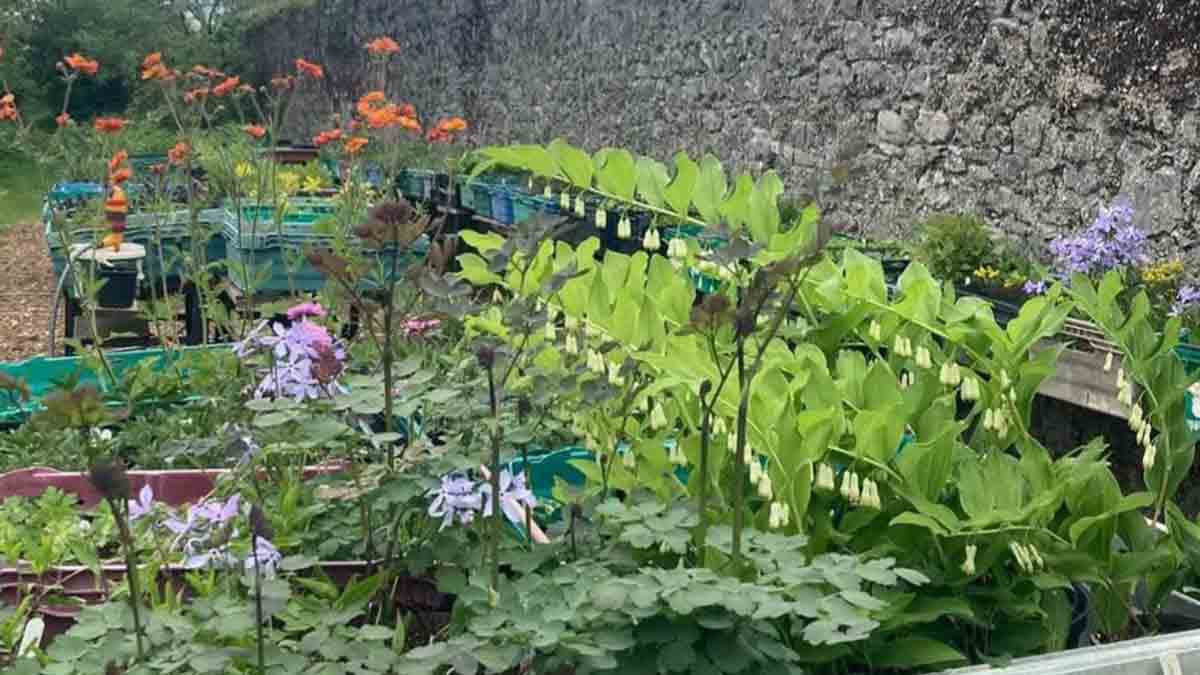
The Walled Garden at Westcourt had its annual plant sale, which coincided with exhibitions at this veritable time capsule. Jim Jobsen displayed bowls carved from windfall wood, and artist Luke Cassidy ran a workshop titled 100 Tiny Moments of Care, in which he invited people to ponder the ways they can look after their native town.
Visitors shuffled about in deep philosophical mode, reflecting on this challenge, as others examined the herbs and plants in the organic garden, or just relaxed in the sun.
The four-day event culminated with a long-table feast at the Power House. Chef Connor Higgins offered his culinary expertise and the diners had a rare treat.
It was better than any medieval banquet, one local enthused, as this year’s festival came to a joyous and rhapsodic close, and quiet returned to the Town on the King’s River.