


By John Fitzgerald

I visited three sites last week that recall the Great Famine in the county. The first was Callan Workhouse, which opened its doors in 1842 but struggled to cope with the influx of starving people when famine struck.
It was a model of dehumanizing bureaucracy and the architect had specifically designed it to deter all but the most poverty-stricken from seeking refuge there.
During the Famine, more than 2000 people died in the building, while food was being exported from Irish ports under armed guard and cruel landlords lived in opulence.
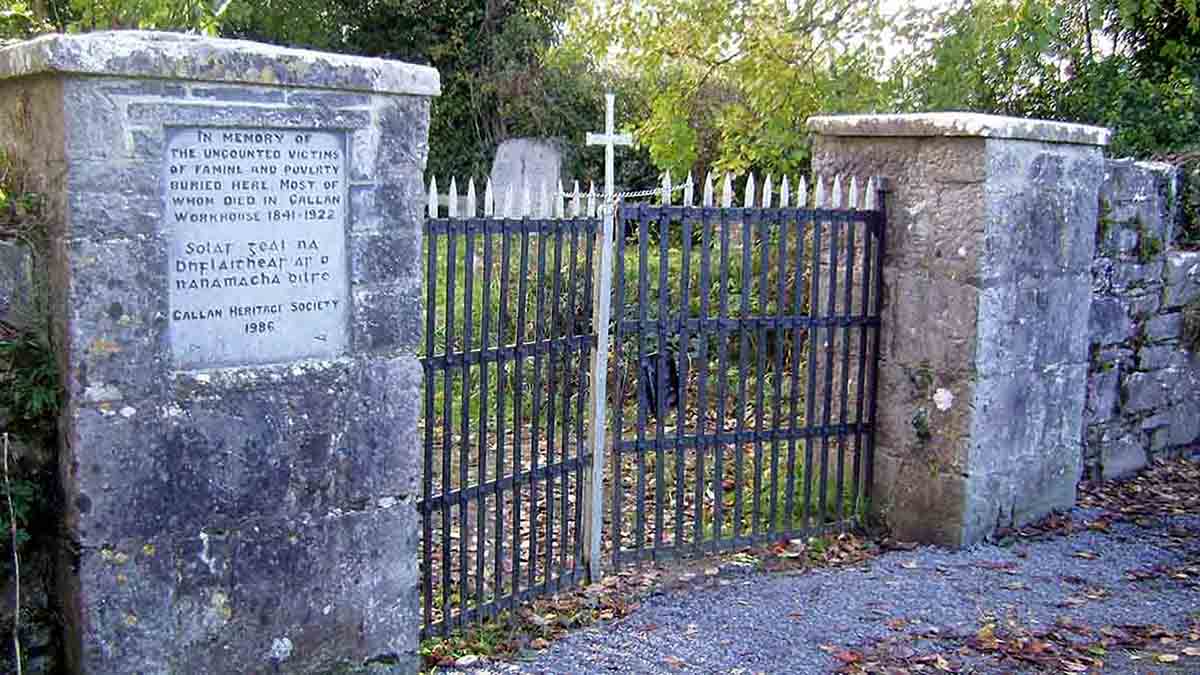
A large group of locals gathered at the Workhouse last week for the annual walk to Cherryfield, site of the famine graveyard.
Each week during the famine timber carts conveyed the corpses of people who had died in the Workhouse or elsewhere in the district to the “pauper’s cemetery” located about a mile and a half outside Callan. It was named after the cherry trees that grew on the site. The civic authorities deemed it suitable as a burial ground because the land was of poor quality.
Not a day passed in that dark period without funerals leaving the Workhouse. Emaciated bodies were piled up on the carts that creaked their way to the site. Upon reaching Cherryfield, the victims were tipped into trenches.
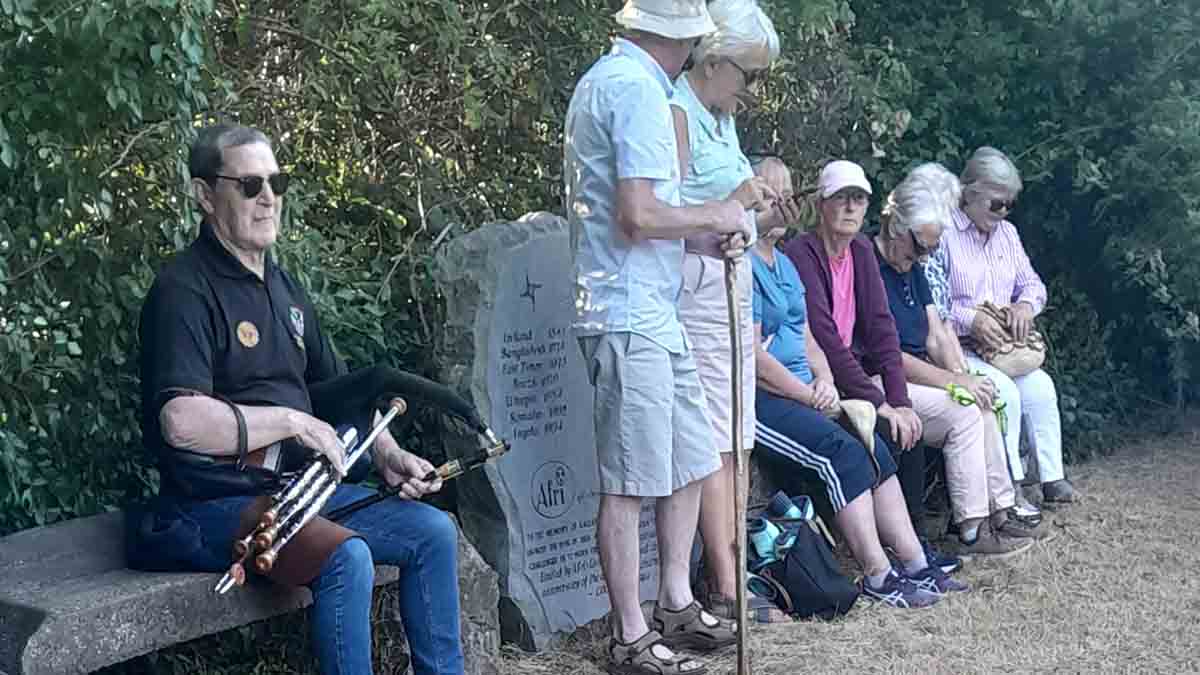
In pleasant July sunshine, and against a peaceful backdrop far removed from the 1840s, Liam Rice and Joe Kennedy of Callan Heritage spoke of the harrowing scenes that unfolded back then…of grief beyond expression, of the yawning pits and the nameless innocent dead.
“We still don’t know how many were laid to rest here,” Joe Kennedy told the gathering.
Historian Philip Lynch and local woman Josephine Fitzgerald recited poetry honouring those who died, while musician Packi Dawson played a haunting melody on the bagpipes. Singer John Corrigan sang the Fields of Athenry, a song harking back to the same unfathomable era. Prayers were offered and eulogies given in remembrance.
In another part of the county, I called to Gáirdin an Ghorta- the Famine Garden- in the tiny village of Newmarket.
President Mary MacLeese opened this visually stunning and historically evocative commemorative centre in 1999.
Curator Willie Baron showed me around the venue that has become something of a pilgrimage for thousands of people from all over Ireland and abroad. Irish Americans tracing their roots are especially drawn to it. They feel transported to that “other Ireland” when they tread its hallowed ground.
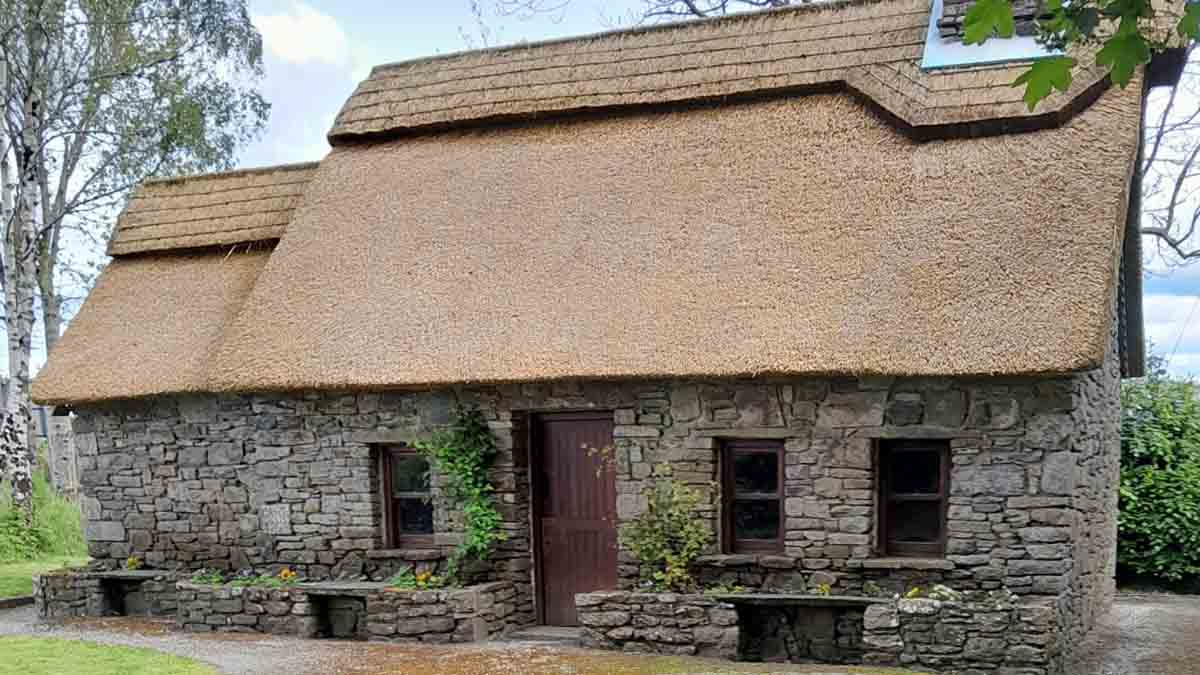
Upon stepping in from the road, the first sight to greet me was the Heritage House, a faithful reconstruction of a 19th century-thatched labourer’s cottage, set in a potato/cottage garden, skirted by native broad-leafed trees.
A few steps from this picture postcard setting, you’ll find a grove of sycamore trees. Willie Baron notes that this was the “tree of the planters,” a poignant reminder of another pivotal phase of Ireland’s story. The Famine itself unfolded within the context of colonialism.
Passing through the leafy portal, you find yourself facing twin paths, symbolizing the start of a calamitous winding course that led to death, suffering, and emigration on an apocalyptic scale.
The yew trees fringing the two rocky paths are emblematic of death. There’s the Path of the Living and the Path of the Dead.
Whichever path you choose you’ll find yourself in a dark leafy tunnel, and each path leads to the Valley of Sorrows, a little garden of contemplation.
The Path of the Dead recalls the more than a million people who died in the Famine, not including those forced to emigrate, many of whom died on the coffin ships or of disease shortly upon arrival in North America.
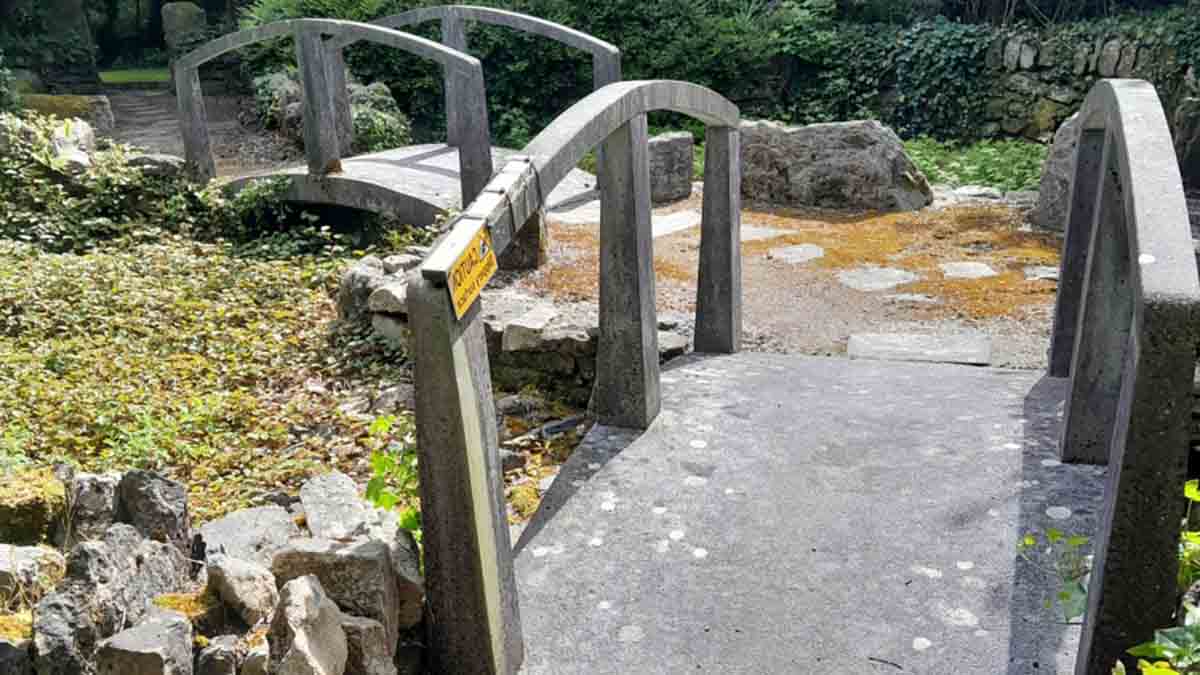
This path descends to a sunken garden to meet the Bridge over the River of Tears
You cross the river to reach the Hungry Island, symbolic of all the people who survived the famine to reach a new life, many beyond our shores.
At the end of this symbolic journey, you reach The Silent Era, alluding to the stunned aftermath of suffering in silence and struggling just to get on with living after the catastrophe.
Out of the pathways, you find yourself in the Garden of Plenty. Willie Baron explains that this patch attempts to restore a kind of balance between man and nature. It serves as a communal meeting place for visitors to Gáirdin an Ghorta. Fruit, berries nuts and herbs grow here, all organically managed.
This patch in turn leads through a spring garden where cherries and bulbs beguile the senses, marking the end of a walk defining a traumatic part of our heritage.
Visitors to the Famine Garden have described the experience as life transforming and a jolt to 21st century complacency. It takes us back to a time when to be Irish meant being on the receiving end of the cruelest injustice, oppression and a famine that could have been avoided.
Callan Workhouse, Cherryfield, and the Famine Garden are potent reminders of what happens when oppressors or uncaring elites disregard people’s wellbeing. The glinting bayonets on the guns pointed at people who objected to the huge food shipments leaving Ireland during the Famine told the natives everything they needed to know about what the rulers thought of them.
What happened in the 1840s left a permanent scar on this country. It was a lesson learned in the hardest possible way, one that later fuelled the struggle for independence.