


By John Fitzgerald

(Part two)
(Continuing the story of Billy Boland of Glenmore, who himself had a thousand stories to tell. Part One from last week can be read on the Observer website)
On a memorable day in his youth Billy helped to convey milk to the creamery for a neighbour who had fallen ill, but the donkey pulling the cart was an “unbroken ass” and tried to make a break for it, running at great speed along a wind and bumpy road. Milk from the twelve gallon churns spilled as the cart trundled on.
Then boy and donkey came to an abrupt halt when a wheel fell off the cart. The ass he-hawed loudly in panic, the cart floundered and crashed into a ditch, and Billy was sent hurtling through the air over a nearby wooden gate leading into a field.
To the rescue came a man who was out walking nearby. Thoughtfully pulling on a pipeful of tobacco, the stranger offered to get Billy and the donkey back on their feet and safely on their way to the creamery. He re-attached the wheel and positioned a horseshoe on the axle to keep the wheel in place.
While the Good Samaritan was performing this vital operation, Billy had to hold up the cart with his two hands and hold the reins of the donkey in his mouth. “Where I got the raw strength that day I’ll never know”, he told his listeners.
Living near the River Barrow, Billy loved to fish in his spare time…and the salmon he caught never went to waste. It wasn’t just for the craic as it is nowadays, he reminded a younger generation, when many anglers threw away their catch, having achieved their aim of simply pulling fish out of the river. “We savoured the taste of that pink delicacy on the plate” he intoned.
He fished in his youth and early manhood in between working either for farmers or at other backbreaking jobs…such as wading about waist high in the river, drawing gravel. He spent many long days, stretching into evenings and dark nights, filling four stone bags with the gravel and landing them on the riverbank. “That was hard”, he recalled grimly.
Equally hard was digging perches- or drains- with his graufawn, a pick with a wide blade at one end. In the course of his life, he dug more than 30,000 drains, cleared tens miles of ditches, and turned 50 acres of land. “If you could see my hands”, said Billy, “you’d believe me. The welts and cuts that cover them are the proof.”
In 1935, he married his sweetheart Minnie, who bore him a total of fifteen strapping children. They, like Billy, grew up in challenging times and all but one of them took the emigrant ship to England. Billy and Minnie had a long and happy marriage until Minnie passed away at a ripe old age.
Apart from hard work and tough times economically, the early years of his life were blighted by another scourge: the dreaded flea. “They were my deadliest foe”, he sighed; “they advanced like a German tank division when they got into your skin”. Before he got married, Billy had only one shirt. Every Saturday night he washed it.
One evening, he hung it on a bush outside his house to dry it. In the morning it resembled a piece of hardboard due to frost. So he heated it by the fire. When he decided it was dry and warm enough, he put it back on him…only to discover it was alive with fleas. Thinking on his feet, he pulled the shirt off, placed it on an anvil, and began battering it with a hammer to kill the insect invaders.
He had to beat the shirt for hours to exterminate the vile vermin. Billy spoke with apprehension and dread of how the fleas terrorised people in the days before DDT. He explained: “They made our lives Hell, those squatting little blackguards. You’d be afraid to lie down in your bed at night. They had sharp teeth and could leap from six to twelve feet according to the length of their legs. And the damn critters were well fed too…there was a shine off their backs like you’d see on a well-fed pig.”
Billy was adamant that one of his sons who was attacked by fleas would not go through the same torment as himself…so he called to a chemist in New Ross to buy a box of a certain new powder someone had told him about. The wondrous DDT had just arrived on the market.
He described the effect of the powder on his son’s condition: “Oh God, it was like the atom bomb falling on Hiroshima; such was the result of the DDT shaking over the bedclothes. Within minutes the fleas had thrown in the towel and run up the white flag”. He referred to the chemist who sold him the powder as “a saint among men”. If he had sold it for £50 a jar, said Billy, people would still have gladly bought it.
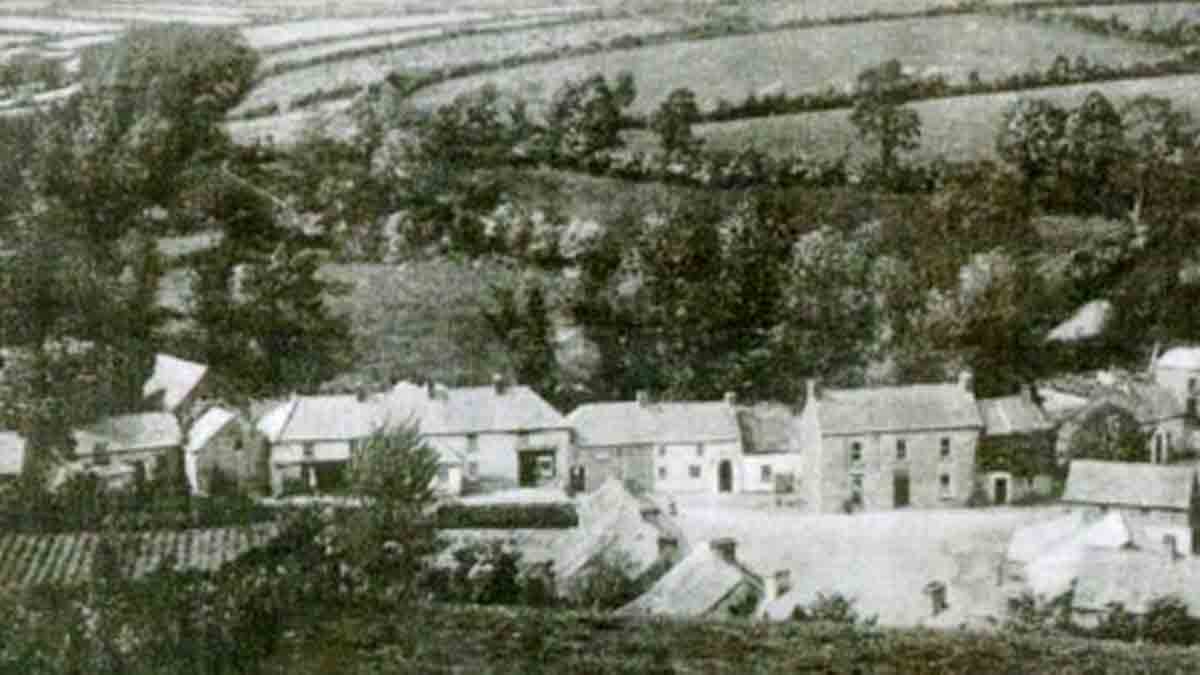
In his later years, Billy regaled friends, neighbours, and quite a few visitors from neighbouring town lands and counties, with his stories of life in times gone by. Students engaged in historical projects came knocking on his door at Ballycroney for advice. He welcomed them with a heart-and-a-half and soon put them in the picture about the Glenmore of his youth… a very different village from the one they knew.
In November 1998, Billy took his leave of this world. He was 85 years old. He had borne with great dignity the illness that snatched him from his legion of friends, relatives, and fans.
Life’s tough journey had come to an end…and the gates of Heaven swung open for the man of a thousand stories.
(Extract from my book Kilkenny a Blast from the Past)