


Last week I recounted how Callan PP, Canon Carrigan pursued courting couples with his horse and trap in the 1920s. In the nineteen forties and fifties, the town had other crusading priests who were committed to preserving morality in the parish.
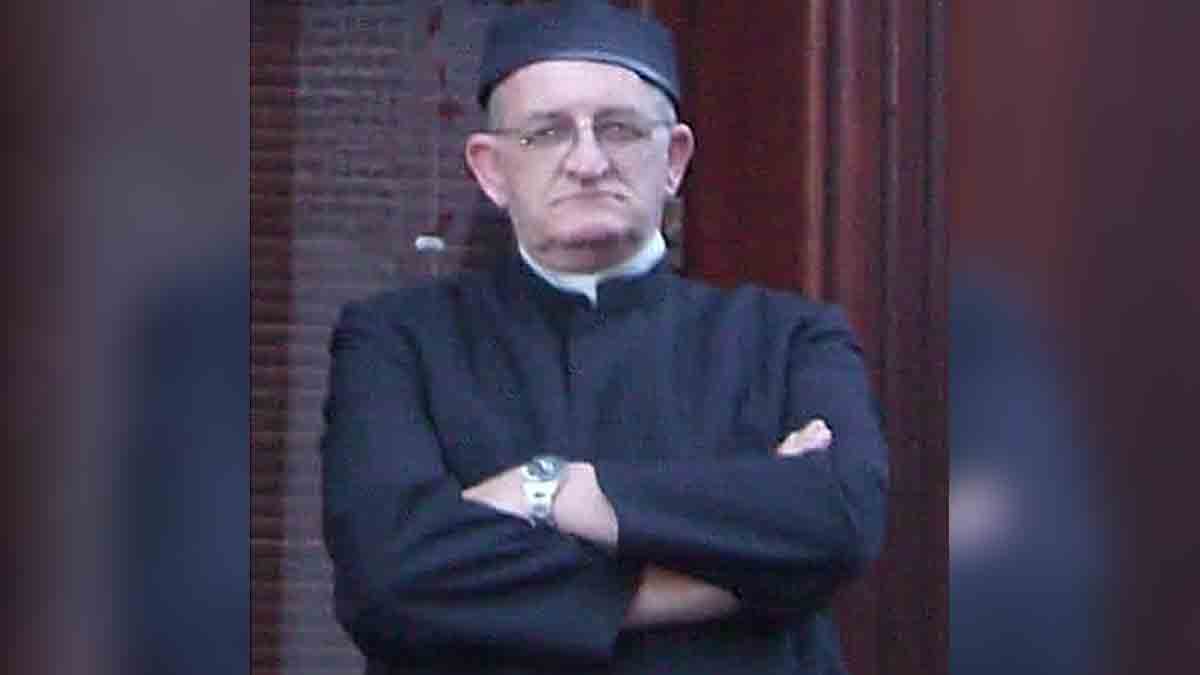
Fr. Bob (not his real name) was one of them. Like Canon Carrigan, he patrolled the streets and laneways of Callan, keeping an eye on ditches, fields, and hay barns in the surrounding countryside.
But unlike the Canon, he preferred to move about on foot, though he sometimes agreed to travel by pony and trap or in a plush- if somewhat antiquated- baby ford car, one of the first examples of motorized transport in the area.
Courting couples dreaded the appearance of his dark, threatening form whenever or wherever they met under a protective night sky. In all seasons, he trekked the roads, streets, boreens, and laneways. In sweltering summer heat, he was out on patrol.
On a freezing winter’s night, even during snowfalls or hailstorms, he could be seen trudging along, eyes peeled and his mind in a constant state of alert.
His aim was to “nip sin in the bud”, in the time-honoured belief that prevention was better than curing. Unfortunately, Fr. Bob found that both the cure and the prevention, as applied in the course of his morality patrols, were often worse than the sin, whether this had been committed or was still in the planning stage.
But he persevered in his quest to steer the faithful away from wrongdoing. He believed the direct approach yielded better results than simply deferring to the goodwill and Christian principles of his flock.
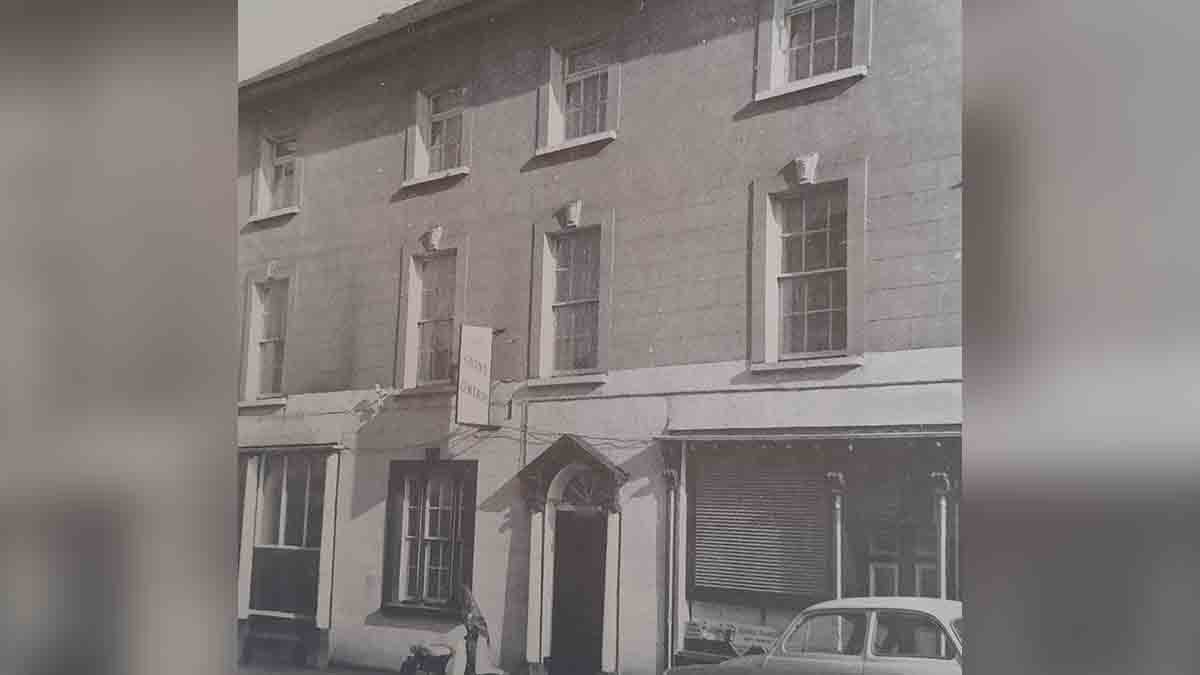
Despite his conservative outlook, Fr. Bob was a keen socialite and a friend of all drinkers in the town. He had a key to the Grand Central Hotel and could call in for a jar or a tipple anytime he pleased, day or night.
He was always armed when on patrol, as much for his own protection as for administering chastisement. His weapon of choice was the traditional Blackthorn stick, though on occasion he would take a horsewhip or a sally rod.
When asked why he sometimes opted for different modes of punishment, he would laugh heartily and say, “Ah sure, isn’t variety the spice of life.”
In keeping with his vocation, Father Bob also took a large rosary beads on his morality crusades in the Callan district. A naggin of Paddy whiskey completed the arsenal. This was to fortify himself for the task ahead.
Fr. Bob asked for volunteers to accompany him on his beat, and there was no shortage of high-minded locals who shared his zeal to preserve the Catholic ethos in Callan. Sometimes, a few lads heading home from the pub might find themselves press-ganged into joining a patrol.
The volunteers received hearty handshakes from the priest, and each was given a less polished but equally robust blackthorn. Led by their spiritual adviser, the men blessed themselves, invoking divine protection from harm.
Fr. Bob advised the lads on their task… A typical set of instructions would be: “…Can you cover Mill Street Jim? Tommy, keep an eye on Bridge Street…Is anyone out on West Street? Be sure to look over the ditches, and don’t go into any fields that have bulls in them. The sinners wouldn’t be there anyhow…”
Setting off on a patrol, he hummed to himself: “Hi Ho, Hi Ho, we’re off to fight the foe.” Sean Holden, though a friend of Father Bob, never joined him on the beat. Being a man ahead of his time, Sean felt that young couples should be left to their own devices.
Sean had many a long and multi-faceted theological discourse with Father Bob, during which they would cover all aspects of Catholic and Christian belief but avoid the vexed subject of morality patrolling.
Though he had fixed times for patrols, mostly from eleven to three pm on selected nights, Fr. Bob was “on call” twenty-four hours a day and always eager to confront immorality.
Often, while having a quiet drink in the Grand Central, a loyal parishioner would rush to him with a whispered message: “Father, they’re at it in a ditch, beyond in the Minauns.”
Fr. Bob would arise from his chair calmly, excuse himself, and ask politely if any men present would be willing to aid his bid to rescue endangered souls. Gathering a few volunteers, he made a hasty exit from the hotel.
Surviving volunteers have advised me not to mention their names, so I am respecting their wishes.
When they spotted a courting couple, the morality patrol gathered around the scene and Fr. Bob opened the Holy Book to read aloud whatever words of scripture he deemed appropriate. In cases where the couple refused to heed their presence, the men might prod them with the sticks or beat the bushes to distract them.
The startled couple were always given an opportunity to explain, and were then requested to do penance and say a joyful or sorrowful decade at the earliest opportunity.
In fairness to Father Bob, his apostolic activities were mild in comparison to those of the Grand Inquisitors, who, as we recall, went to far greater lengths to purify the spirit and keep Catholics on the straight and narrow path.
Their methods included flogging, stretching on the rack, and burning at the stake; methods never employed by Fr. Bob.
Father Bob was fond of a popular prayer to St Michael the Archangel. It was a hard-hitting pre-Vatican II invocation that gave the Devil sheer hell, denouncing him and seeking protection from his nefarious ways.
A copy of the Prayer to St. Michael was pinned on the door of the Town Hall to remind parishioners of the constant risk of damnation that faced them every day of the week. Temptation stalked the land, and you could never be too careful.
Deadly Sins, Venial Sins…and Sins that weren’t Sins at all
When the missions came to Callan, Fr. Bob would walk the streets each day of Mission week, demanding names of anyone not attending missions. He emphasised the importance of cleansing one’s immortal soul by submitting to the ferocious oratory of the Missioners.
The Mission was welcomed and dreaded in about equal measure in Callan. Many people felt it helped to purge them of the Seven Deadly Sins and to keep the Devil at bay. It was an essential part of their belief system.
Others feared and disliked being reminded of their human weaknesses. They dreaded the possibility that they might perhaps be committing a sin without knowing it.
Their solicitude may have been well founded, as many ungodly acts and thoughts were considered offshoots of major sins. Some of these were under-publicised or occasionally overlooked by the Church, but nonetheless could have dire consequences in the afterlife, according to official teachings and doctrines.
You could be happily going about your business, thinking you were living an honest, clean, unblemished existence, in full accordance with the Laws of the Church, when in fact your soul might be in mortal jeopardy, stained by sins you never knew existed.
To be continued…