


By John Fitzgerald
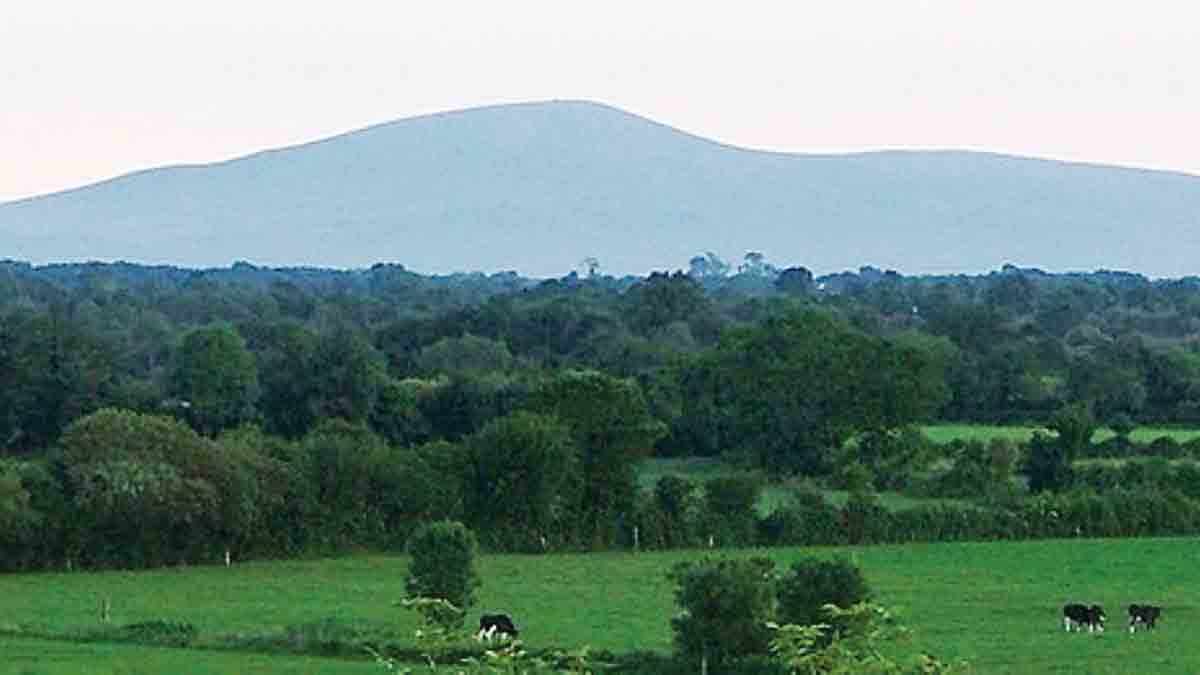
A mountainside in County Tipperary was the only part of Munster to witness an uprising in 1798. The action occurred on Carrickmoclear hill, an outcrop of Slievenamon.
A rebel army numbering many thousands planned an uprising in the county. Recruits came from areas like Windgap, Grangemockler and Mullinahone. Volunteers from County Kilkenny, with Callan and Killamery topping the list, later supported these.
Having waited in vain for the French to arrive, the rebels fixed on July 26th for the revolt. Their leader was a Captain Power, who held a commission in the French army.
Unfortunately, a local publican, Maher of Nine-Mile-House, betrayed the United Irishmen. He made contact with Lieut. Despard, the Redcoat commander at Mullinahone, and tipped him off about the planned revolt.
The Yoemen devised a clever stratagem. They knew that the signal for the uprising was to be a beacon fire to be lit there on July 23rd, three days before the date agreed by the rebels.
When they spotted this false signal, the rebel leadership sought frantically to alert the volunteers to what was happening. But almost 600 men walked into Despard’s trap. Awaiting them was a massive Yoemen detachment comprising troops from Callan, Kilkenny, and Clonmel.
A fierce and prolonged battle ensued. The rebels managed to repel the first attack, inflicting heavy losses on the enemy. But a sea of Redcoats overwhelmed them. What remained of the rebel force withdrew to the “High Mountain” of Slievenamon, still fighting as they retreated. For days afterwards Yoemen scoured the mountainside in a mopping-up operation.
When caught, the outlaws were hanged, flogged, or transported for life. The reign of terror continued for months. Those devoted to the cause of Irish freedom and independence were criminalized, their actions presented as “seditious and treasonable behaviour”.
In 1998, a bi-centenary committee was formed to commemorate the event. The group gave the battle site at Carrickmoclear a face-lift and re-opened the ancient roads leading up to it. The hill is now accessible to visitors. A mass rock at nearby Kylatlea, which the rebels used as cover, has also been restored.
Act of Mercy
The graveyard at Killamery village in County Kilkenny contains the remains of rebels who died in the 1798 uprising. These include men from Callan, Windgap, Grangemockler, and Mullinahone.
To honour the heroes, a plaque was unveiled at the cemetery in 1998. Danny O’ Shea of Kiltalahan, a townland near Killamery, was among those present at the ceremony. Mr. O’ Shea is a direct descendent of a rebel who survived the battle of Carrickmoclear.
After the rebels’ defeat at Slievenamon, an order went out from Redcoat headquarters-any rebel caught in possession of his pike was to be “dispatched without delay”. Unarmed prisoners were to be interrogated and punished at a later date.
One of those nursing his pike when captured was 16 year old Michael Hoyne, Danny O’ Shea’s ancestor. Troops were about to execute Michael when the Yoeman second-in-command, Lieut. Lee intervened. To the amazement of both rebels and Redcoats, Lee spared the young prisoner’s life. It was an uncharacteristic act of mercy by a man feared for his ruthlessness.
Michael Hoyne lived to be 87 years old. He died in 1869. Lieut. Lee is buried in the same graveyard at Killamery.
Before the plaque unveiling, a piper (Jim Keating) led a procession of pikemen to the graveyard. People of all ages from Killamery and surrounding areas took part, carrying the harp-emblazoned banners of the United Irishmen. Michael Power and Milo Cuddihy commanded the guard of honour.
Moving orations were delivered, recalling the heroism of ’98 and the spirit of non-sectarianism advocated by Tone.
(My novel Invaders tells the story of how a small band of men and women faced one of the most powerful armies on earth)