


By John Fitzgerald

A Kilkenny town has said goodbye to a tireless champion of the oppressed and the disadvantaged.
Callan native Fr. Jim Halloran, who died on October 28th, had transformed the lives of countless thousands of people across the world.
As a missionary, he was driven by a passionate belief in justice and human rights. He was also an accomplished novelist and published several books on the subject of small Christian communities, which he felt could help reverse the fortunes of a church in crisis.
In 2004, the American Biographical Institute named him as one of the thousand top achievers of the 21st century.
At the Requiem Mass in Callan’s Church of the Assumption, locals were joined by people from all over Ireland to pay their respects to Fr. Jim and honour his exemplary life.
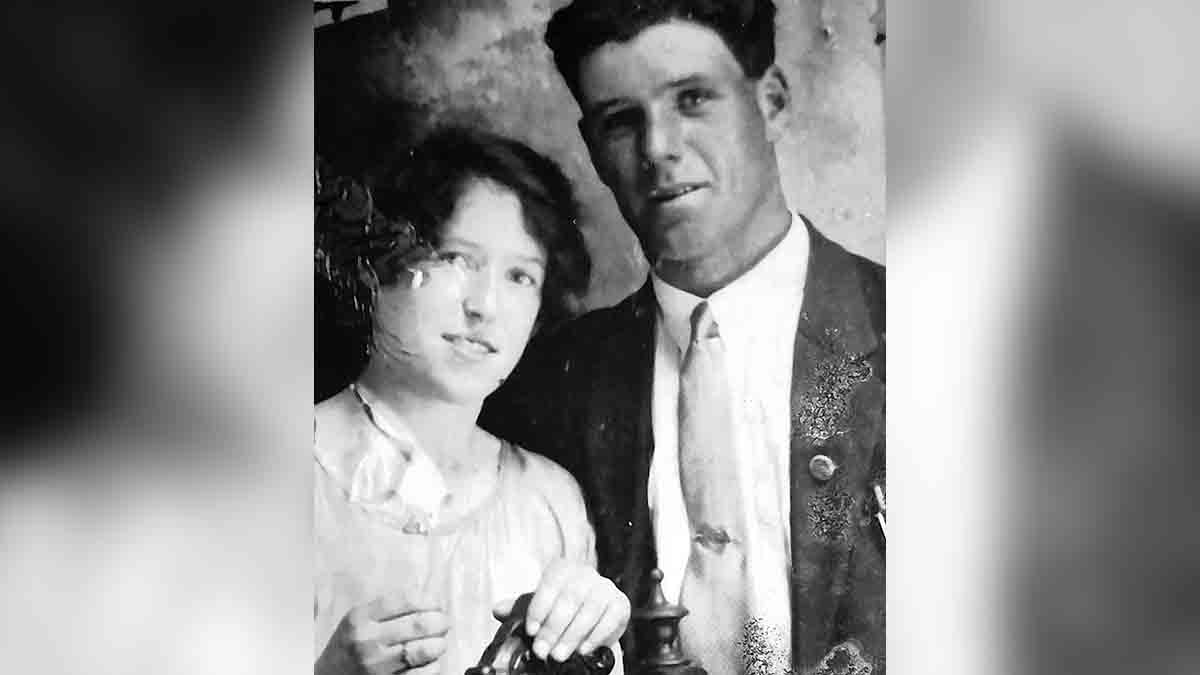
Jim O’Halloran was born in Callan in 1932, son of Martin and Jane (nee O’ Reilly). The family lived at first in Mill Street and then moved to Skeaugh, just outside the town.
His education began at St. Brigid’s School, where the nuns taught him. Next he attended the Academy, a national school, and the Christian Brothers School in the town.
Retired postman Jimmy Walsh of Mill Street was a schoolmate of Jim O’ Halloran’s at the Academy. He remembers Jim as an uncommonly bright pupil who flew through even the most difficult subjects. Jimmy recalled: “First, second and third classes were all in the same room. Jim was one class ahead of me, but I’ll never forget his brilliant mind…always alert…with a world of knowledge at his fingertips. But he loved sport too. He wasn’t always stuck in a book. He hurled like mad in the evenings in the fields around Callan.”
Callan of Jim’s childhood saw hard times. Emigration was rampant. As often as not, the streets were deserted, with just a few elderly folk or children about. His mother remarked one day: “If you placed a canon at the end of Bridge Street, and fired a ball up through the town, you’d hit nobody.”
His mother cycled from Callan to the family home at Skeaugh in the early forties with “a half-ton of groceries” on the bike to meet the needs of her husband Martin, herself, and their fourteen children.
As a teenager, Jim felt he had a vocation to be a priest. He was particularly impressed and influenced by the example of the Augustinians in Callan. The Order had been in the locality for five centuries and had won their way into the hearts of Callan folk with their simple dedicated lives and deep spirituality.
But it was to a different religious order that Jim that would devote the best years of his life. At age fifteen, he left Callan to complete his secondary studies at two different Salesian Colleges, one at Pallaskenry, County limerick, and the other at Ballinakill, County Laois. He then progressed to higher studies, attending universities at London, Oxford, Maynooth, and Philadelphia.
In pursuit of his priestly vocation, he entered the novitiate of the Salesian Congregation in Sussex, England. In 1963, he was ordained a Salesian priest at the Congregation’s HQ in Italy. His first appointment was to Malta as headmaster in a school for deprived young people.
In 1970, he was appointed to the Salesian South American Mission in Ecuador. There he continued teaching and lectured at the Catholic university in the capital, Quito.
But he also worked in deprived areas of the city, where he came face to face with the injustices and inequalities that blighted the lives of many Ecuadorians.
Fr. Jim spoke up for people who were exploited and repressed by the country’s military junta, acting as a voice for the poorest of the poor. He was posted to other parts of South America, and also to missionary assignments in Africa. On both continents he stood with the downtrodden and championed their rights to education and equality.
From his experience of poverty, economic exploitation, and dictatorship, he became convinced that “basic Christian communities in Latin America and Africa, if they networked, could be powerful instruments for development, justice, and peace.”
This insight shaped his life and became a new driving force behind his missionary work with communities worldwide. His work took him to universities and other centres of learning across the globe, as well as to remote villages and far-flung mission stations.
Fr. Jim strongly believed that the way forward for an embattled Catholic Church was to implement the “community model” of church proposed by the Second Vatican Council.
This proposal envisaged having all members of the Church, whether clerical or lay, participating equally in its day-to-day functioning.
The Callan man explained his thinking on this issue for me when I met him in Kilkenny in 2002: “I actively encourage, not just Christian communities, but groups of all kinds, whether religious or not, to link up with and support each other. I believe that if people come together at grassroots level they can really change the world. Reform can be initiated from above…renewal must come from below.”
When not immersed in his missionary duties, Fr. Jim could be found at his desk, writing. A creative powerhouse, he penned both novels and deeply philosophical works.
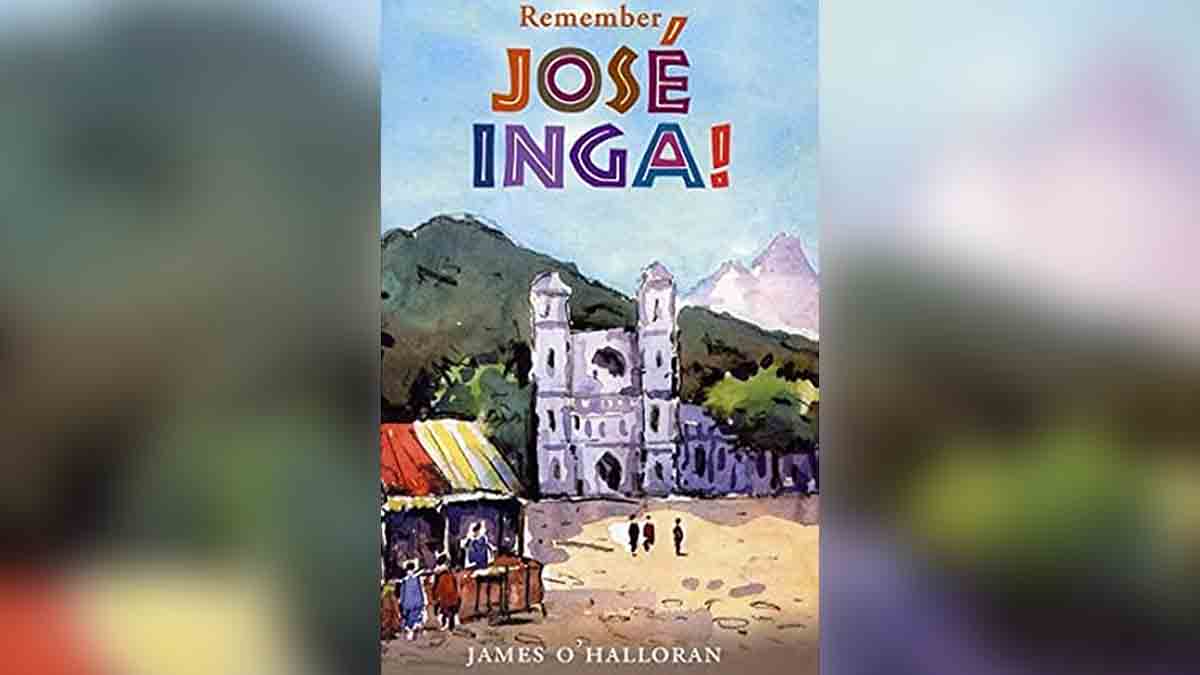
In The Acacia Bird Sings (1999), and Remember Jose Inga! (2003) he drew upon his experience of battling injustice and illiteracy in Africa and South America, and he won critical acclaim for his depictions of real people living under tyranny.
A Christmas Truce Carol (2012) was inspired by a temporary unofficial ceasefire in World War One, when British and German soldiers stopped killing each other and played football in No Man’s Land.
In his non-fiction books he explored a range of theological issues, and promoted the concept of small Christian communities.
Though Fr. Jim never sought recognition for his work, in 2004 he received a rare accolade: The American Biographical Institute officially deemed him to be one of the greatest minds on earth.
Since 1967, the ABI had studied and documented the lives of many great men and women worldwide.
The ABI’s reference works have won critical acclaim for their consistently high quality and unimpeachable accuracy. The volumes find their way into libraries and universities worldwide.
The ABI’s designation of Fr. Jim as one of the top thousand “great minds” therefore came as a both a surprise and a shock to him, and to the people of his native Callan, for he had been numbered among such notables as Mother Teresa, Albert Einstein, Stephen Hawking, and the Dali Lama.
His eight brothers and two sisters, other members of the extensive O’ Halloran clan, and his many friends in Callan were ecstatic at the news.
But Fr. Jim didn’t let this high profile boost go to his head. He continued his missionary work, and, into his late eighties, was still writing, celebrating Mass, and, of course keeping in contact with his family back in Callan, who were never too far from his thoughts.
His visits were eagerly awaited locally, and when his novels were launched in the parish hall there was barely standing room.
All who knew him, or even had a brief meeting with him, remarked on his wit, perpetual good humour, and his smile that was like a ray of sunshine. And he never lost his love of sport. Wherever he was in the world he’d have a radio handy to “follow the hurling.”
While inclusion in an earthly Hall of Fame was an apt honour, I reckon that Fr. Jim is now in receipt of a far greater accolade…this man who brought light and joy to so many lives.
(Pre-deceased by his parents, his brothers Pod, Sonny, Micky, Frank and Dick and his sisters Annie, Jane and Alice. Missed by his brothers Liam and Noel, his sisters Mary (Cuddihy), Kathleen (Lawe) and Peggy (Anthony), nieces, nephews, grand nieces, grand nephews, brothers-in-law, sisters-in-law, relatives and friends.)