


By John Fitzgerald

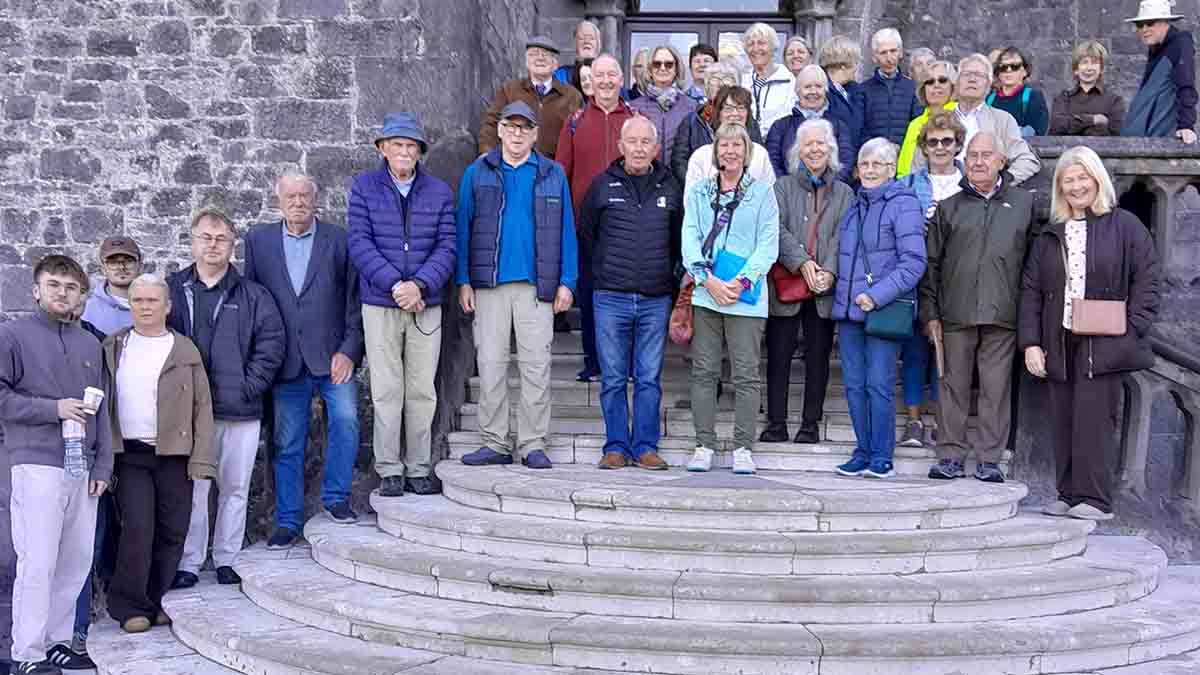
The Kilkenny Heritage Walkers marked another milestone on Saturday. Marianne Kelly led them on their 750th outing, exploring more of the city’s hidden and overt cultural gems. I joined them for the occasion. The weather was favourable. A freezing cold morning had given way to autumn sunshine. A blessing, everyone agreed.
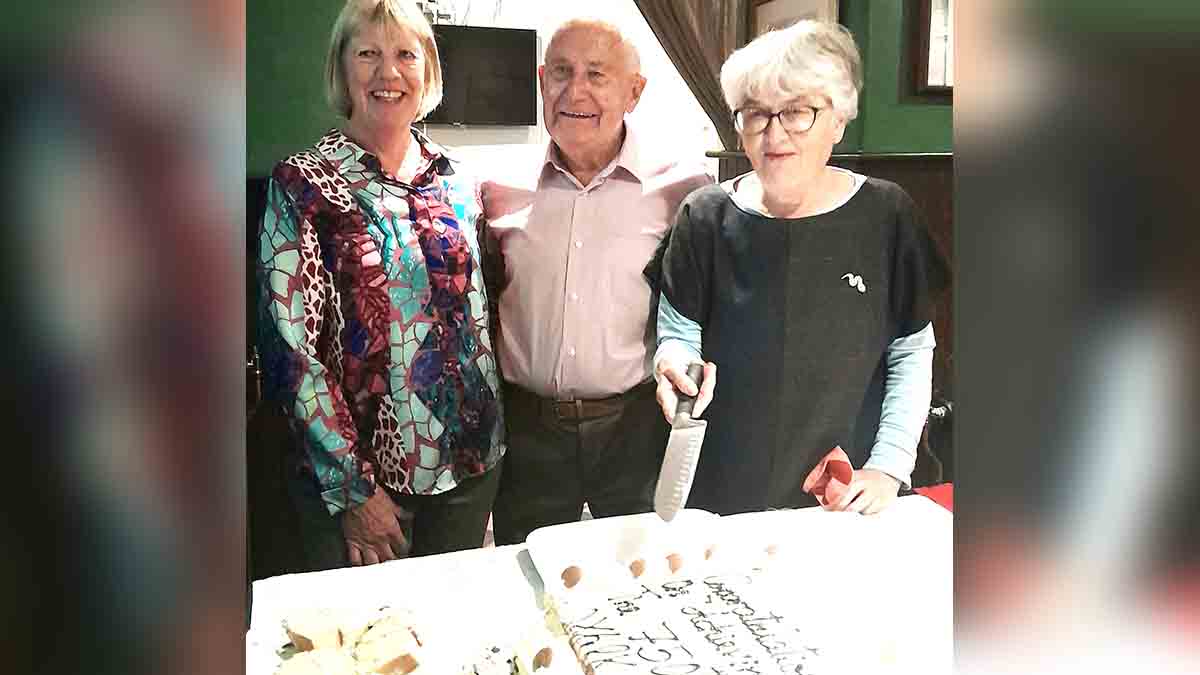
Afterwards the group celebrated the success of their weekly steps back in time with a modest but joyful get-together in the Home Rule Club.
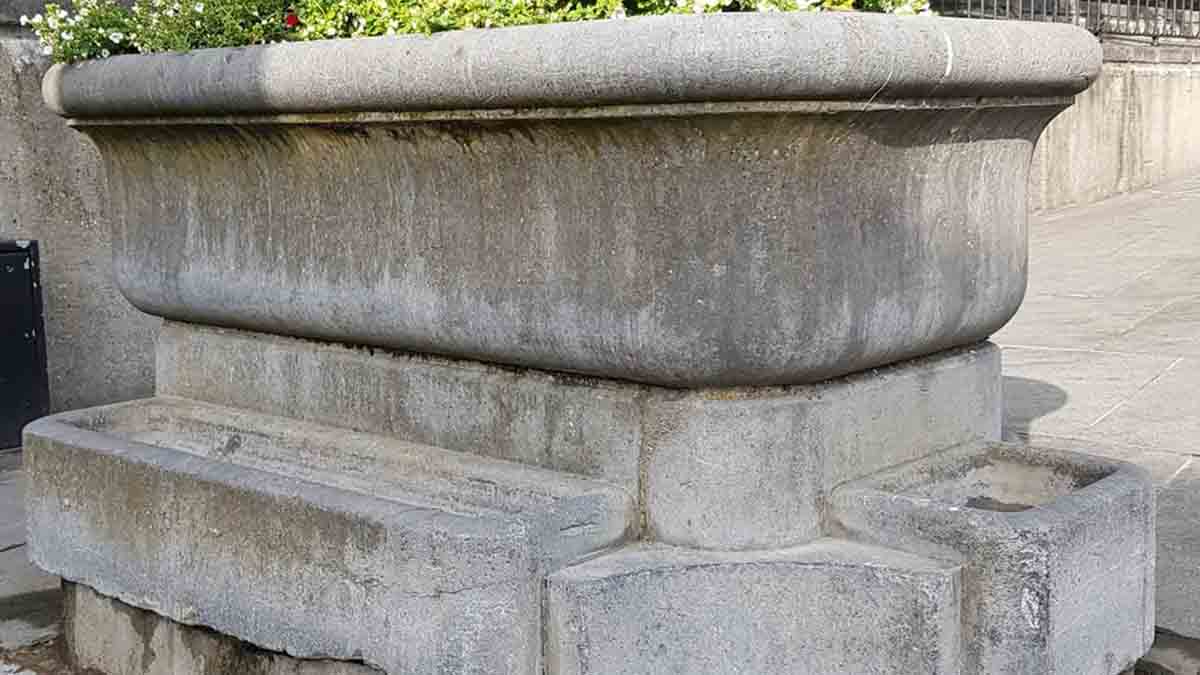
Most Saturdays, the walkers meet at the Horse Trough on the Parade, so it was apt that Marianne started her presentation with a spiff about that relic of another age. She recalled that the Kilkenny Society for the Prevention of Cruelty to Animals (KSPCA) commissioned the provision of the trough in 1902 to cater for the city’s hard-pressed workhorses.
It proved a welcome relief to the animals, especially in hot sweltering weather when they craved water as they pulled heavy wagons or delivery vehicles over rough cobbled ground, damaging their hoofs and joints in the process. They were worked to exhaustion, and kindness depended on the owners or drivers. The trough at least relieved their thirst.
It survived the gradual phasing out of the worthy equine servants that followed the advent of motorized transport, and has ever since been a favoured meeting or starting point for events of all kinds in the city, including the Saturday walkers themselves.
Marianne noted how the KSPCA had shown great foresight and compassion in adding the horse trough to the city streetscape and mentioned in passing that it was an Irishman, Richard Martin MP, who had founded the world’s first animal protection society.
The walkers then entered the castle grounds, where the Rose Garden Lawn to our left was bathed in sunlight, its fountain cascading gently, encircled by dozens of tourists posing or taking pictures. A little dog scampered about, shaking himself when the water sprinkled him.
Marianne shed light on little known castle curios, and explained some of the ornate heraldic emblems that bedeck Kilkenny’s Jewel in the Crown
She drew attention to some of the classical statuary for which the castle is noted: Diana the Huntress, a Roman goddess, and Hermes, the revered Messenger of the Gods in Greek mythology. They looked oddly out of place amid 21st century apparel, zoom lens cameras and slick smart phones
Marianne elaborated on the adventures of those exotic beings: their shape-shifting, miracle working, casting of thunderbolts, and epic cosmic showdowns.
The group then crossed the street to the Kilkenny Design Centre, to see a five-foot high fiberglass cat.
Designed by artist Stephen Aylin, it was one of the sculptures created for the Kilkenny Catwalk Art Trail in 2021. The cat has charmed thousands of visitors in what used to be the castle yard for centuries, long before the design centre was built.
If the story of the trough on the Parade was intriguing, the presence in the city of a big chunk of Nelson’s Pillar was an even greater revelation for those who hadn’t heard how parts of the bombed (and demolished) statue of the famous British war hero had found their way to Kilkenny.
Marianne recounted how in March 1966 an IRA team carried out an attack codenamed Humpty Dumpty that blew Nelson off his pillar. Shortly thereafter, the Irish army in a less professional operation demolished the remainder of the pillar and shattered every shop window in O’ Connell Street.
Before all the rubble could be cleared away, people snatched chunks of it as trophies. Among them was a man who happened to admire the quality of the stonework carving. He took some of the stones back to Kilkenny in the back of his truck, mindful of their possible historic or aesthetic value.
They remained unheeded and almost forgotten in a shed… until the restoration of the Butler House Gardens as an acclaimed millennium project. The stones thus found a fitting new home, far from the capital.
The walkers inspected the 16 stones in the Butler House Gardens. They are tastefully arranged in box hedges around an unruffled pool. It mirrored the autumnal sunlight as the group connected to yet another part of Ireland’s turbulent legacy.
Though parts of the lettered stonework rescued from the base of the doomed pillar are difficult to decipher, it’s believed to honour the admiral’s victory in war.
Leaving behind the gardens and the stony time capsule, the walkers revisited sights and themes that featured in past outings, but Marianne approached each of these from a new perspective, pointing out lesser-known aspects of the city’s architecture and streetscape.
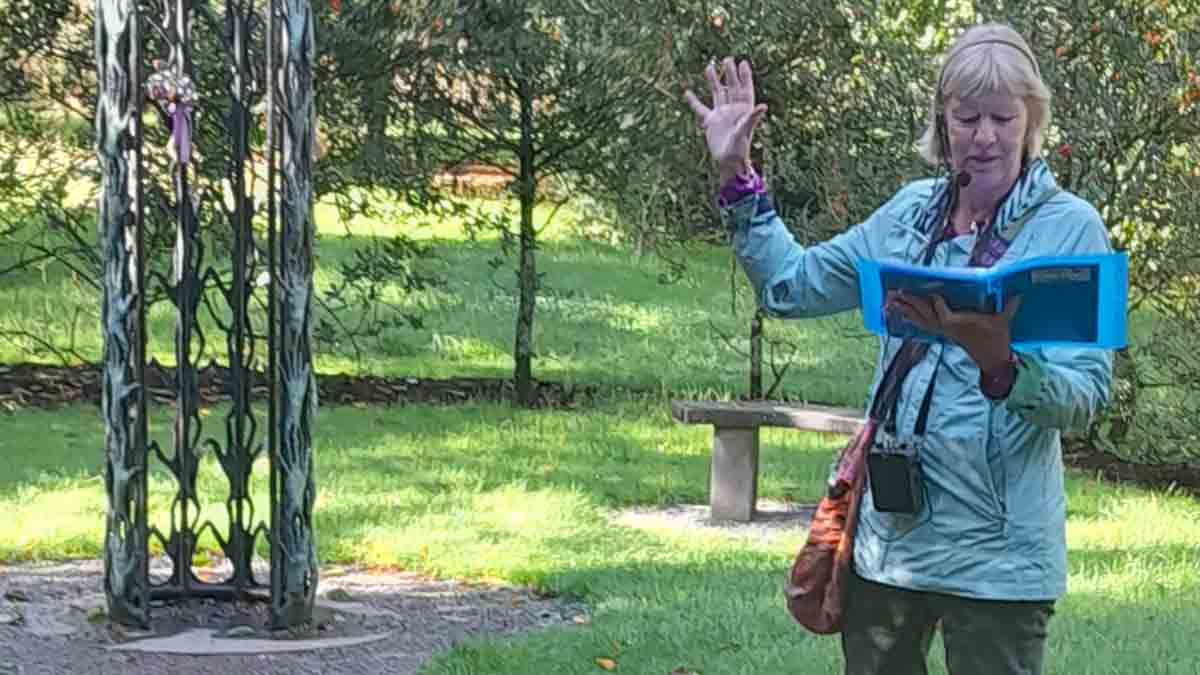
Since the heritage group began its weekly talks and walks, it has paused on many occasions at one very special artwork in the castle grounds: the national monument to missing people. The group concluded its 750th walk on Saturday with another visit.
The monument was officially unveiled in 2002 by then President Mary MacAleese. The eight-foot high sculpture, by local artist Anne Mulrooney, has hand prints from families of missing people, each one cast in bronze and interwoven into a latticed design.
The Jo Jo Dullard Memorial Trust, set up by Jo Jo’s sister the late Mary Phelan, commissioned the work, which was funded by the National Millennium Committee Project.
From all over Ireland people travel to see the monument, to reflect, and often to pray, or just to make a heartfelt plea to the universe for long-denied justice…for an end to the long wait.
The walkers continued on their way, after adding their own hopes or prayers to the countless others elicited by the sculpture, which does silent homage to those who, though listed as “missing” are not forgotten…and never missing from the hearts of their loved ones.
The walk of the day complete, the group headed to the Home Rule Club, where historian Paddy Neary commended the walkers’ resilience, and the passion that drives their weekly explorations. He recalled the hundreds of Saturday outings that took them down all kinds of meandering and mysterious pathways to behold or extol past glories, achievements, or ordeals.
Marianne Kelly honoured those from the group who had passed to a better world: Tom Downey, Kitty Norton, Mary Gittens, Sean Hoyne, Mícheál Brennan, Seamus Brennan, Ian Coulter and Ned Kennedy.
As they cut into a celebratory “750” cake, the walkers cheerily vowed to soldier on for as long as their feet, and their lives, will carry them…along the lanes, roads, tracks and trails to yesteryear.