


By John Fitzgerald

(Part One)
I’ve quoted the late Seamus O’ Brien many times in articles. Throughout his life, Seamus promoted all aspects of Callan’s heritage and was a tireless community activist. He loved sport and served on local committees dedicated to reviving the sporting fortunes of the district.
He was a long serving secretary of the John Lockes Hurling Club.
He used his position as a local newspaper correspondent to boost his native town with his commentaries and pithy news items.
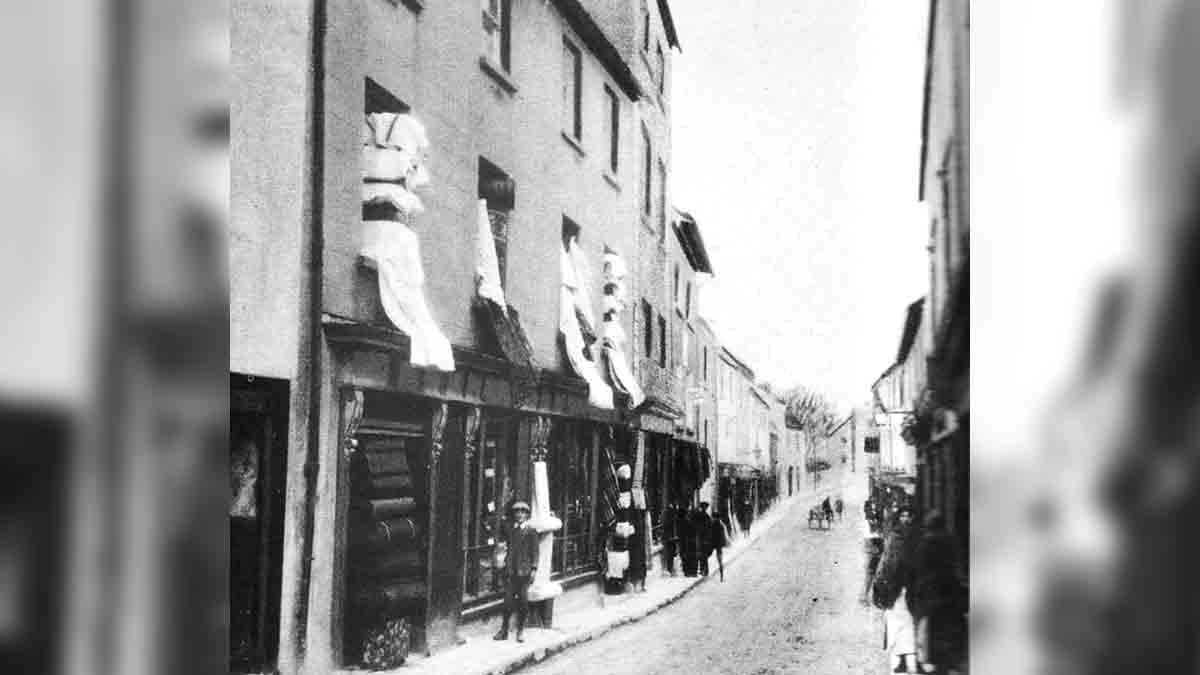
Upper Bridge Street in Seamus O’ Brien’s childhood and teenage years was very different from the less attractive but still charming thoroughfare it is today. There were no satellite dishes, little in the way of traffic congestion, and not a derelict building in sight.
Though the shortest of the four Main Streets, it was for the opening decades of the 20th century the town’s principal shopping area. A staggering twenty-seven businesses thrived in the street, which meant that every house was a hive of economic activity. A showcase of ambition and enterprise, some proud locals dubbed it, rightly or wrongly, the “busiest street in Callan.”
Seamus lived at number eleven with his parents, sisters, and brothers. Before 1914, Michael and Mary Bishop had owned the house. Mary employed Annie Morrissey of Conahy in a drapery business she had established on the premises. Annie (Seamus’s mother) took over this business after Mary’s death and in 1916 met and married William O’ Brien of Grangemockler, Seamus’s father.
A master carpenter and builder, William had been in town working on the construction of the creamery manager’s house in West Street. The couple opened a newsagent’s shop, which was a big success from day one, closing only a few years ago.
Early Memories
Seamus was born in 1922, one of six children. One of his earliest memories is of his father shuffling through the shop with a struggling pig flapping about in a canvass bag, which he proposed to raise and fatten in the garden, a common practice at the time to supplement one’s income or provide food for the family.
Willie tried to stifle the squeals of the pig but Seamus heard it all too clearly. The sound seemed to pierce his eardrums.
A local butcher, Mattie Lanigan, slaughtered the pig. Seamus was transfixed by the spectacle of the razor-sharp knife slicing and squelching into the animal’s quivering carcass and the noise of its ever-decreasing cries of pain or distress as it expired. Other pigs followed this one through the house and into the garden.
The family enjoyed regular meals of pork steak, rashers, black and white puddings and pig’s head and shared the bountiful meat with their neighbours.
Another childhood memory Seamus treasured was that of the songbirds. They gazed and chirped at you from cages that hung outside almost every house in the town… filling the homes and streets of Callan with their melodious sweet music.
Finches and linnets were the main performers in this daily choir, though song thrushes put in an appearance too. Some householders partially covered the cages with cloths to protect their birds from the ever-vigilant hawk, swooping over the Callan skies in search of easy prey.
The prevalence of this attachment to artificially generated dawn choruses and daylong avian operatic recitals in the town was extraordinary. In Green Lane, for instance, Seamus noted that, from the 1920s through to the late 1950s, the Kearneys, Dowlings, Corcorans, Fannings, Roches, Woodgates, and Keatings kept songbirds.
A Ms. Bergin was a conscientious objector on Green Lane who avoided this tradition as she felt that birds should not be confined in cages. “They should”, she opined, “be flying free in the wide blue yonder, as God intended.”
Today, the remnants of the songbird days in Callan are still evident, though you need to be especially observant to detect them.
Some of the nails from which hung the cages of those winged if captive entertainers are there, protruding from the walls about seven feet off the ground… reminders of an era that would, I imagine, be as offbeat and unfamiliar as the Stone Age to some twenty-first century townsfolk.
The tradition of keeping songbirds in Callan began to fade out by the early 1960s and today it is rare to hear them in homes of the district.
Tom Comerford of Green Lane was among the last residents of the town to have a bird singing in front of his home. The singer that delivered the final performance for Tom died, according to Seamus, in the autumn of 1962.
As the aged linnet gasped her sawn song, in a rendition that would have put our present-day Celebrity, You’re a Star TV contestants to shame, passers-by allegedly wept.
Even the parish priest, recalled Seamus, shed a tear upon hearing of her demise and made a reference to her in his otherwise fiery Sunday Sermon.
God be good to the bird!
Some of the larger Callan shops had electricity in the 1920s, supplied by the town’s own scheme that had been up and running since 1909. But the majority of households had to make do with the old fashioned means of illumination. A flickering oil lamp hung from the kitchen wall of Seamus’s home.
A tin shade nailed to the ceiling encircled it to prevent smoke from billowing upwards and outwards and thus blackening the whole room. At bedtime, the family had enamelled candlesticks to bring upstairs.
Seamus often read by candlelight, devouring the latest Westerns and increasing his general knowledge of the turbulent world into which he had arrived the year Michael Collins was shot.
In most Callan homes, including Seamus’s, a sacred heart lamp powered by paraffin burned day and night, a constant reminder of the never ceasing presence of God in their midst.
To be continued…