


Photos by Ken McGuire
PM O’Sullivan
The Black Abbey, one of Kilkenny’s treasures, possesses a quiet magic.
Fr Damian Polly, the current Prior, immediately noticed this quality on his arrival two years ago. “A lot of people get that sense of peacefulness,” he nods. “Even the tourists. They are sort of brought up short by the character of being in here.”
His colleague Fr Tom Jordan likewise nods and develops this point: “You can see the faces change in some visitors. They arrive into us and maybe they’re chatting away, talking away, still distracted by being somewhere new. And then suddenly… The peace.”
Fr Damian: “Silence descends…”
Fr Tom draws a broader moral about contemporary life. “The Black Abbey is one of the few places where there still is silence,” he notes. “Noise is very hard to avoid in today’s world. Doesn’t matter where you go, whether it’s into shops or supermarkets. There’s noise. Outside, cars and motorbikes on the street. They are louder than ever. But here is like being right out in the countryside. Or in the back part of the Castle Park.”
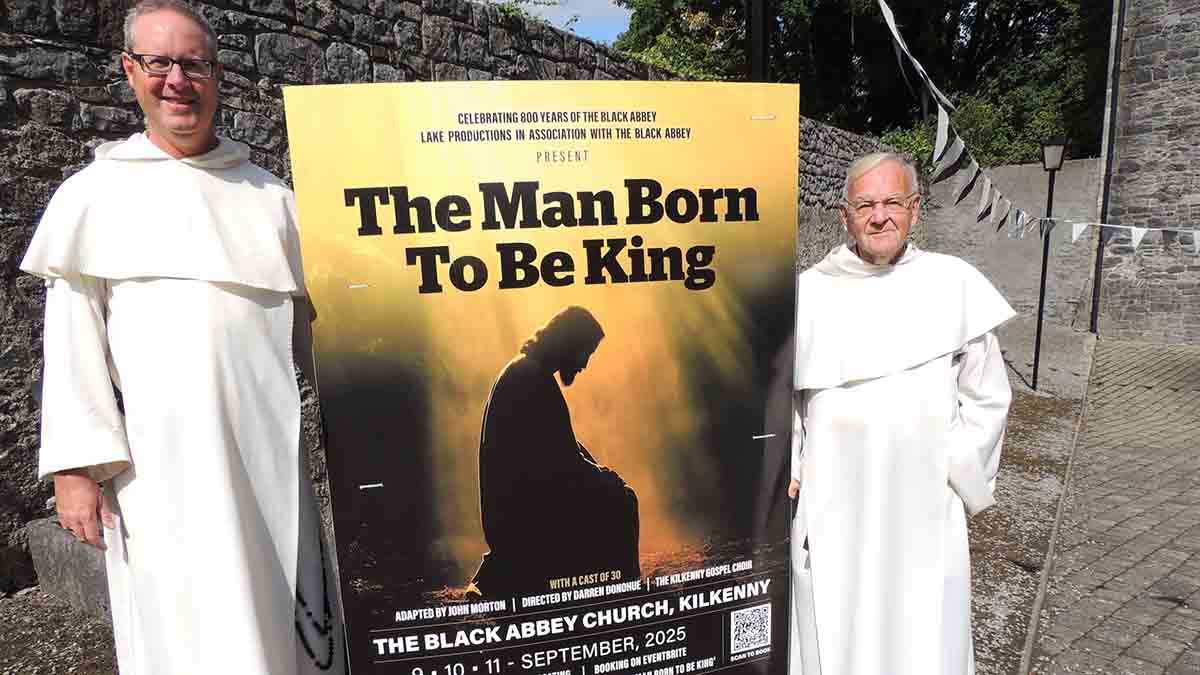
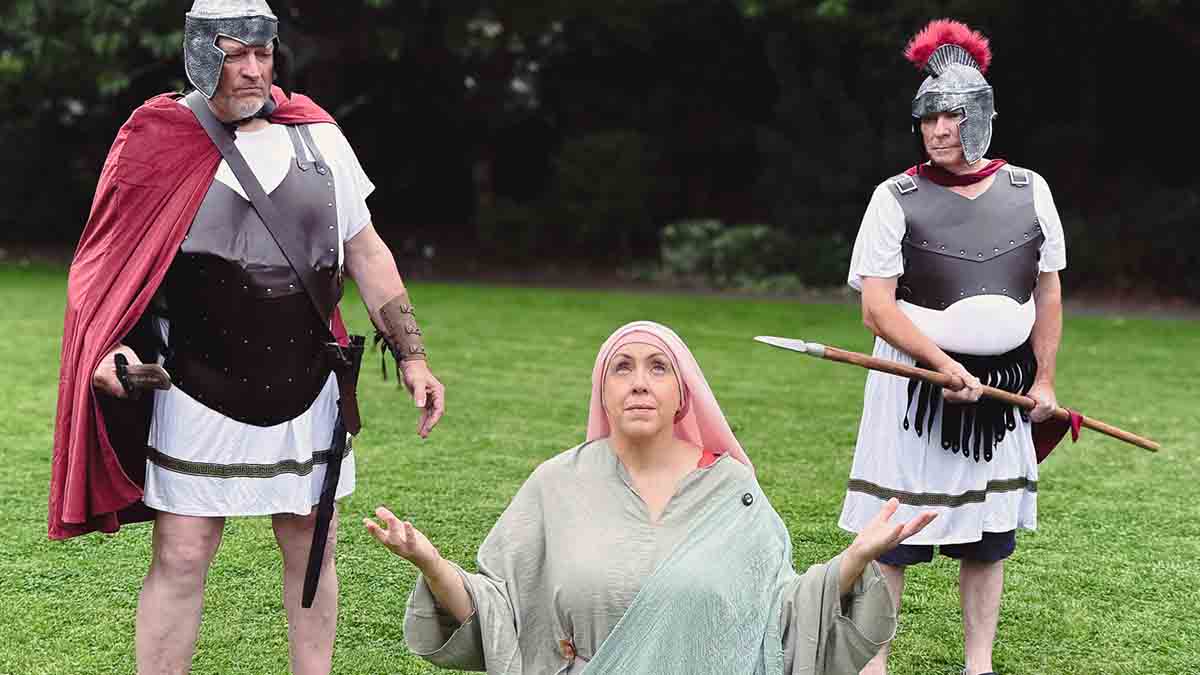
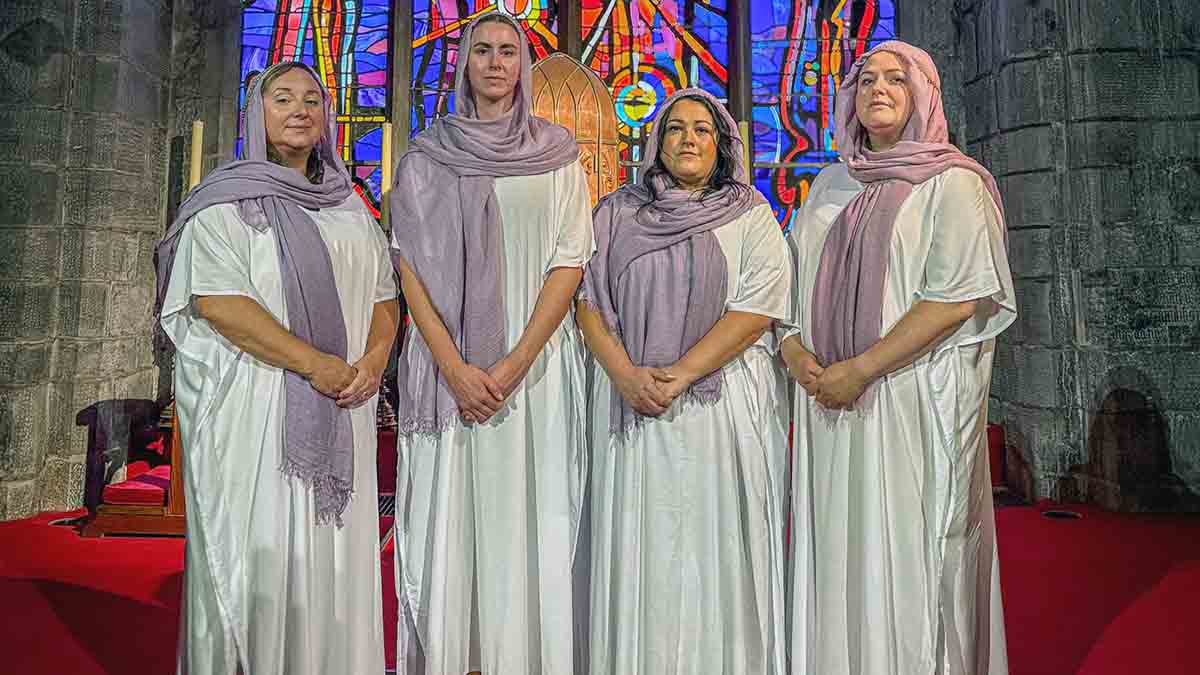
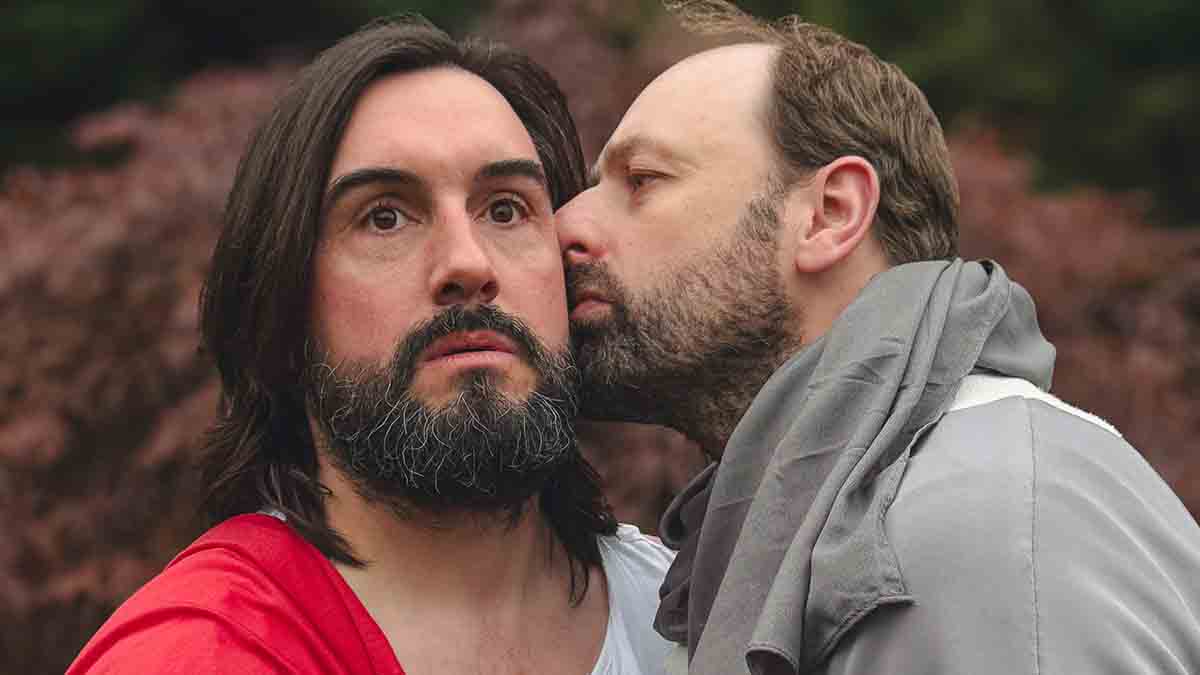
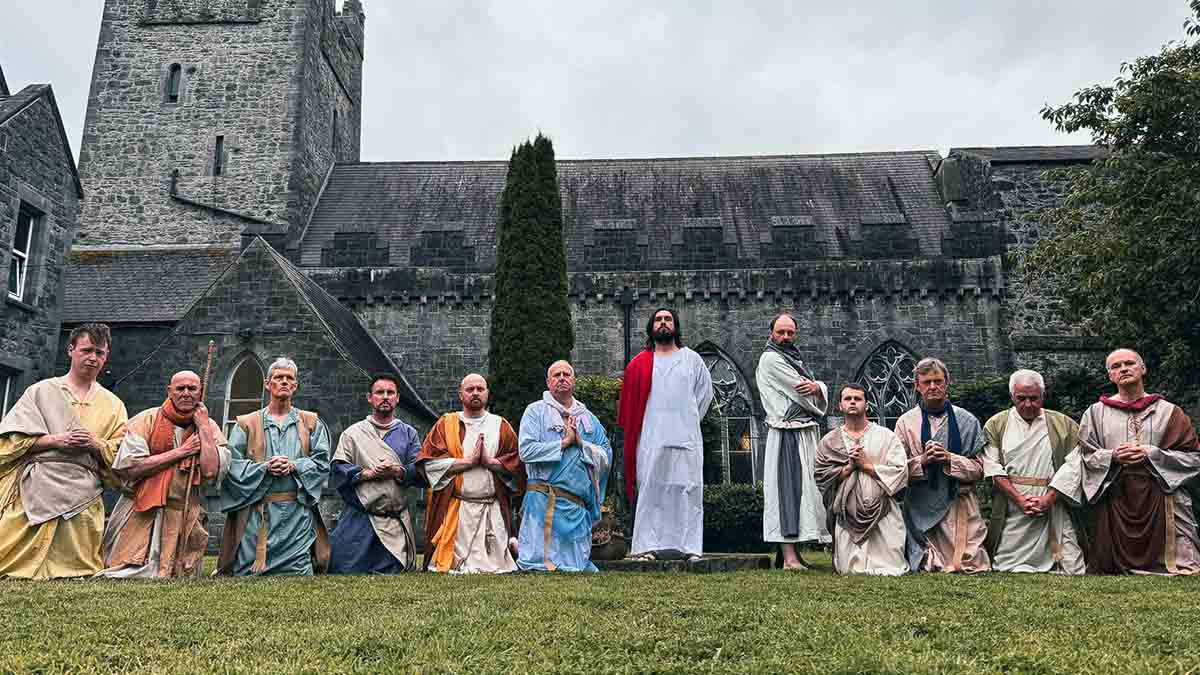
Yet few matters are absolute. The opposite of silence is drama, and these two men are equally perceptive on this activity and its value. The question is certainly topical, in that The Black Abbey, pairing with Lake Productions, will stage The Man Born To Be King between Tuesday 9 September and Thursday 11 September. Directed by Darren Donohue, this offering returns to one of drama’s oldest forms, a Mystery play based on Gospel stories. The Abbey itself is the venue for all three performances, when accompaniment will be provided by the Kilkenny Gospel Choir.
As Fr Damian explains, their rationale proved straightforward in one sense: “The Black Abbey is the jewel of the crown in our Province. Obviously here is the only original Dominican foundation that we have. Uniquely, it came back to life. So many other foundations are just in ruins throughout the country. It’s a kind of miracle that The Black Abbey is still a place of daily worship, centuries down the road.
“The immediate momentum for the play derives from our 800th anniversary in 2025. We were looking at the issue last year, because it’s such a momentous milestone. We were thinking about how best to mark the moment. So we had some brainstorming about different things we might do throughout the year.”
He continues: “And so this play came into mind. It was Tom’s idea. He brought up Mystery plays, which I hadn’t really heard of before. We were talking about concerts. We were talking about pilgrimages. We were talking about all different things. And then Tom mentioned the idea of doing drama.”
Several factors informed his colleague’s suggestion. One was an experience now five decades distant. As Fr Tom details: “I was serving in Sligo, the early 1970s, and there was an old church that had been built during The Famine. It had been found to be unsafe, really, and the building had to be knocked. So we decided that we would put on a play in the church, as a last note. Sligo had, and still has, a wonderful tradition of drama.
“Anyway, we just got together. Just devised the idea of doing part of a Dorothy Sayers play. Sayers was an English writer and she had a whole series on the Life of Christ. The BBC did it. The idea was to involve the different churches, the different choirs. And our version ran for a week, and ended up a big success.
“It even had the effect of a lot of people returning to the Church. Some of them were involved in the cast and some had been part of the audience. They were very moved by the experience.”
An unexpected twist occurred: “We had a prefab in the Market Yard around the corner that the Corporation gave us for two years, until the church was rebuilt. And it proved so popular that people didn’t want to move back, because they got so fond of that prefab. It was very intimate. But eventually we did move back.”
Reviving an element in The Black Abbey’s own history also appealed to Fr Tom. “I am conscious of the local context,” he stresses. “The Mystery plays developed in England, around Mass on Easter Sunday morning, before moving out in time into the streets. And eventually the way the dynamic developed was that different guilds would be responsible for different scenes in the Scriptures.
“There are clear records of Mystery plays being done here in Kilkenny too. Putting on The Man Born To Be King will be nothing new, in the best sense.”
Fr Damian widens history’s lens: “Post Reformation, there obviously was a lot of tension in Christianity about the presence of drama, the whole business of theatre. In 1650 nearly everything in Britain to do with the theatre got shut down. The very idea of dramatic display was offensive to [Oliver] Cromwell’s party and followers. It was seen as Catholic remnants. Then there was the iconoclasm, the smashing of statues and so on.”
He presses back to an era before this conflict, emphasising the role drama, often in disguised fashion, played in religious life: “You could even think about the raising of Celtic Crosses in Ireland. A lot of people were illiterate. Not everybody knew how to read or write. The vast majority, probably, did not.
“They put up Celtic Crosses, with the depiction of Bible scenes on them, as what you could call visual catechetical instruments. People could read them without being able to read. They were drama in stone. To see something depicted was enough, many centuries before television. I guess the same could be said about ornamentation in cathedrals.”
Fr Tom nods once more: “And the same with stained glass windows. Another form of communication through telling a story.”
His Prior elaborates on this theme: “Even when you think of some of the Gospel narratives like Jesus preaching on the side of a hill, a site that would be like an amphitheatre, to several thousand people. It’s just complete drama. Jesus would be telling parables and telling stories, preaching through stories. People in the audience would be imagining all these scenarios.
“Jesus was like a master storyteller. In that sense, there are many Biblical scenes that stand out as intensely dramatic. Religion has always made use of drama as a resource.”
Fr Tom stirs at the mention of amphitheatres’ importance. He puts himself back in 1954, resumes being a schoolboy in Bagenalstown. This youngster learnt the power of spectacle with a certainty never relinquished.
“That year, the life of St Patrick was being celebrated,” he recalls. “It was part of the festival An Tostal. There were lots of different events. An aunt of mine took me to one in Slane, which is another natural arena, as anyone who goes to a concert there well knows. I remember St Patrick, played by Anew McMaster, came up the River Boyne on a boat. McMaster was one of the leading actors of that time, and he was dressed in a big white costume and carrying a crozier. St Patrick was arriving in Ireland on his mission, of course.
“And then, that night, we went on to Tara. And there was another scene there. During that one, they lit a fire on the Hill of Slane. We were in Tara and we could see it. And the whole thing came alive, because the druids said that if the fire wasn’t put out tonight this fire would never be put out in Ireland.”
He looks away: “I can still see that blaze in my mind’s eye.”
The production has been made possible by the sponsorship of The Kilkenny Public Commemoration Scheme 2025, in association with Kilkenny County Council. The Man Born To Be King, adapted for stage by John Morton, is directed by Darren Donohue and will run at the Black Abbey from 9 to 11 September. Booking is through Eventbrite.