


BY JOHN FITZGERALD
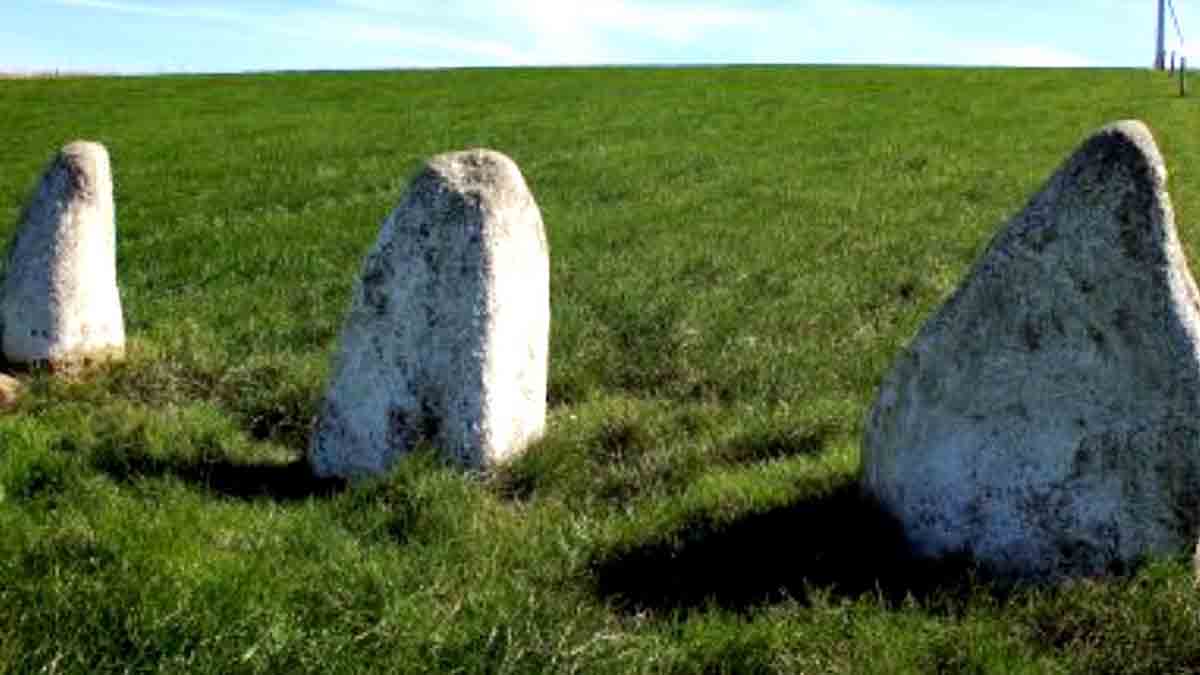
 If you pass through Nicholastown in South Kilkenny, you will notice three stone pillars rising out of the earth.
They present to the eye a stark and haunting three-fold image, recalling ancient times and dark deeds. Dating to the Bronze Age, the standing stones were painted white in honour of three friars who were executed by Cromwell’s men close to the spot.
They are almost dazzlingly prominent against the flatness of the countryside that surrounds them like a carpet of green. The Dollard family of Smithstown has kept the tradition alive by giving the stones a fresh coat of paint every year.
Though of ancient origin, folklore has woven its own inimitable spin on the significance of the pillar stones. Legend speaks of a dedicated friar, Brother Dominic, who sought refuge in the home of a local farmer to elude the
Roundhead troops and their bloodhounds. Every monk had a price on his head.
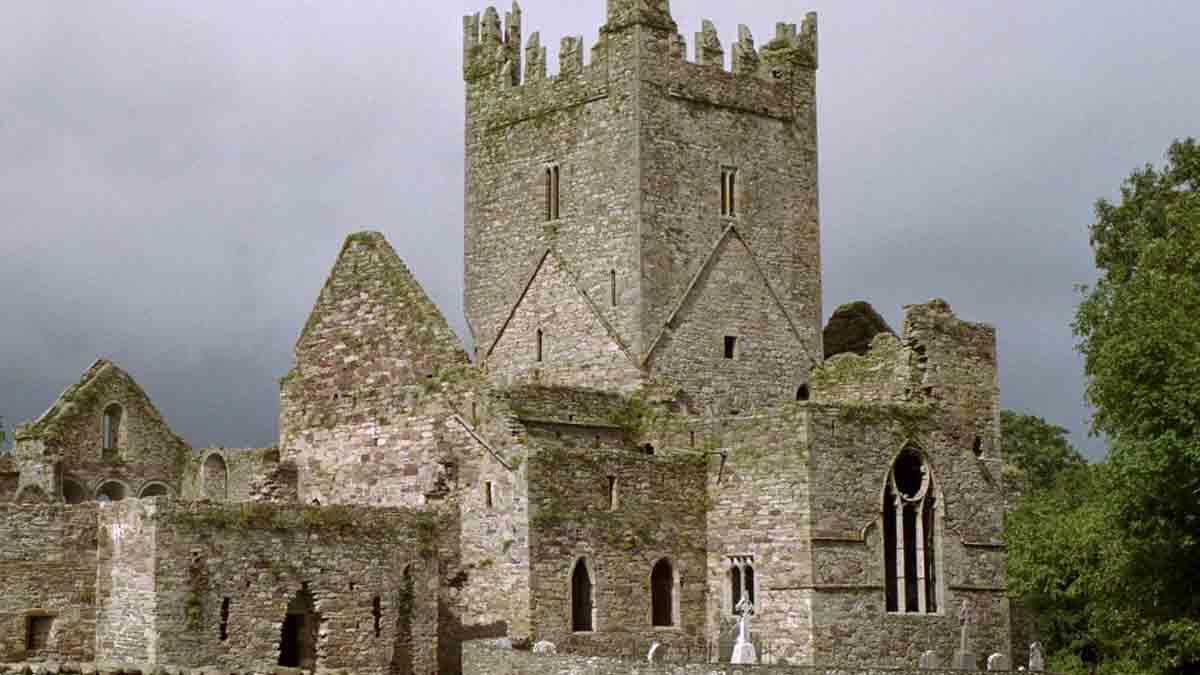
Cromwell had just reduced Jerpoint Abbey to ruins and slaughtered the monks found within its walls. Brother Dominic decided to lie low for a while until the invaders had left the area. He was concerned about two other friars who had been visiting a nearby convent and had not yet returned.
They arrived at the farmstead later that evening, numbed by the horror of atrocities they had witnessed as they scurried across fields to avoid the rampaging Roundheads. They had seen hovels blazing, summary executions; men having their tongues ripped out, and the sad, hollow-eyed corpses with ropes fastened tightly around their necks.
These once lively, hard-working and good-humoured men and women of the parish now swayed grotesquely from trees that now reeked of death.
It was not a good time to be a monk, or an outspoken critic of the Right Honourable Mr. Cromwell. But Dominic and his fellow friars refused to go about in disguise or abandon the Faith that had sustained them through their lives of poverty and obedience.
In the farmer’s house, they knelt and prayed for Cromwell’s men-much to the farmer’s bafflement and annoyance- imploring God to forgive them their trespasses. The farmer outlined, in language that might not be considered apt in the company of monks, what HE would like to do with Cromwell on a dark night in Slieverue.
But as dawn broke the following day, a caller to the house breathlessly informed all within that Roundhead cavalry was approaching and would soon be on their doorstep. The monks set off again through the fields.
As darkness gathered, they lay down to rest in the ruins of Jerpoint Abbey, thinking, perhaps, that lightning would not strike twice in the same place. But as they had a bite to eat, a Roundhead officer spotted them from the top of a hill. The sight of three Catholic clergymen dining happily in the church ruin, which was still smouldering, was too much for the Cromwellians.
They charged down the hill to capture their enemies. The friars made no attempt to escape or offer resistance. They blessed themselves and gave up without a struggle. The troops tortured them for hours, pulling out all their fingernails, inflicting cuts designed to cause pain without killing, before “half-hanging” them from trees. Death came as a welcome relief. By morning, Heaven had three new martyrs.
A second legend has it that the three friars had escaped from the Augustinian Abbey in Callan. According to a third legend- which seems a bit too off-the -wall to be based on fact- the troops, after executing the friars, then rode into Garranda, the present-day village of Mullinavat, for a drinking session in a tavern called The Rising Moon. To celebrate the previous night’s work, they drank and feasted into the early hours. But the officer in charge of the group suddenly turned pale, and began frothing at the mouth.
Pointing to a spot in front of him, he starting raving about three ghostly figures that that had appeared in the tavern. As his men tried to calm him, the officer became hysterical, shaking from head to foot and roaring about three monks who were standing there, pointing accusing fingers at him. It was like a scene from Macbeth.
“Save me, God forgive me! He shouted, “They’re choking the life out of me.” He fell dead on the floor, knocking over a table as he went down and striking terror into the hearts of his men.
Because of the negative associations created by this incident, the Rising Moon had its name changed to the Rising Sun. So the legend goes.
The local people interred the bodies of the slain monks in holy ground. In reverence to their memory, a practice began of painting the three ancient standing stones at Nicholastown.
Ever since they’ve been called “The Three Friars.”