


Photos by Danny Lahart
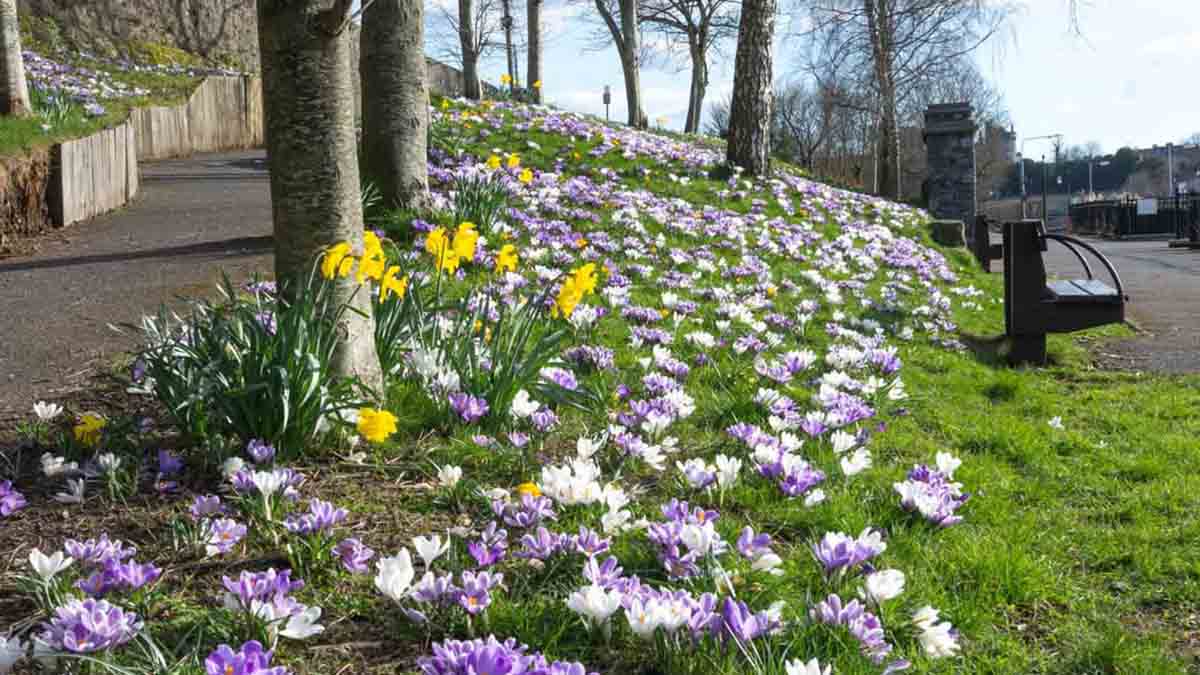
The Kilkenny Great War Memorial Committee had a desire to improve the envoirns of the memorial to the over 800 Kilkenny men and women who died during the First World War.
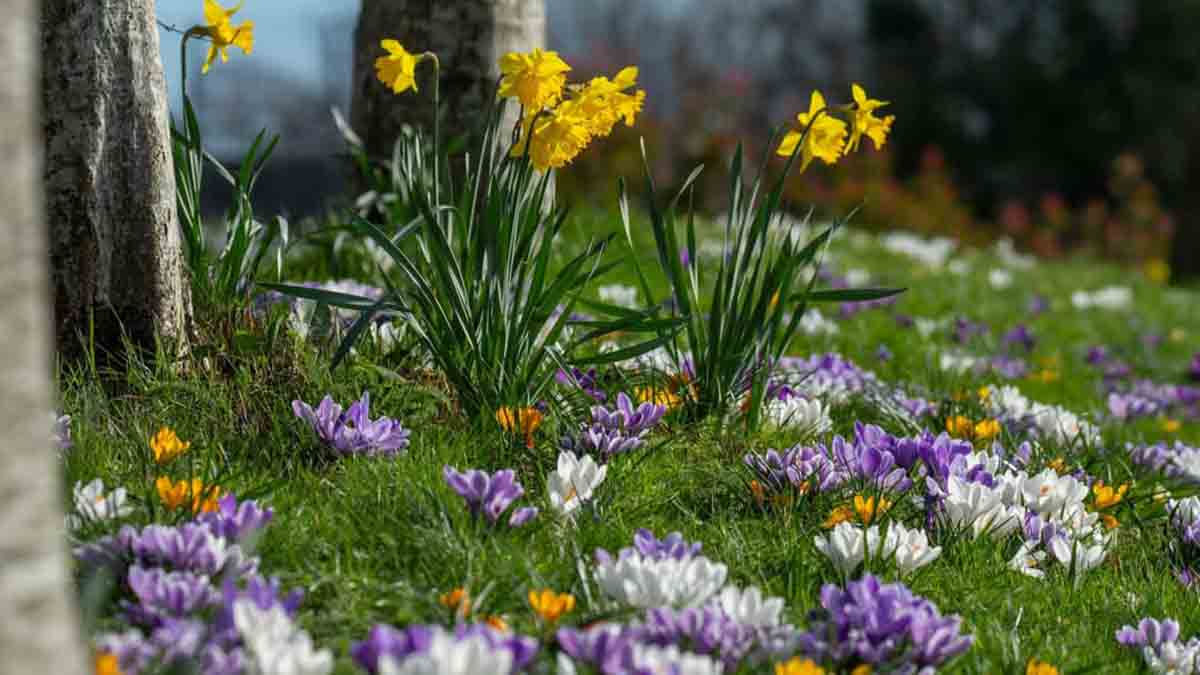
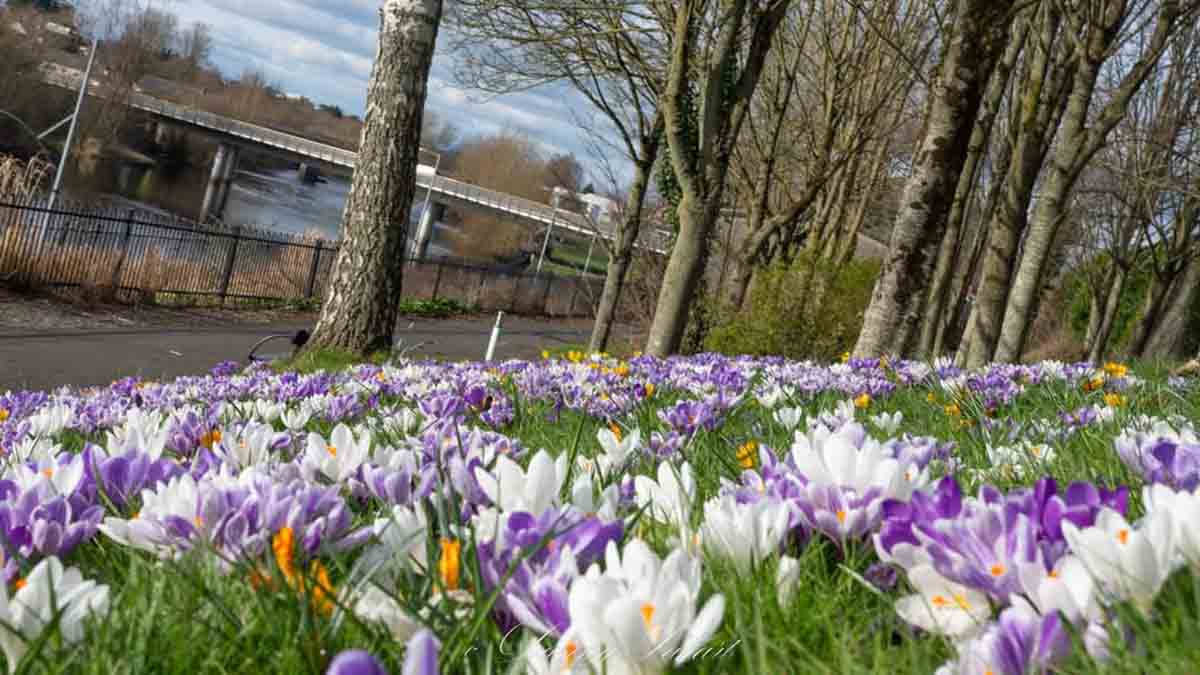
To this end, the idea to place Crocus bulbs in the raised grass bank was born. This task was enormous to achieve from the resources of the Kilkenny Great War Memorial Committee fund. However the partnership was made between the Keep Kilkenny Beautiful committee who saw the potential of the planting they provided funding for the bulbs as well as an Amenity Grant from Kilkenny County Council and the Michael Street residents contributed to purchase the bulbs. The bulbs chosen are Bee friendly and they are an excellent source of pollen and nectar being pollinator friendly. The design and planting was coordinated by the war memorial committee and carried out by Keep Kilkenny Beautiful members, Michael Street residents, Volunteer Centre members and local people. On sunny September evenings and weekends initially, 20,000 pollinator-friendly Crocus bulbs were planted and last year another 6,000 were added, bringing the total amount to 26,000. A grass management plan is in place for the bulbs to die down naturally as the flower development is taking place for the next year. The Kilkenny Area Office gave assistance to erect the marker bollards for the grass cutting operatives. Research has shown that there are 33,169 Irish men and women from the 26 Counties of the Republic of Ireland. The wish is now to plant another 7,169 Crocus bulbs around the memorial to have them as a national tribute to all of them. This will cost €1,000 to purchase.
The Crocus symbolises
The Crocus symbolises cheerfulness, gladness, mirthfulness, glee and youthfulness. The crocus flower’s message is one of joy and cheerfulness that celebrates the return of spring.
The crocus flower colour meanings are:
White – Purity, Innocence and Truth
Purple – Dignity, Pride and Success
Yellow – Cheerfulness, Gladness and Joy
It is no wonder that the crocus has a reputation for cheerfulness after winter.
• According to Greek legend, Crocus was the name of a Greek noble youth who fell deeply in love with Smilax, a beautiful shepherdess. When the gods forbade the marriage to Smilax, poor Crocus killed himself in deep sorrow. Upon discovering his death, Smilax was heart-broken and could not stop crying. The Goddess Flora took pity on the distraught Smilax and turned them both into plants. Crocus was turned into a crocus flower while Smilax was turned into a vine. It is said that the Greeks used vines to weave together garlands of crocus flowers for wedding decorations. The crocus has long been a symbol of youthfulness and cheerfulness. The flower was used by ancient Greeks to ward off the fumes of liquor by weaving the crocus flower into the wreaths to be worn on the head.
• The Egyptians also used the crocus flowers to dispel the fumes from intoxicated liquor by placing spray of flowers on wine glasses.
• The crocus is often found in India so saffron is a symbolic colour and is one of the three colours in the Flag of India.
• The crocus was the emblem of the 2019 FIFA under 20 years world cup in Poland.
Botanical characteristics
Crocus is a genus of flowering plants in the Iris family comprising 90 species of perennials grown from corn. Many are cultivated for their flowers appearing in Autumn, Winter and Spring.
They are resilient
Crocuses are known for being able to cope with the occasional frost or light snow. This is thanks to their natural insulation. They struggle to thrive in hot conditions, so they work really well with the British climate. They are some of the best spring bulbs to come back year after year as well, so you can carry on enjoying their beauty.
They produce saffron
The delicate threads of the plant are collected and dried to create saffron. It has long been among the costliest spices in the world by weight. It is popular in foods all over the world, especially in baking and curries. It is even the reason behind the name, as crocus is Latin for saffron.
Saffron is used as a spice to season foods, and is also known as an anti-carcinogenic and an antioxidant and boosts the immune system. The spice saffron is obtained from the autumn blooming species in India from the stigmas of the crocus sativas. Its fragrance is used in perfumes and cosmetics.
They are popular around the world
It’s not only in Britain where this plant blossoms. Because they can grow in meadows, forests and even on mountain peaks, crocuses are found across Europe, China, the Middle East and Africa.
They come in a range of colours and species
From vibrant yellows to purples, and some even come with markings. This plant is guaranteed to add colour to any green space. And with 80 different species to choose from, there’s lots of options.
They flower in Autumn and Winter
The majority of crocus flowers blossom during the late autumn and winter months. This means that they are the perfect flower to brighten up any garden during those cold and dull winter days.
They are versatile
Crocuses are amazing as they can be planted in loads of places. Whether its woodland, rockery beds, grass or containers, crocus flowers will blossom.
Can thrive in sun or shade
Whether they are grown in full sun or partial shade, crocus flowers can thrive in both which is great for most gardens.
Haven for bees
It’s a common fact that bees are now in extreme danger of dying out but they are a vital part of our natural environment. By providing as many plants that attract different species of bees as possible is one way we can help with their survival. Crocuses are one of many flowers which are perfect for this job.
If you wish to be part of this initiative and leave a colourful, pollinator-friendly legacy then you are invited to make a donation to the group online at their bank account which is IBAN IE29BOF190606422546979 BIC BOFIIE2D. You can also drop a donation to John Joe Cullen at 48 John Street. Further information available by phoning 086 336 9080. With your help and support we can make something special in Kilkenny city.